A vacancy had arisen due to resignation of Cllr Prentice due to health reasons. He was returned at last year’s triennial election, polling 1002 votes, the most of all the candidates.
Last year’s election produced no women councillors, so it looks like good sense prevailed between the parties to only nominate female candidates, hence ensuring at least one lady would be on the council.
Mrs Adcock will attend her first public meeting next Tuesday (15th May), along with her fellow eleven male council members. (Good luck to her)
Mrs Langdale’s vote increased by 12% from last years election but it was not enough to seriously challenge Mrs Adcock.
KUDC Councillors
7 Conservatives (J. Cox, J. Russell, J. Wilson, E. Evans, R. Stansfield, F. Adcock, F. Dodd)
5 Independents (J. Watts, L. Smalley, H. Watling, W. Taylor, E. Smith)
The Labour party will have two representatives on the council. They were both elected in the closely contested Borrowell ward where a re-count was required for the third seat, which went on until 1am. Alan Bytheway finally getting the better of Tory rival, Anthony Whittaker, by just 19 votes.
Labour’s success comes after a long period of endeavour. As a party, they have contested every local election since the war. Before then, on several occasions, candidates who have adopted the Labour Party tag, fought only occasionally. (Dencer being the first ever Labour party candidate elected in 1922)
The Liberals, who as a local party have only been in existance a few months, failed to make any impression on the electorate. They fielded five candidates. A defiant official stated; “This election is only the beginning and even if we are absolutely unsuccessful, we shall continue as a party, building up our strength and influence”.
The Conservative constituency party agent, John Devine, blamed the intervention of the Liberals for them losing two seats.
All councillors who seeked re-election held their seats.
Florence Adcock’s poll of 1106, is a new record for a KUDC election. In subsequent elections it was never beaten and so holds the largest ever poll in the 80-year history of the KUDC.
Just before the election there was a bit of a rumpus between the Liberals and Tories. Liberal agent, Peter Thompson, who was standing in Borrowell ward, was threatening legal action against the tories regarding a ‘Ale and Cheese’ party that the Kenilworth Conservative Association were hosting. Mr Thompson claimed that the party, for which electors could attend and meet their candidates, is an offence under the Representation of the People Act. Apparently, penalties for contravening this act could be a £200 fine, six months imprisonment, a five year ban from voting or in the case of a candidate, disqualification from contesting an election for ten years. He added; “With this event the Conservatives are sailing very close to the wind”. But Mrs Dixon, treasurer of the Warwick, Leamington and Kenilworth Conservative Association, replied; “We are not contravening the act because people who are coming will be paying 5 shillings a ticket and they will have to buy their own drinks”.
Due to the increase in the town’s population this was the first KUDC election which would return 18 members instead of the long established number of 12. At the time of the election the council was down to only 10 members due to recent resignations.
To accommodate the six extra councillors, two new wards were introduced, Windy Arbour and St John’s. This meant the redrawing the boundaries of all the old wards. As in previous elections three members would be elected from each ward.
With these extra wards, 46 candidates contested the election, 19 Liberals, 18 Conservatives and 9 Labour.
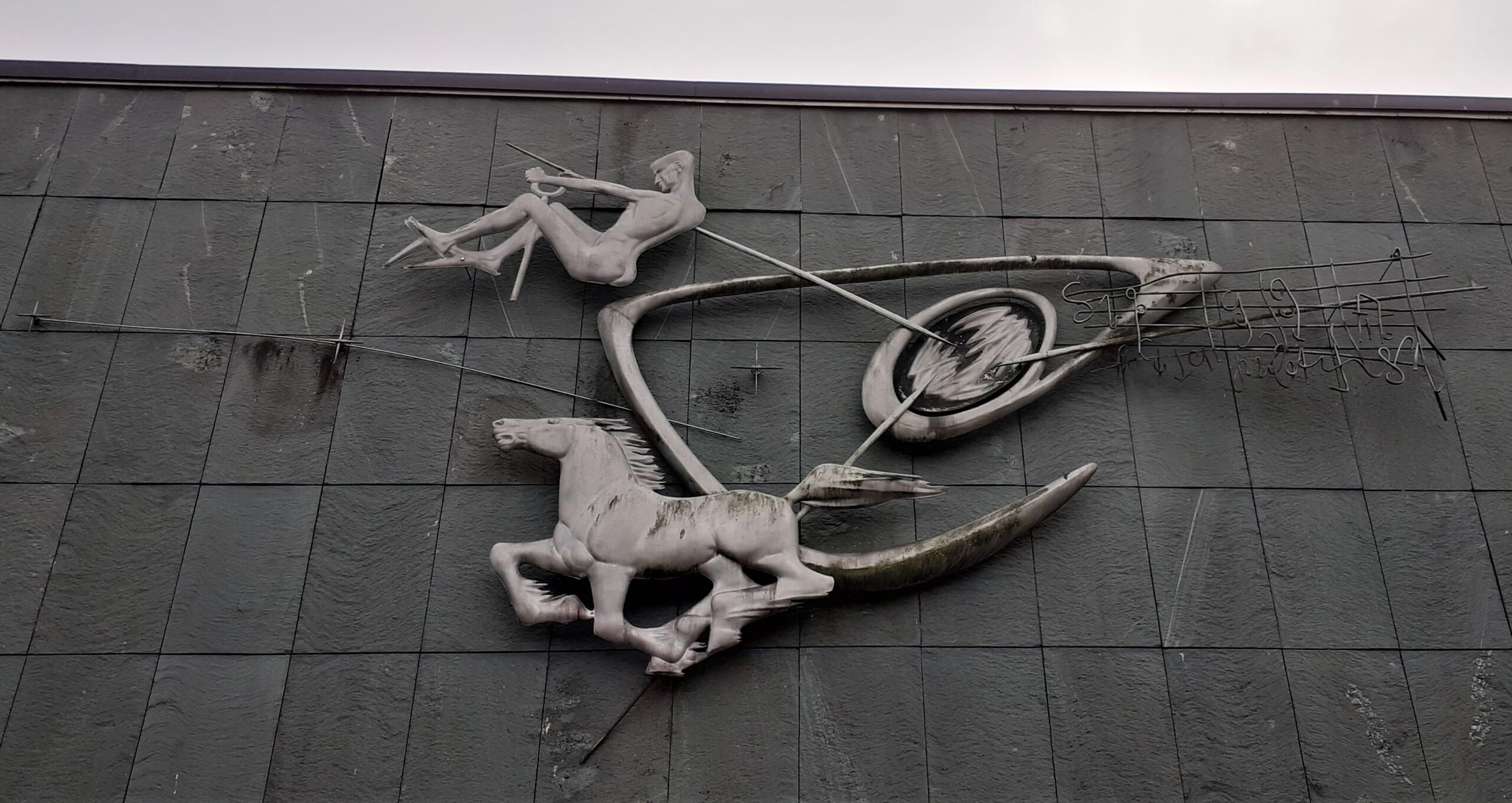
The ‘Count’ took place at Kenilworth Grammar School (The ‘Growth’ sculpture on the entrance to the school was designed by Kenilworth artist Walter Ritchie in 1965)
Labour’s Chris Webster who switched from Borrowell to the new St John’s ward, prevented the Conservatives from ‘sweeping the board’.
Now with 18 seats and based on the the old wards the Conservatives gained two seats in Borrowell and two from the Indepenents in Castle.
Conservative candidate, Leonard Smalley, topped the poll in Castle Ward. He had previously sat as an Independent (or unattached) for more than 30 years. But possibly fearing that the ‘Independent movement’ had now run its course, decided to stand on a tory ticket.
Florence Adcock headed the poll in Windy Arbour with 926 votes, the most by any candidate in the election.
Space at the council house in Southbank road was now considered too small to accomodate the extra councillors, officials and members of the public at monthly meetings. So it was decided to hold summer meetings in the guardroom at the castle gatehouse but it was too cold to use in wintertime. This arrangement continued until 2005 when English Heritage decided to convert the room into a museum, so it was back to Southbank Road for council meetings.
Although their majority dropped from 16 to 13, Kenilworth still holds a strong Tory electorate.
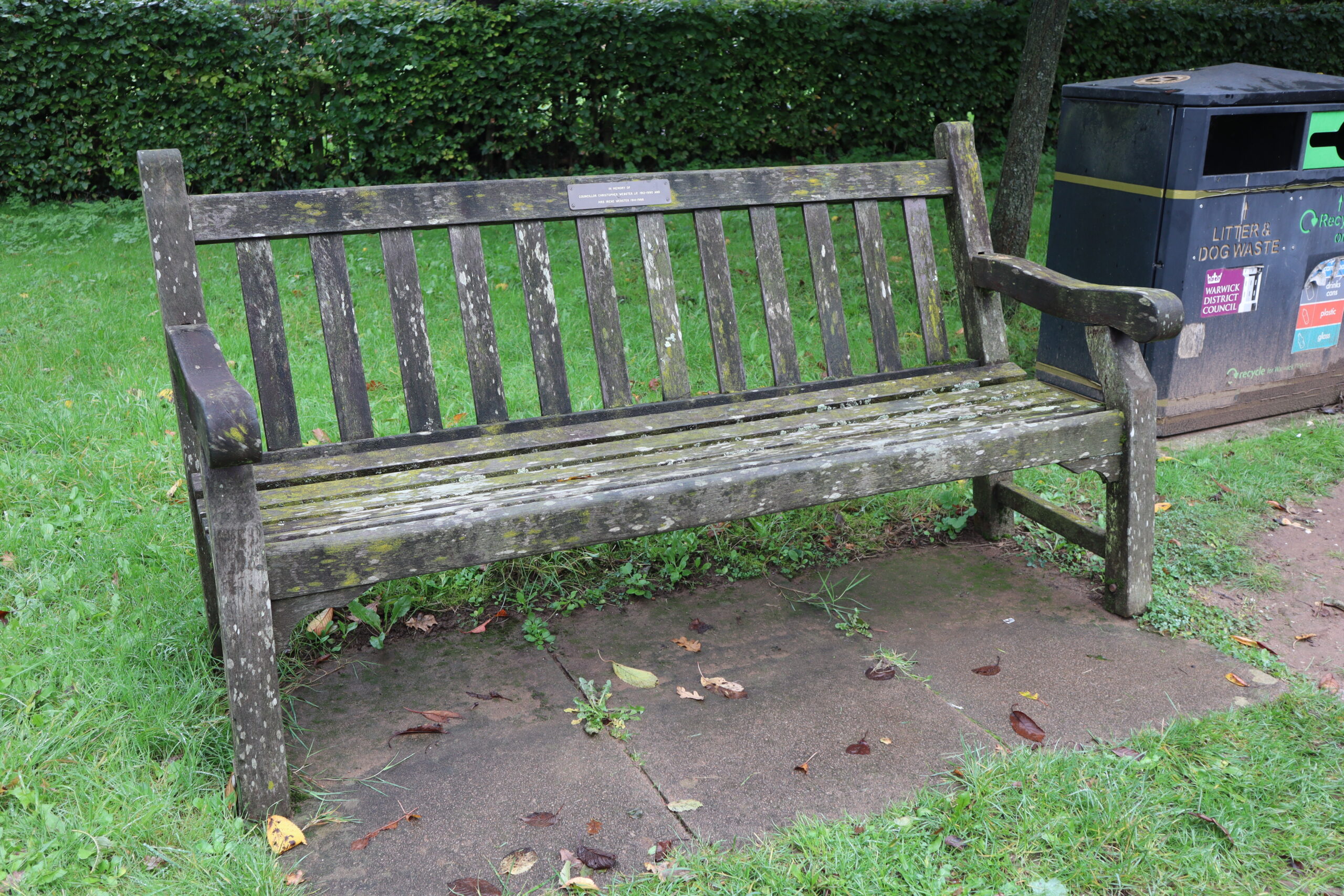
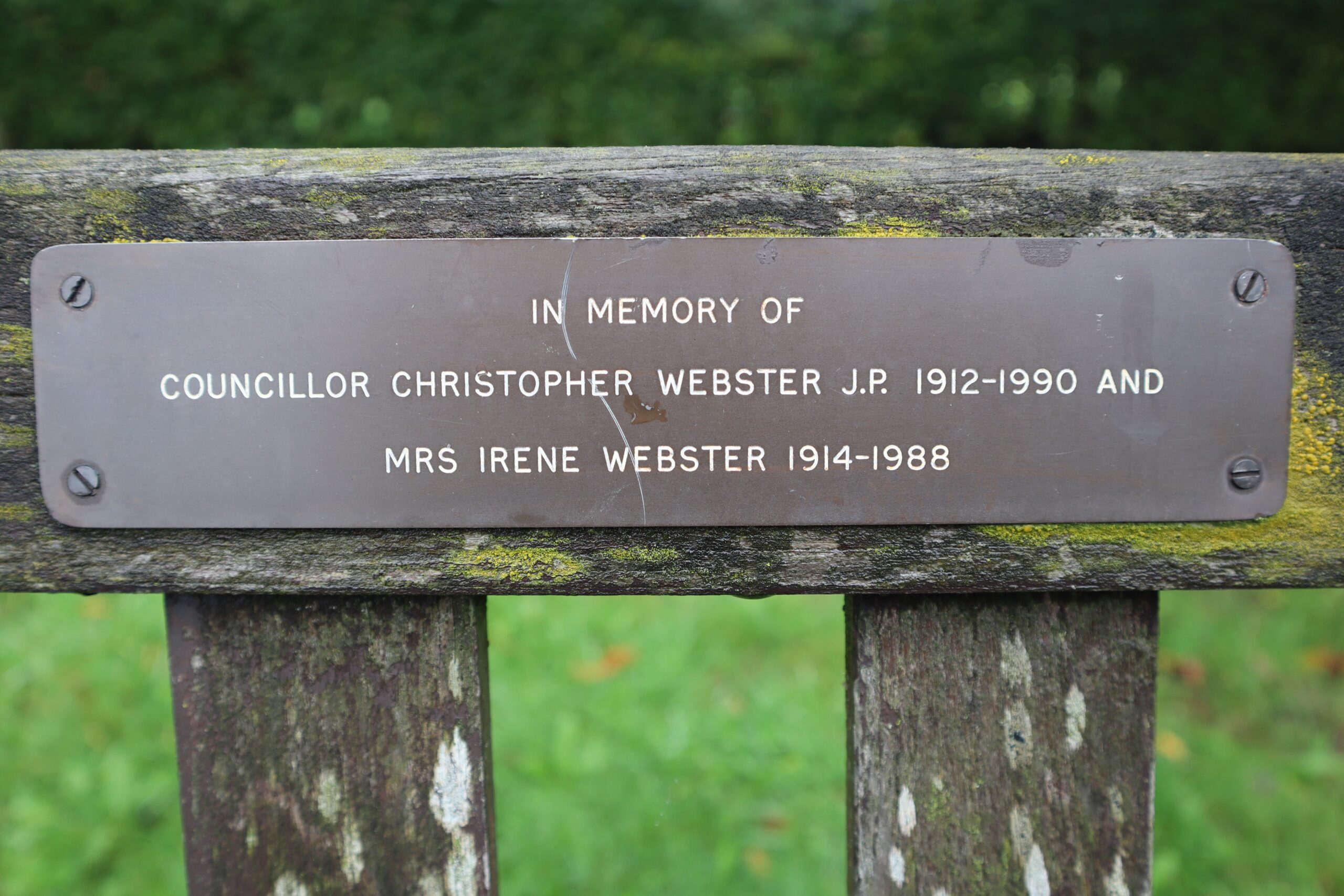
Labour only stood in three wards but managed to get two candidates elected, both in St. John’s. Chris Webster, who had been on the council since 1964, was the only non-Tory and had been the chairman for the previous 12 months. A bench close to the ford was later dedicated in his memory, along with his wife Irene.
Thomas Litterick of Quarry Road, was the other labour candidate elected. He was just beginning his political career, which would eventually take him as far as the House of Commons. He became MP for Selly Oak in Birmingham at the October 1974 General Election. This made him the only Kenilworth resident to ever become an MP.
Eric Bernard Smith, who was first elected in 1946, lost his seat in St John’s. Although he did not contest the 1964 election, he served for a total of 18 years, mainly in Borrowell ward. He was Chairman, twice, 1959-60 and 1960-61.
With restructuring of local government looming, this turned out to be the last ever KUDC election.
KUDC Councillors
15 Conservatives (H Potts, S. Harrison, J. Cox, L. Smalley, B. Whiteman, D. Charlton, J. Wiles, K. Rawnsley, E. Evans, R. Stansfield, Bernice Gardner, Joan Salkeld, Florence Adcock, D. Moore, T. Robinson)
2 Labour (T. Litterick, C. Webster)
1 Liberal (Helen Dore)
Chairman
1970-71 Joan Salkeld
1971-72 Ronald Stansfield
1972-73 Derek Moore
1973-74 Kenneth Hogarth
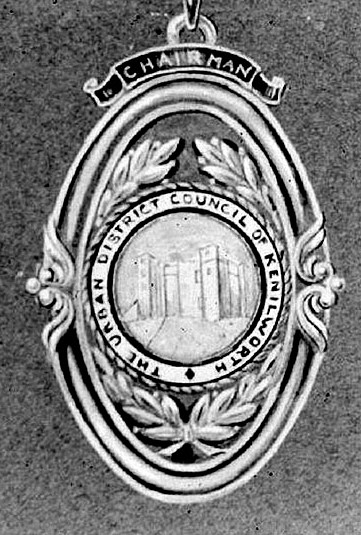
Chairmans Chain of Office – Courtesy of Warwickshire County Records Office. (ref. PH (N) 600/147/3)
A vacancy became available following the resignation of conservative, Bernice Gardner who had been on the council since 1967. Three candidates put themselves forward.
The Tories chose Kenneth Hogarth of Brookside Ave. He is the Chief Sales Executive for the Post Office Telephones, in the Coventry area.
William John Clarke of Crackley Hill stood for the Labour party. His occupation is an Instructional Officier for the Department of Employment at a training centre in Coventry.
Jan Mokrzycki of Windy Arbour was selected by the Liberals who is a dentist, and runs his own practice in Coventry.
All three candidates had contested KUDC elections before without success. Kenneth Hogarth would go on to become the chairman of the KUDC, and later the Mayor of Kenilworth Town Council.
A directive by the Local Government (Successor Parishes) Order 1973, which had been laid before parliament, came into effect on 6th July 1973. This had been followedby theLocal Government Boundary Commission for England, the body established under the Local Government Act 1972 to agree boundaries, names and electoral arrangements of the non-metropolitan districts, which officially came into existence on 1st April 1974.
The final meeting of the (temporary) Kenilworth Parish Council, took place on the 26th March 1974 at the castle gatehouse.
Members Present
Chairman – Kenneth Hogarth
Florence Adcock, Joan Salkeld, D. Charlton, J. Cox, Helen Dore, E. Evans, S. Harrison, T. Litterick, D. Moore, H. Potts, K. Rawnsley, T. Robinson, C. Webster, L. Wiles.
Absent: R. Stansfield, H, Whiteman
Dr. Leonard Smalley (1898-1974)
The chairman referred to the recent death of Mr. Smalley, M.B.E. who had given tremendous service to the council over 40 years. The members stood in silence as a mark of respect.
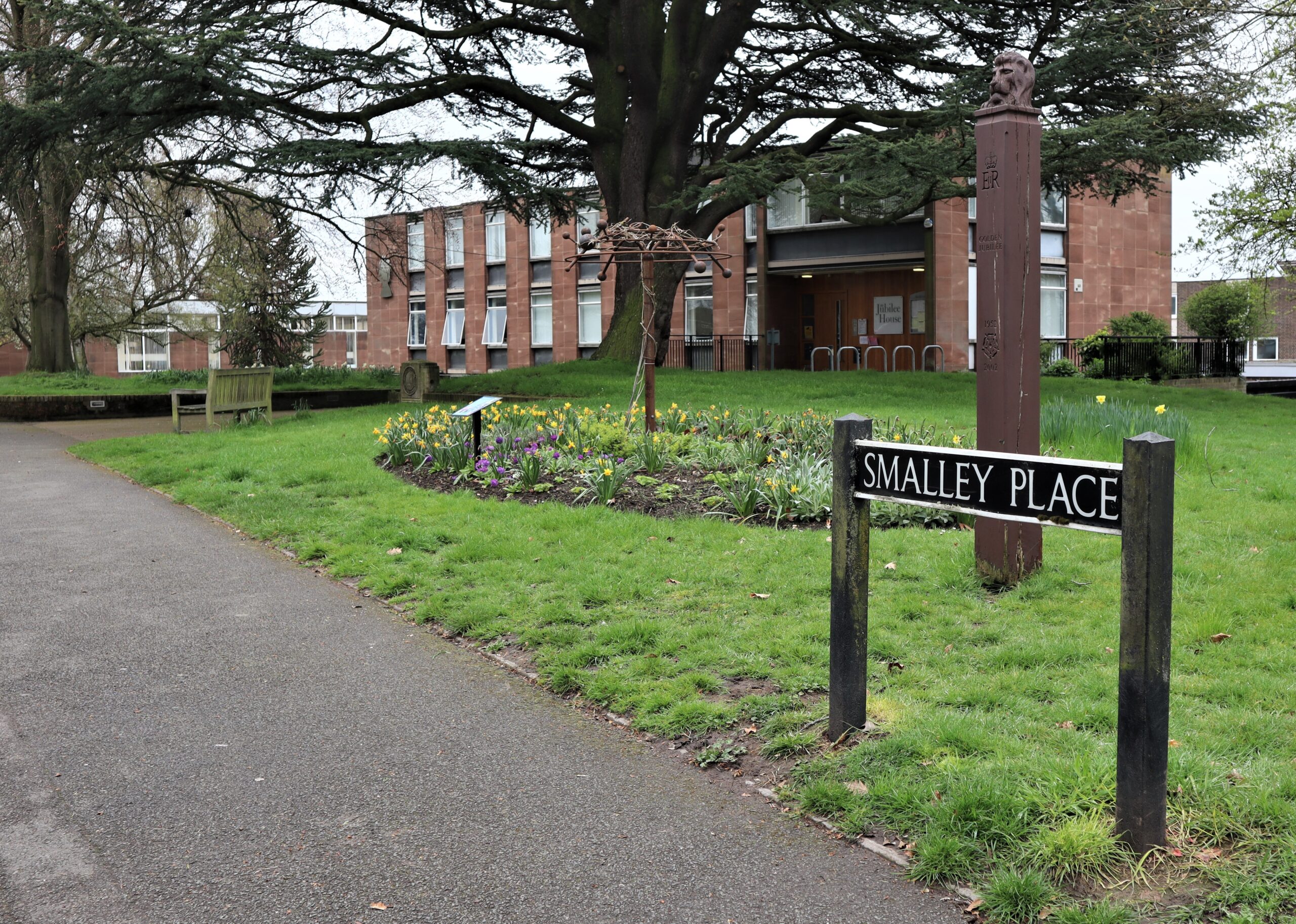
The short stretch of road between the town clock and Barrowfield Lane, along which, Jubilee House stands (the home of the present Town Council), was named in his memory.
The minutes of the final meeting were signed-off by the chairman, Kenneth Hogarth on 3rd April 1974.
So, the Kenilworth Urban District Council was no more, and the new era of the Kenilworth Town Council (and WDC) was just beginning……..