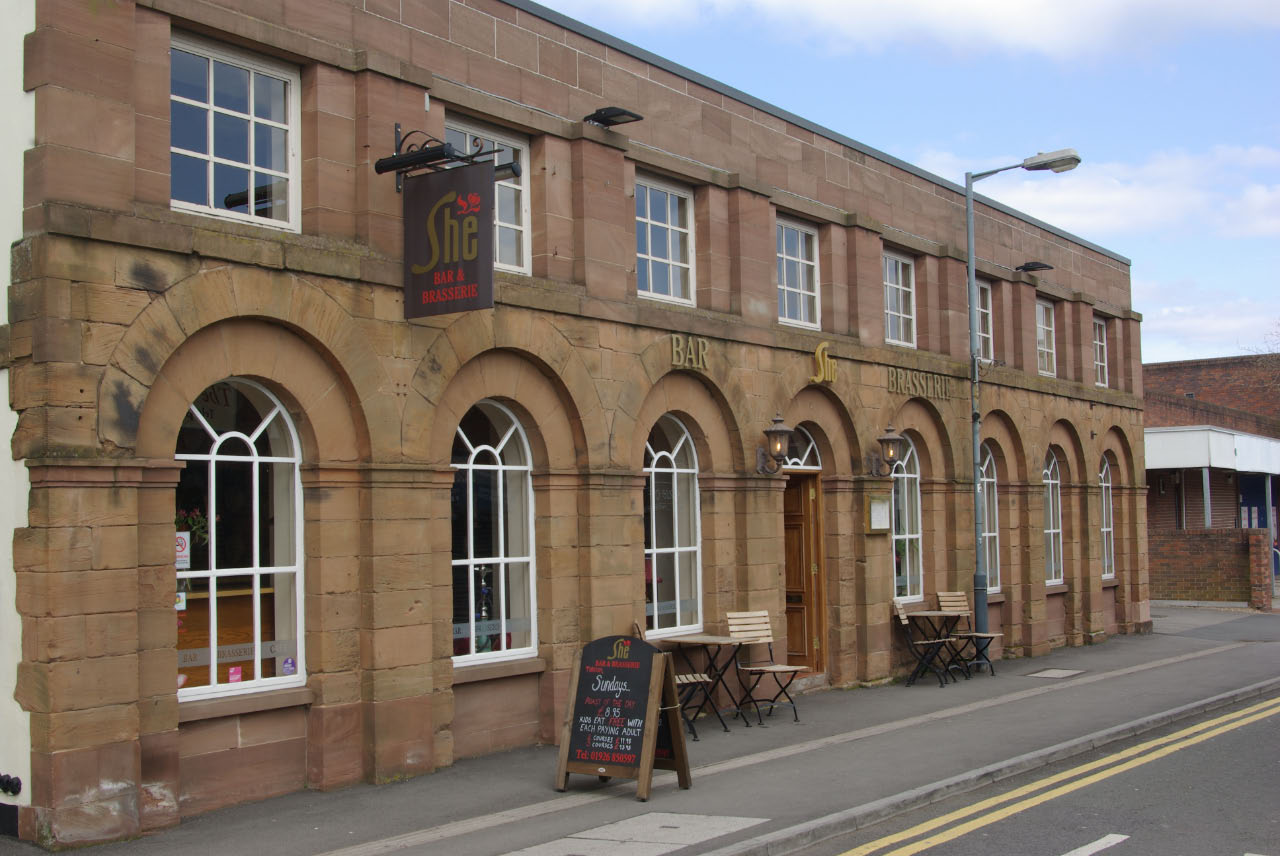
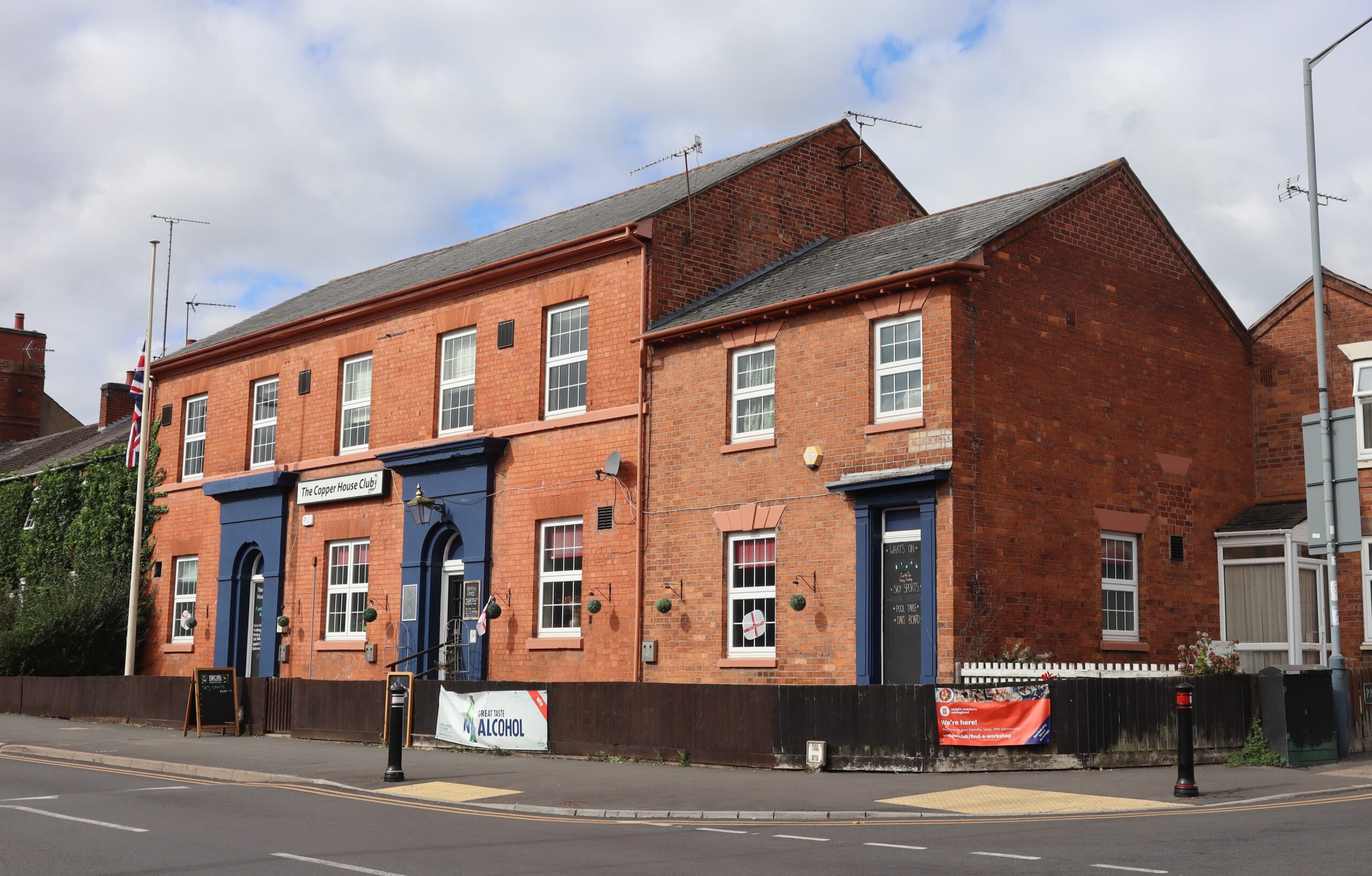
Image Copyright Stephen McKay – Licenced for reuse under the Creative Commons Licence CC BY-SA 2.0 https://www.geograph.org.uk/photo/1770228


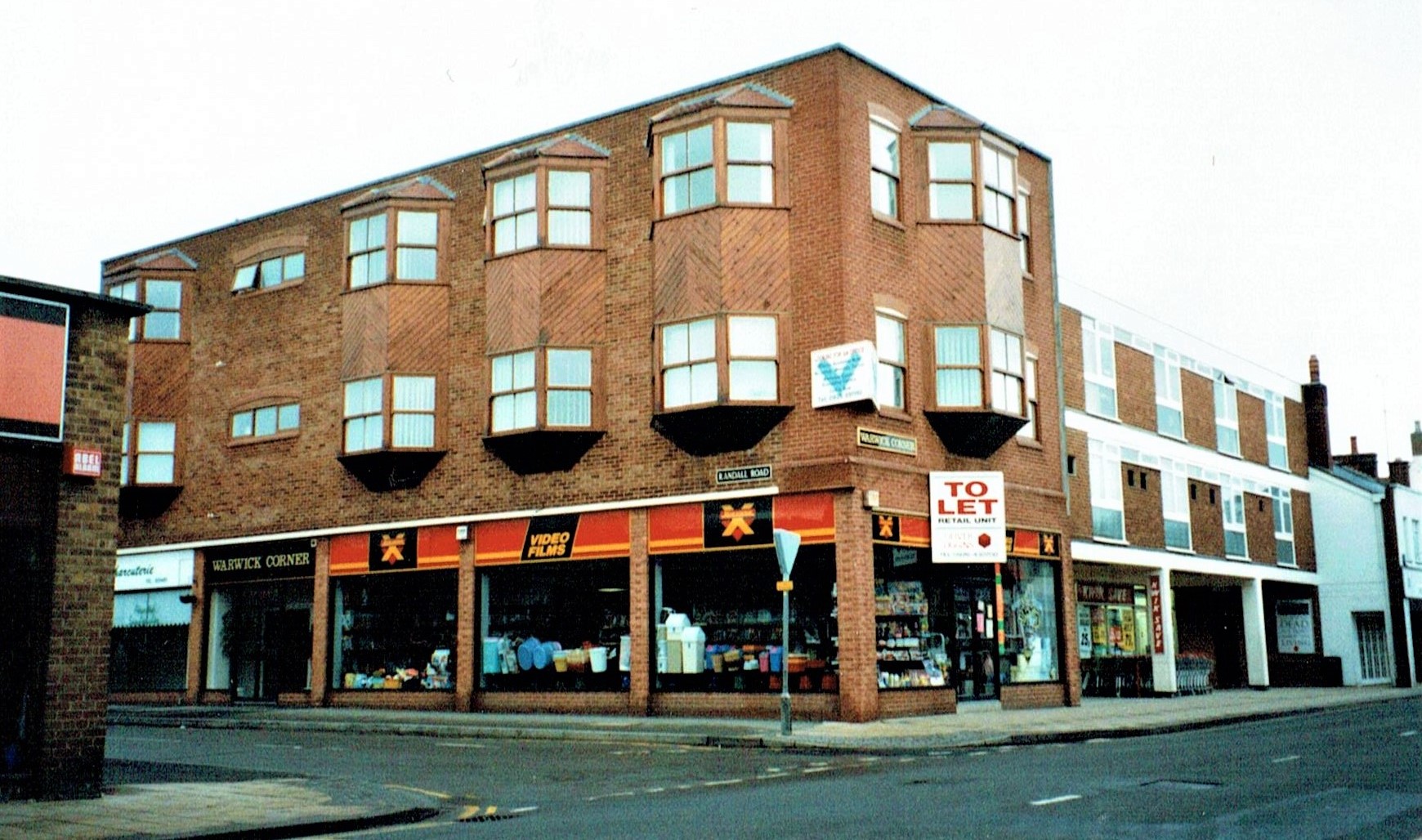
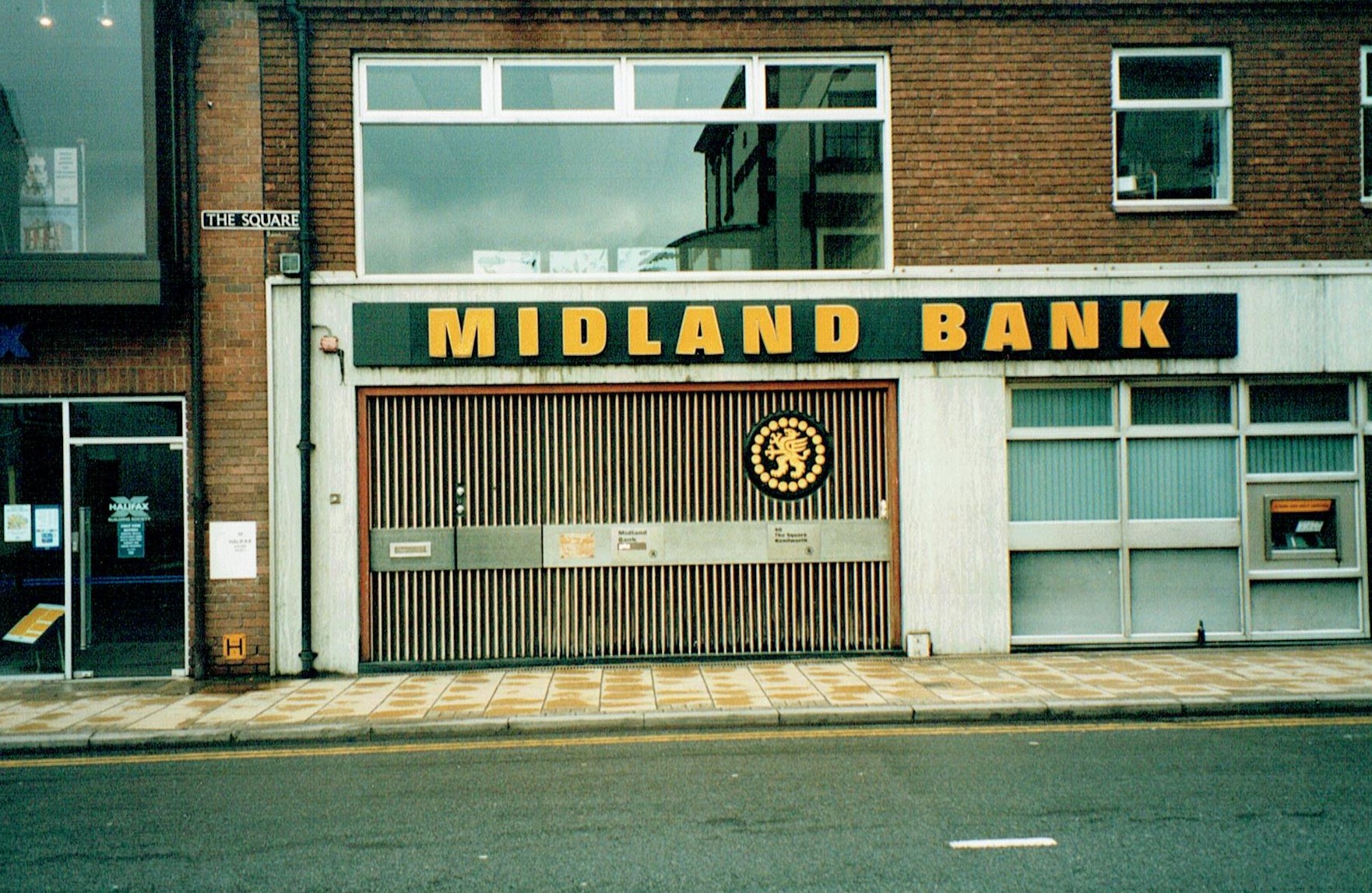
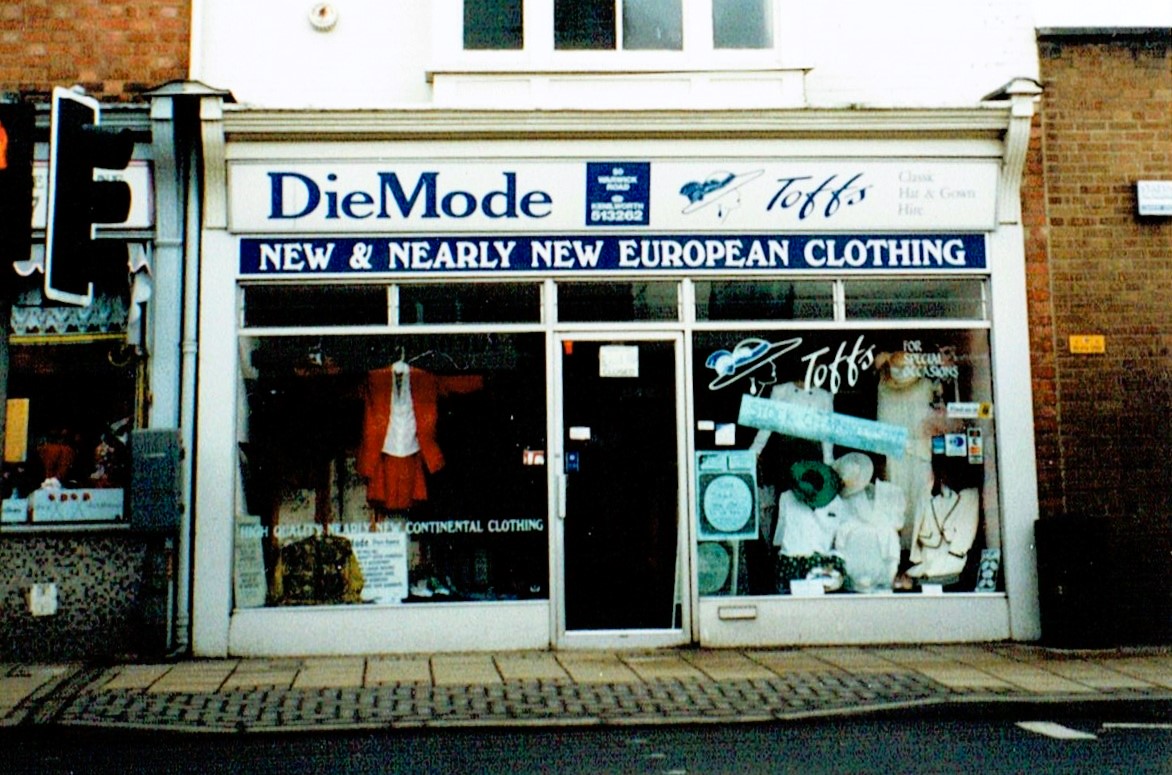
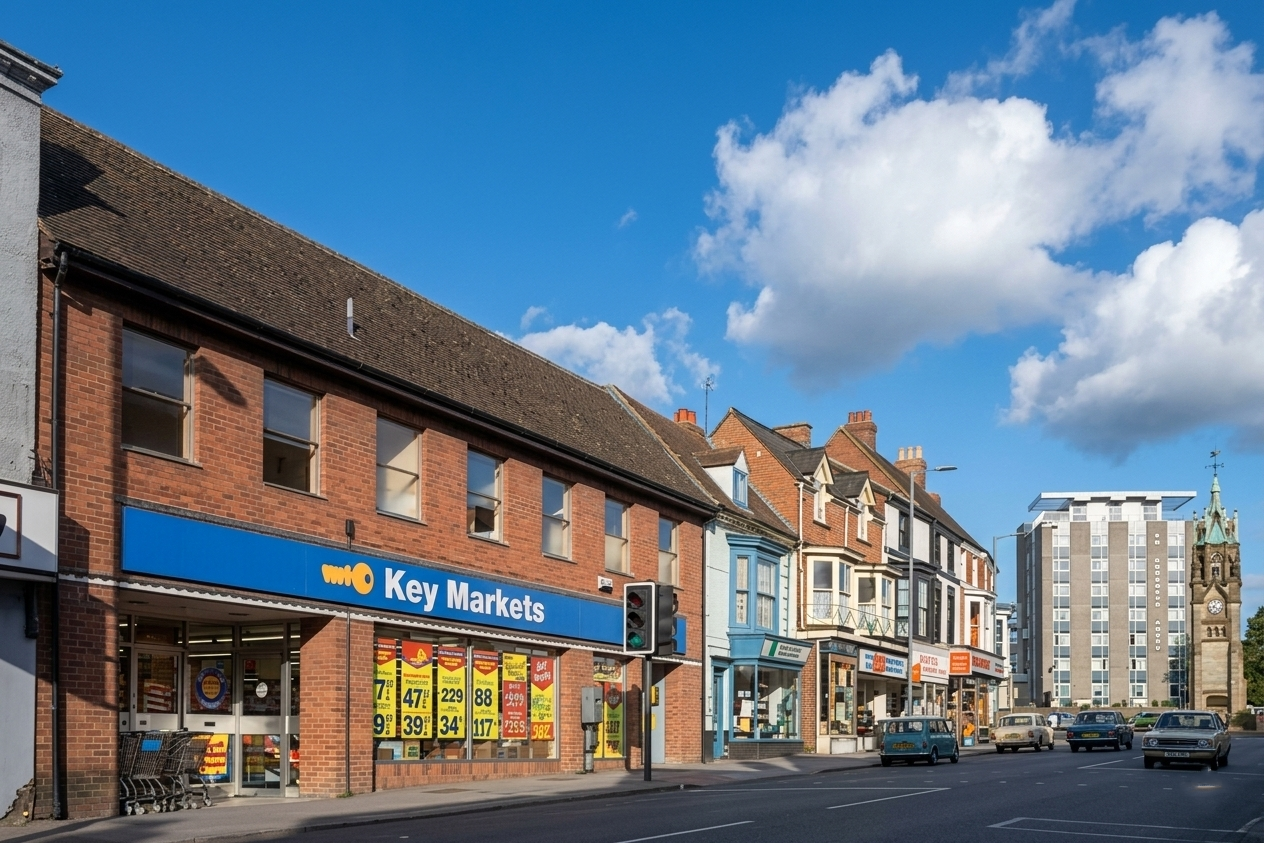




I wish to reveal that I have a personal Time Machine. With it, I can close my eyes and be transported back in just a few minutes, to the early to mid 1950s.
Right at the very start of the Rock ‘n’ Roll era, which I guess, hit Kenilworth circa 1954, when the Alexandra Cinema in Station Road used its incredible sound system, to blast out, Bill Haley’s iconic, Rock Around the Clock. Then later the incredible lyrics and sounds of the late-great Buddy Holly, a singer way ahead of his time… There followed CE SERA SERA…. plus lots more.
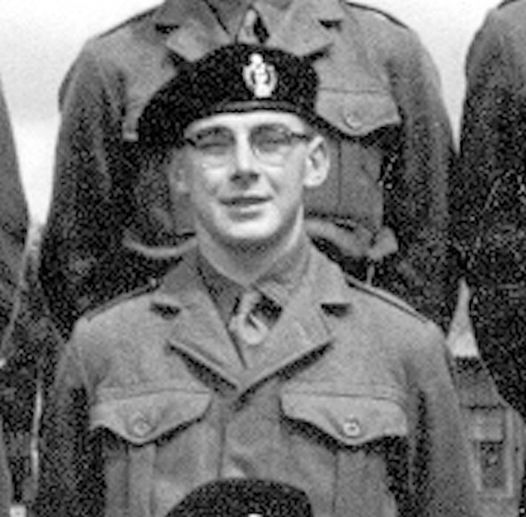
May 1956 saw me called up to do my National Service. My horrendous basic training was done at the huge Hadrian’s Camp near Carlisle. We raw recruits were treated very badly by our horrid Drill Sergeant, who was eventually charged and found guilty of physical and mental bullying. But we all survived, mainly because of all the new music, blaring from every barrack room, NAAFI and Guard House. Likewise during my quieter six weeks of wireless training, in three-ton trucks – pretending to be tanks.
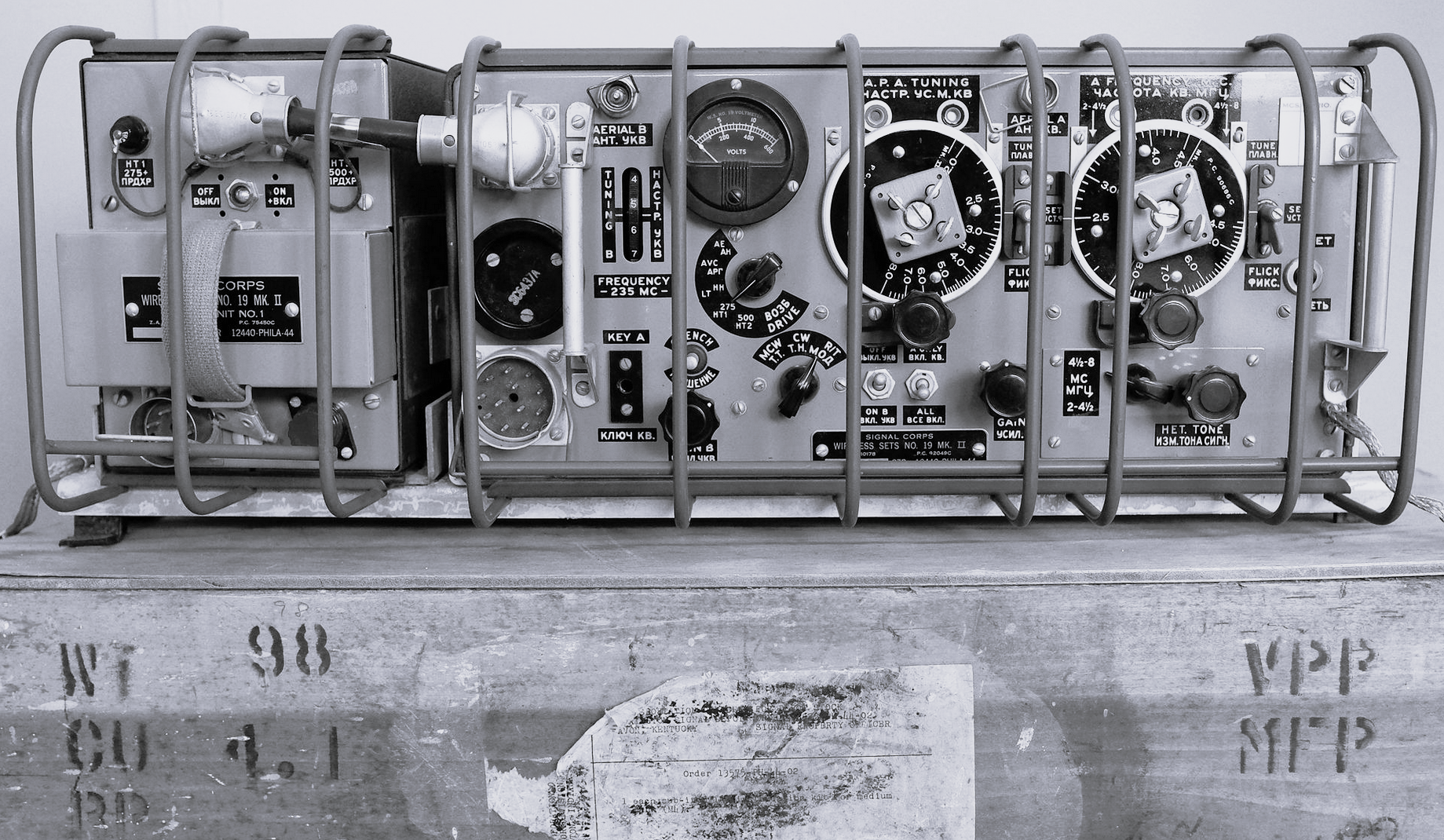
Radio procedures and protocol was very strict, occasionally we did tune our military WS19 Sets, to Radio Luxemburg (208) or the BBC Forces programs, by that time, 1950s Rock ‘n’ Roll had taken over. Elvis was prominent, as was Tommy Steele, the Skiffle Groups were right on the edge of things. Halfway through 1956 saw me in North Germany at Lumsden Barracks, Bad Fallingbostel BAOR 30, close to Hannover, Celle. Nearby was the notorious Bergen Belsen concentration camp – a real eye opener.
Every trooper, NCO and young officers had portable radios, all blaring out the latest, from Pat Boone, Elvis and a host of other new discoveries, who became legends. If we could get to a dance, the sax and drums were prominent, the lyrics shouted, short and to the point. The NAAFI and German pubs had huge Wurlitzer Juke Boxes, for sixpence you could listen or bop around to the latest tune. Strange records like ‘Hernando’s Hideaway’ or ‘She Was Only sixteen’ – could be heard everywhere.
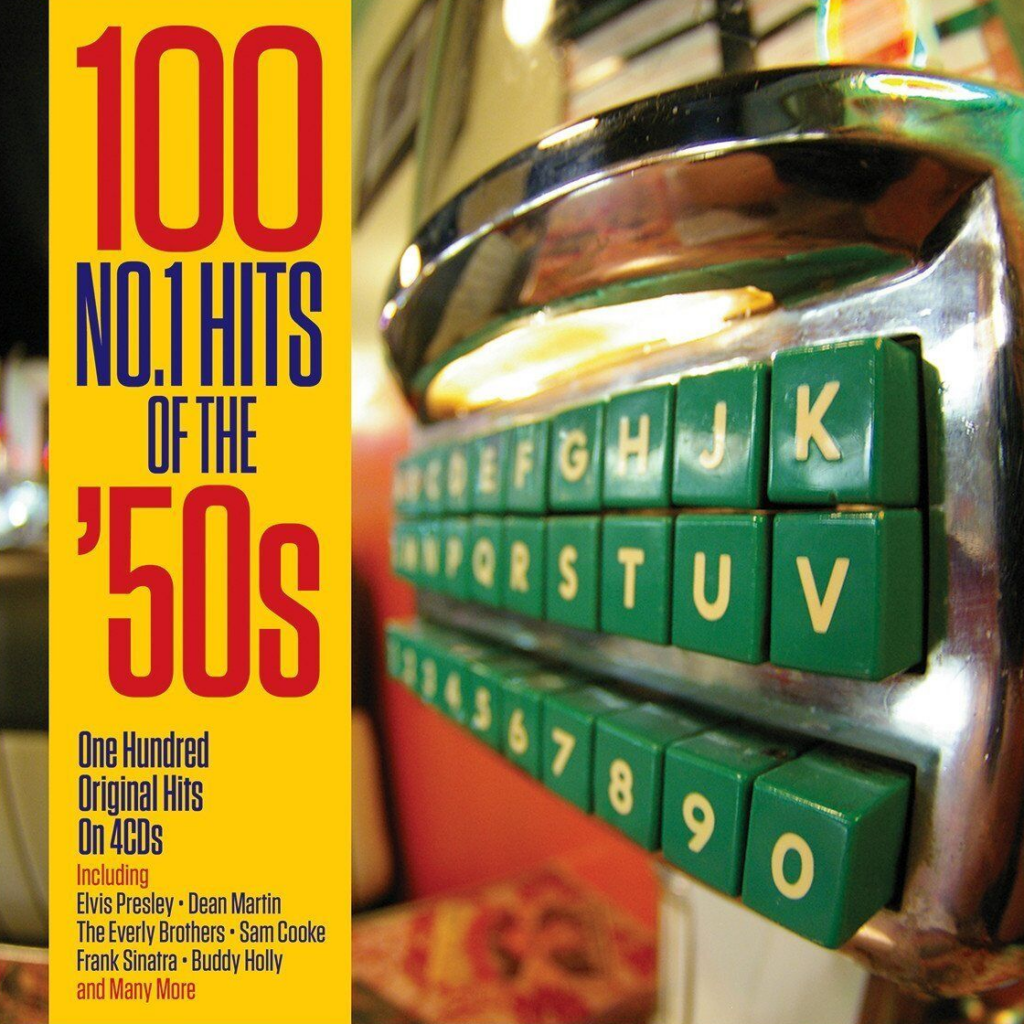
Back to my personal Time Machine. It’s an incredible collection of original artists presenting their best tunes. The Album called 100 Number One’s of the Fifties – a none stop collection of the very best (plus a few of the worst), with only a very short gap between each track.
No Wurlitzer needed these days – just a Apple ipad pro on my lap, record chosen on shuffle, raise my footrest, close my eyes and within minutes this old body of mine is whizzed backwards to noisy barrack rooms, crowded smoke filled naffis, incredible German beer kellers, with oompah music and serving girls…… plus long hours of freezing 24-hour guard duties on the Tank Park or the Fuel Dump, walking around in the pitch black, with near frost-bitten ears or getting soaked or baked by a heatwave during the summer. But from the barrack rooms, half-a-mile or so away, tunes and songs from this album became ingrained. Should you have been a 1950s teenager, you know exactly what I mean.
My now ancient body and mind can still ROCK within this sound bubble. The album is a non-stop, incredible selection of tunes, guaranteed to transform you back in time – in just minutes.
TEMPUS FUGIT (time flies)
Cyril Hobbins – 2022
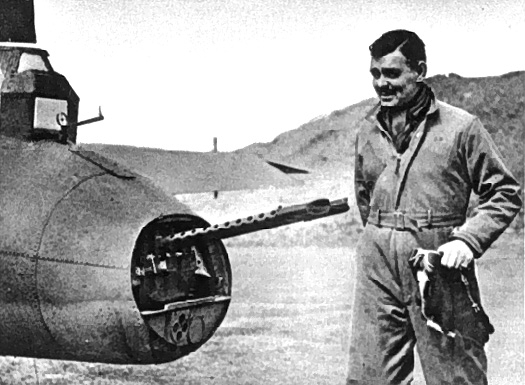
In 1999, a Coventry man revealed that one day during WW2, he had a long chat, and a drink or two, with an American at the Abbey Hotel – That American was none other than Clark Gable. 1
He is best known for his role in the 1939 Acadamy Award-winning film: ‘Gone With The Wind’. He eventually starred in more than 60 films in his 37-year career.2
Although earning a fortune at Hollywood, Gable was determined to ‘do his bit’ for the war effort, joining the Army Air which at the time were controlled by the United States Army. He qualified as an aerial gunner and was assigned to the 351st Bomb Group. He eventually became a second lieutenant, and later a major.3
Unsurprisingly, his employers at MGM were not happy that he was off to war. Studio executives persuaded the Army Air Forces to reassign their most valuable asset to non-combat duty. Gable, however, did not completely step away from films; he became part of a motion picture unit that produced recruiting films for aerial gunners.
In 1943, he was stationed at RAF Polebrook at Oundle, near Peterborough. During his time in England, he flew five official combat missions in B-17s (before the intervention of MGM), but his colleagues later revealed that he unofficially went on many more. He was awarded several medals, including the Air Medal and Distinguished Flying Cross.
We will never know why he was in Kenilworth that day in 1943, probably just passing through. But upon his departure, he told the man from Coventry, “Thank you for not talking about the films.” 4
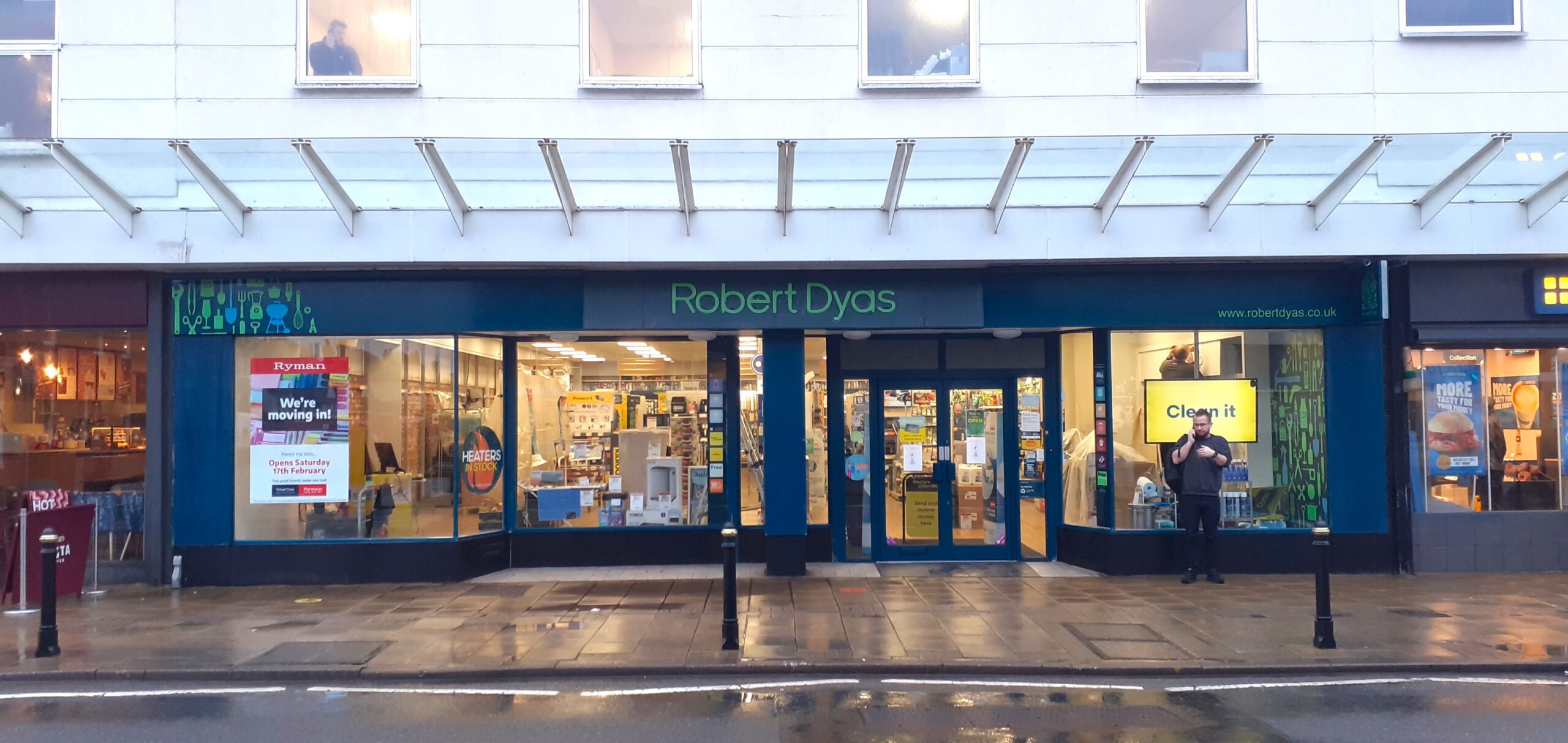
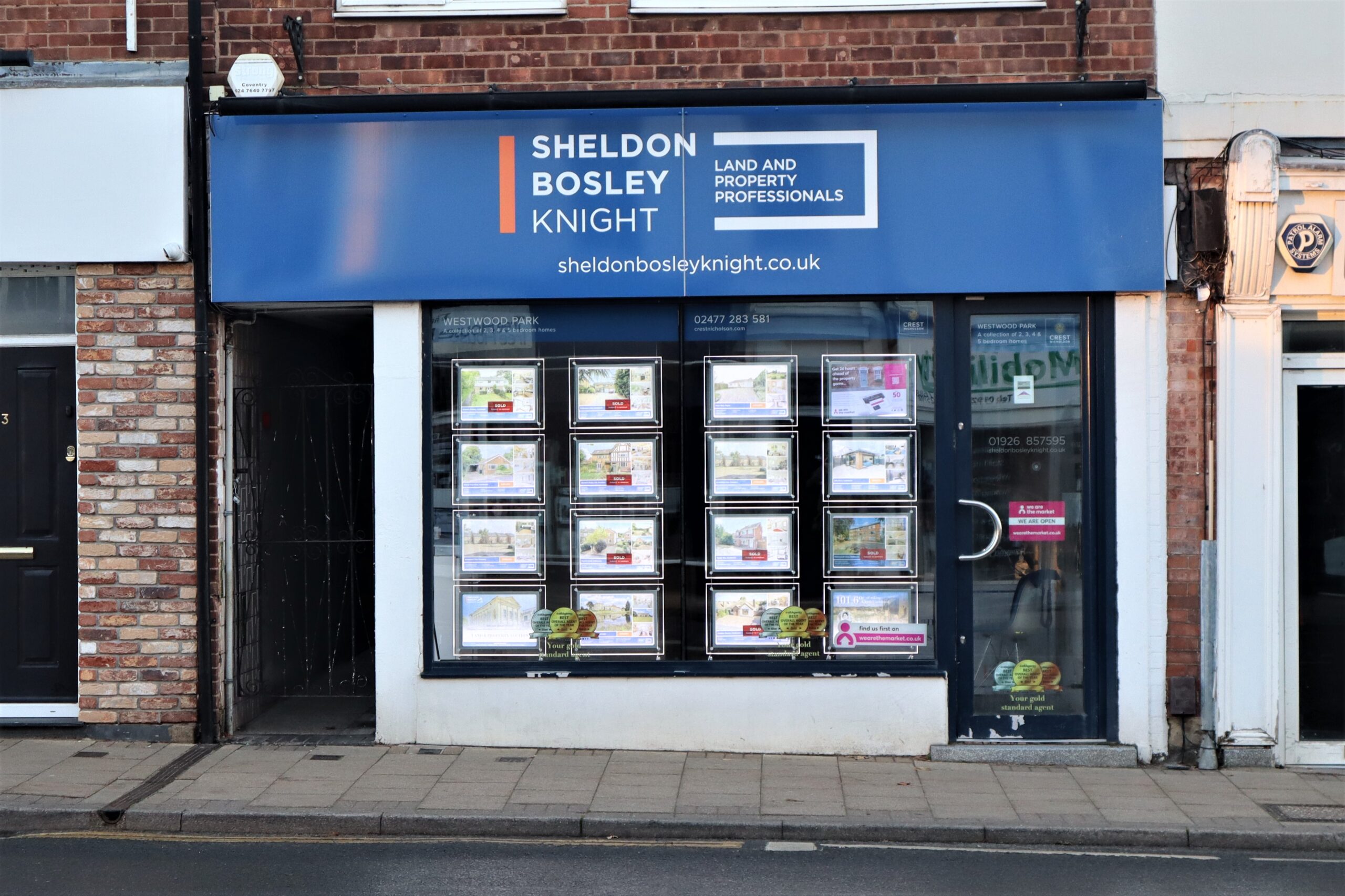
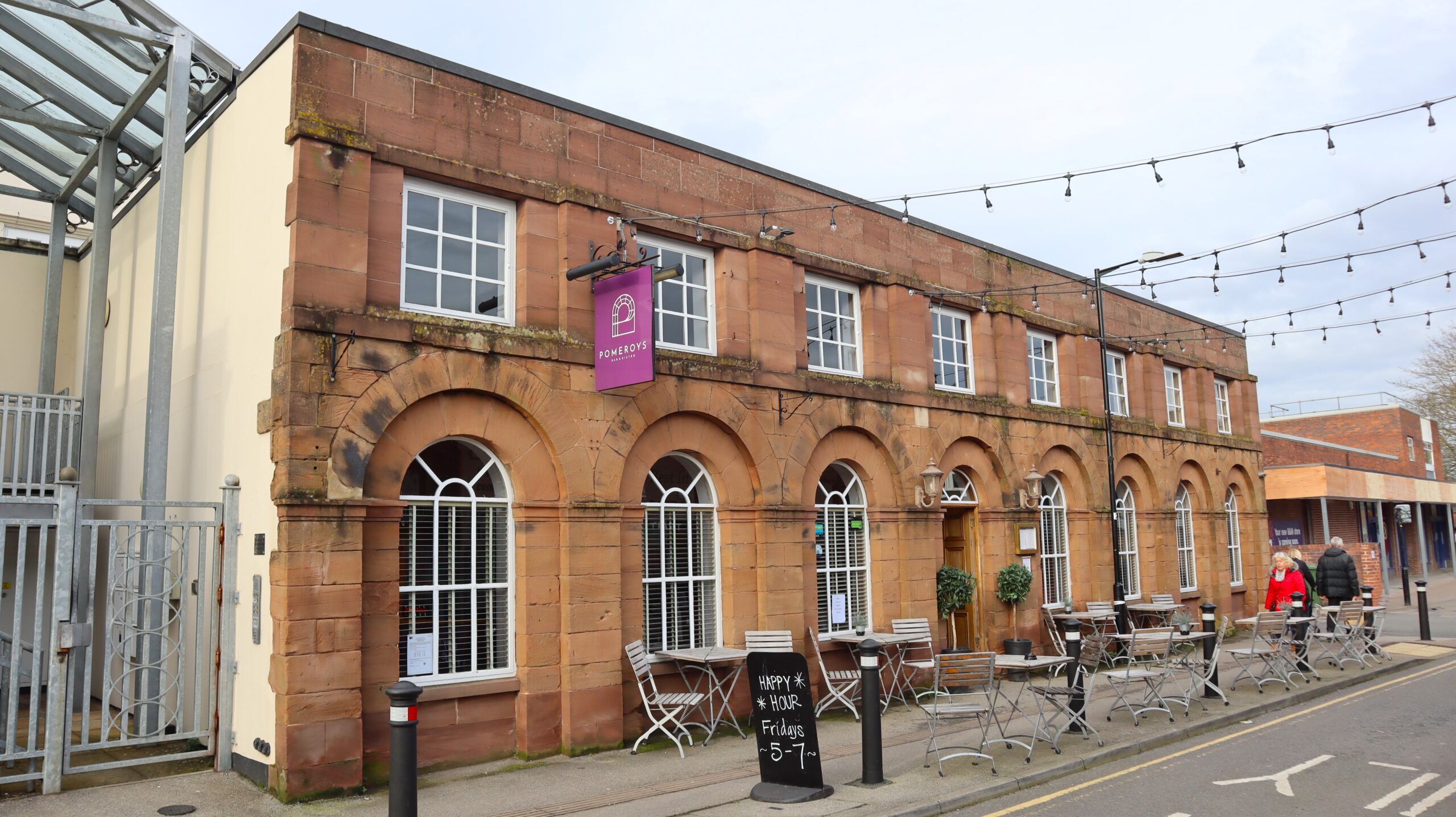
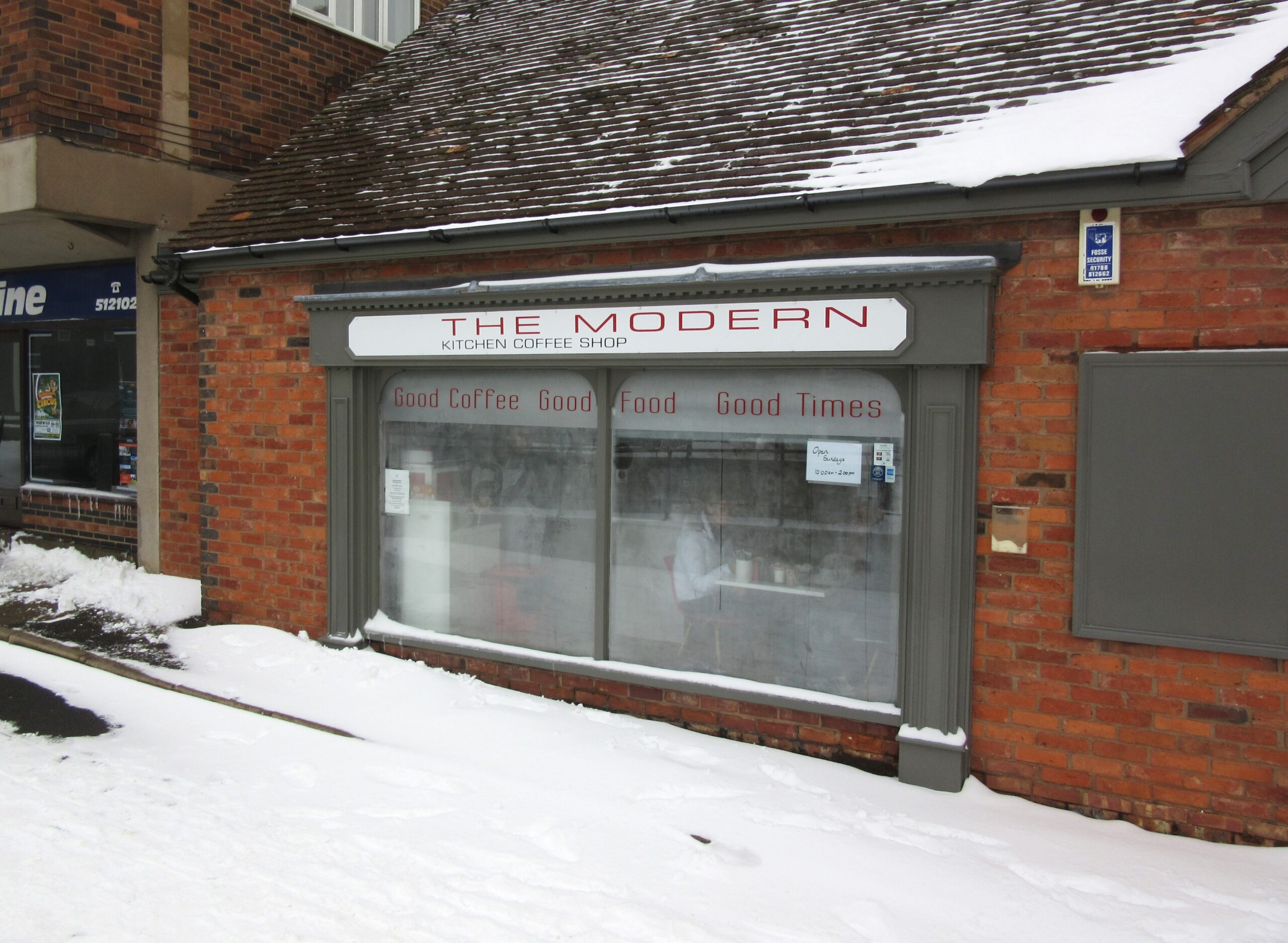
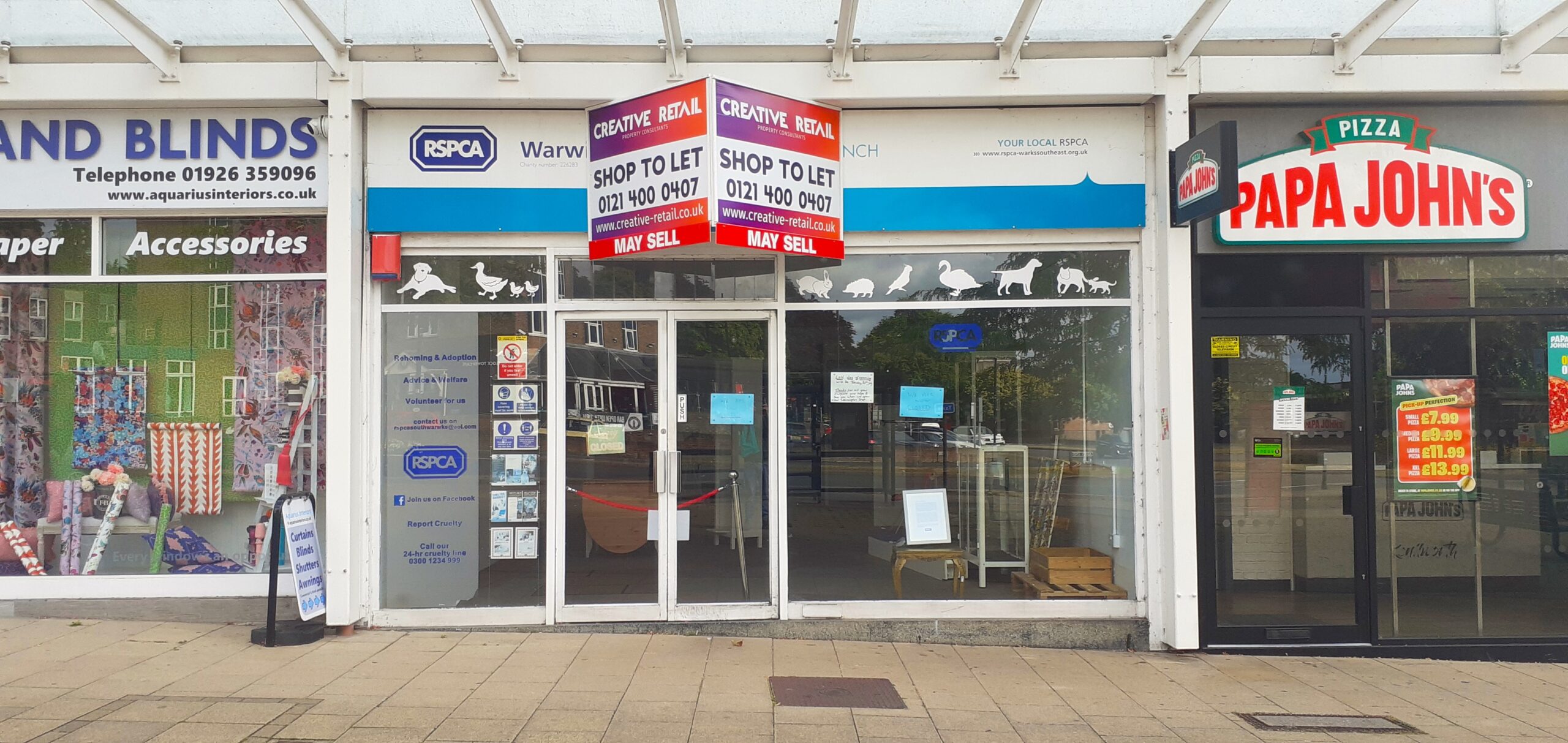
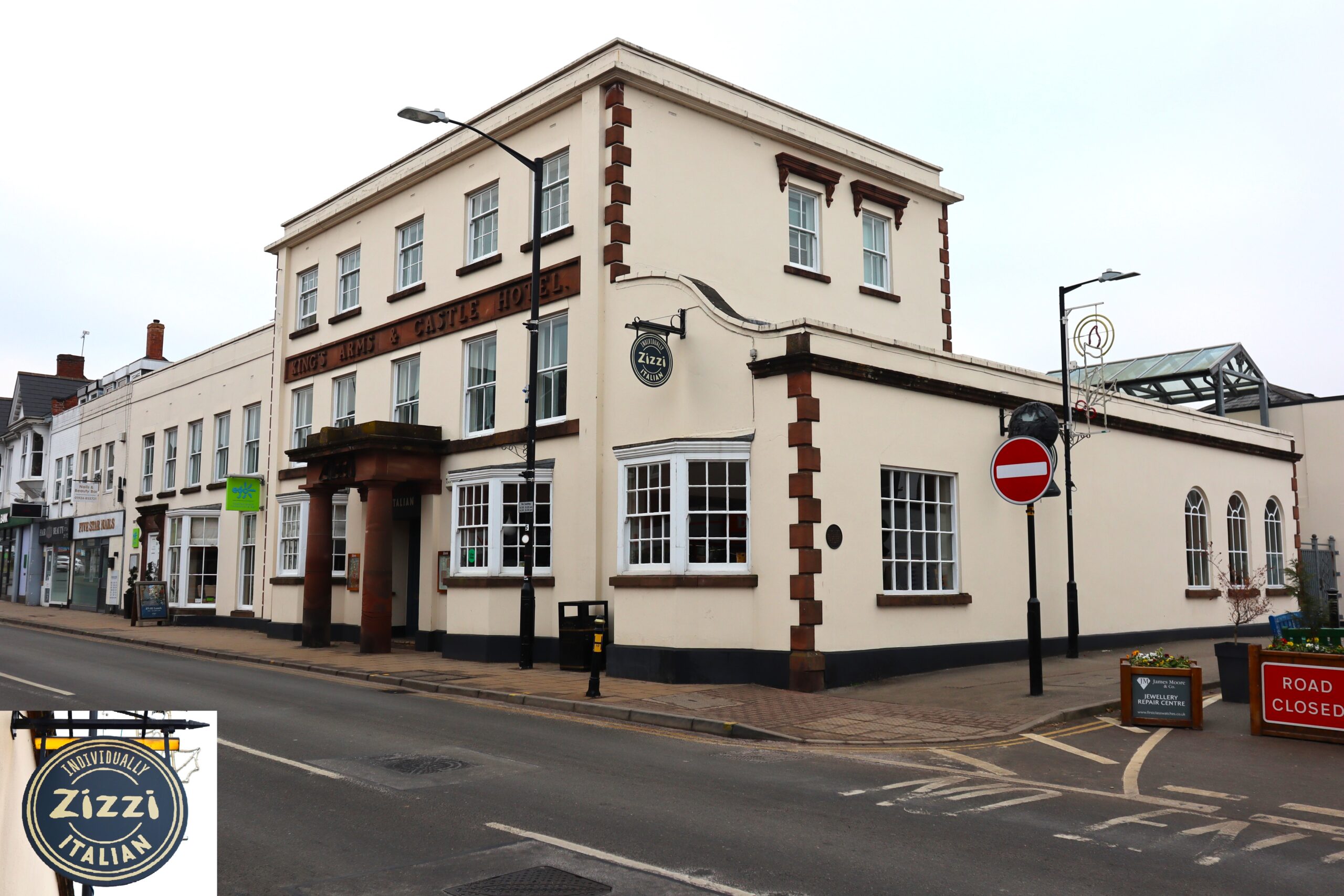
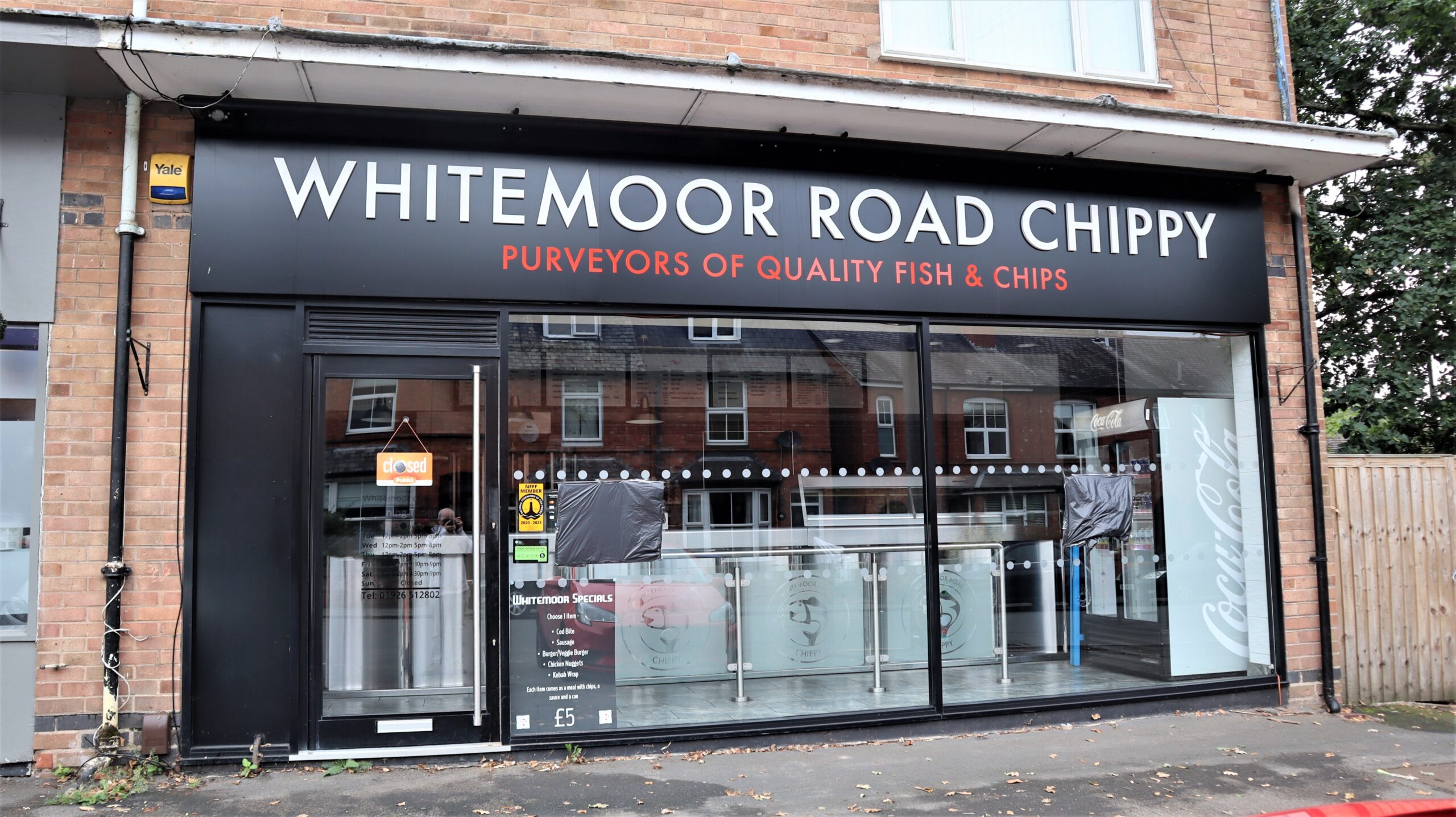
Whitemoor Road Chippy – Reborn as Captains Chippy
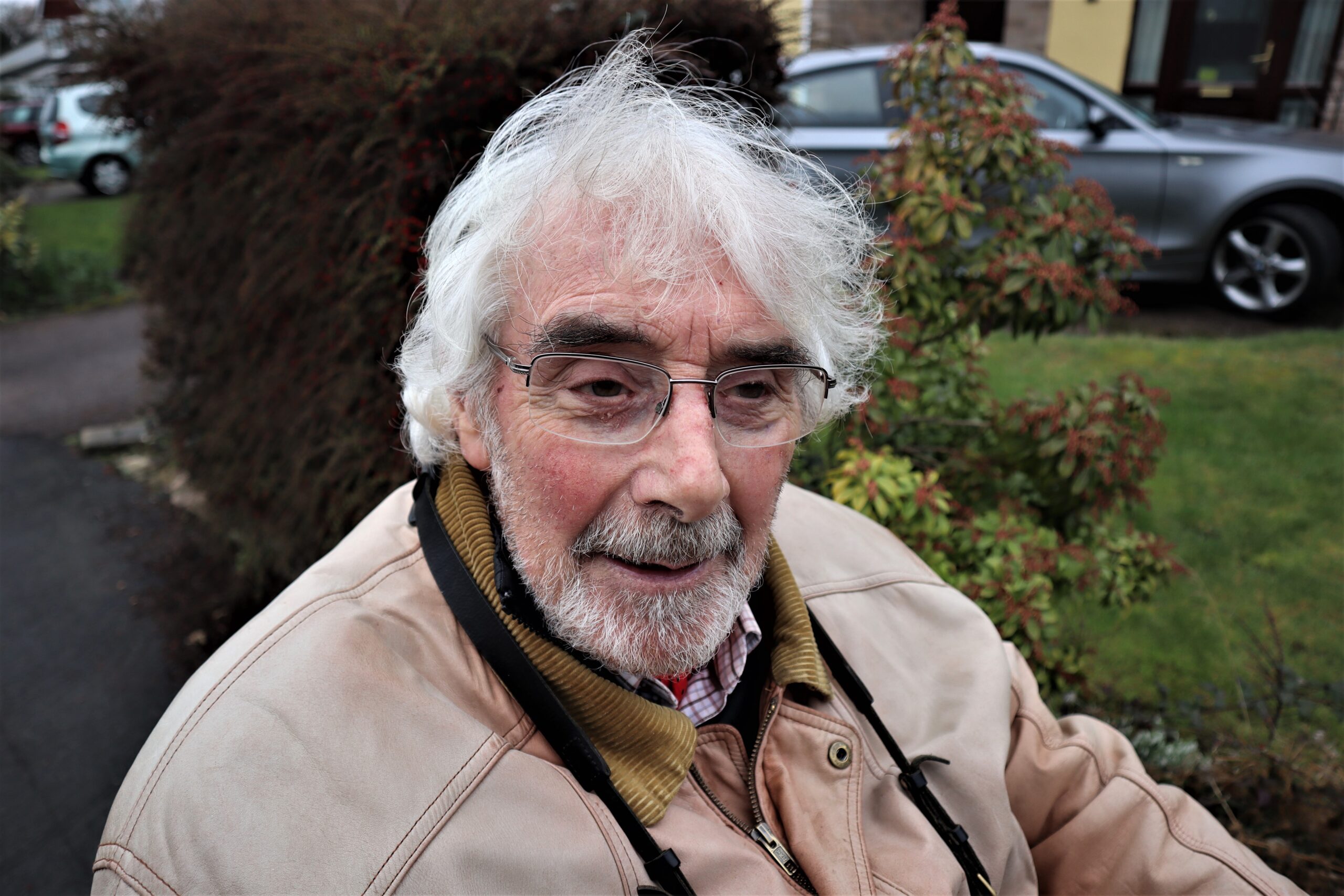
Stuck inside on this miserably wet November day has me thinking as I wait for a doctor to phone.
Most children of almost any age, love wheeled toys, from their very first buggy, to go-carts or ride on plastics. They never forget their very first bike, or as mid-teenagers, their first car or motorbike.
For my generation things were very different, because we wartime kids never saw or owned new toys, there just weren’t any to be found, unless battered pre-war junk. So, as resourceful little groups of both sexes we would scour our neighbourhood, for the wherewithal to construct our own, perhaps under the guidance of a grandad or uncle.
Short planks of wood, shallow vegetable or orange boxes, other odd bits of timber from the firewood pile. We sourced and straightened dozens of bent nails, unscrewed old screws from discarded furniture. The most difficult items were nuts and bolts, plus the biggest target of all, four old pram wheels with axles, it might have taken us a week or more of the summer holiday to get the whole kit together. Our aim, was then to produce, the best steerable go-cart in the neighbourhood, they were all very similar in design.
A strong plank about three or four feet long, with a box-seat fixed to one end, at the other a strong cross piece formed a footrest, always pivoting on a nut and bolt. From each end of this a loop of strong cord or rope co-ordinated hand and feet steering. Braking was a simple dragging of a shoe or boot on the ground.
We all discovered that large pram wheels at the back and smaller ones at the front gave better speed and control. The sheer noise of a group as their creation took shape increased to a crescendo as the final touches were applied, a flag, a sail, or a roughly painted name. The natural leader of the group, girl, or boy always had first go, others took turns to push or to pull the lucky driver, until the favourite slopes were reached, then turns were taken.
It was then that the real fun started, depending upon build-quality. All go-carts would increase in speed down the slope, poorly built ones would disintegrate. Others attempting to turn would roll-over, spilling driver and passenger into the path of the others. One of the most common failures was the disconnection of axles from plank chassis, the poorer of the groups could only use bent nails as fixings. The best built ones used strong screws or even nuts and bolts, with the help of an adult.
So, small noisy groups, would gather at street corners, on waste land, bomb sites, or at a favourite hill. Bruises, scabby knees and elbows were the norm as were splinters and hammered thumbs. There was often rivalry as to who had the biggest scabs…. They were so very common. Back at home, Vaseline, Germaline or even mum’s saliva would be the cure.
During the record cold winter of 1947, many of these homemade go-carts were pushed or pulled through the deep snow or on icy roads to the Gas Works in Dalehouse Lane. From there shivering children would pull and push home a hundredweight sack of coke, to help hard pressed mum’s to keep the house warm……. painful chilblains and the hot-aches made us cry real tears. It was a long walk from Roseland Road.
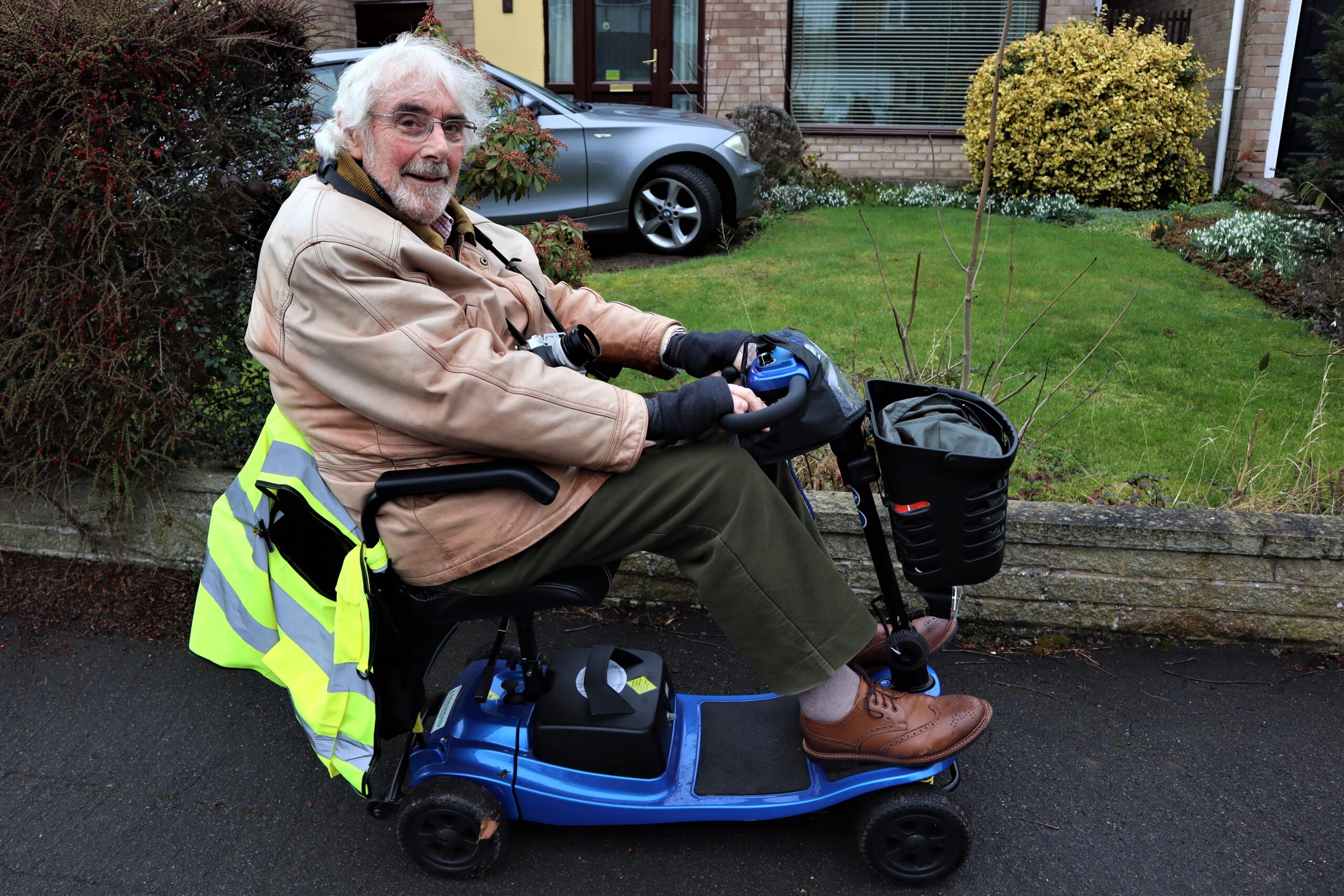
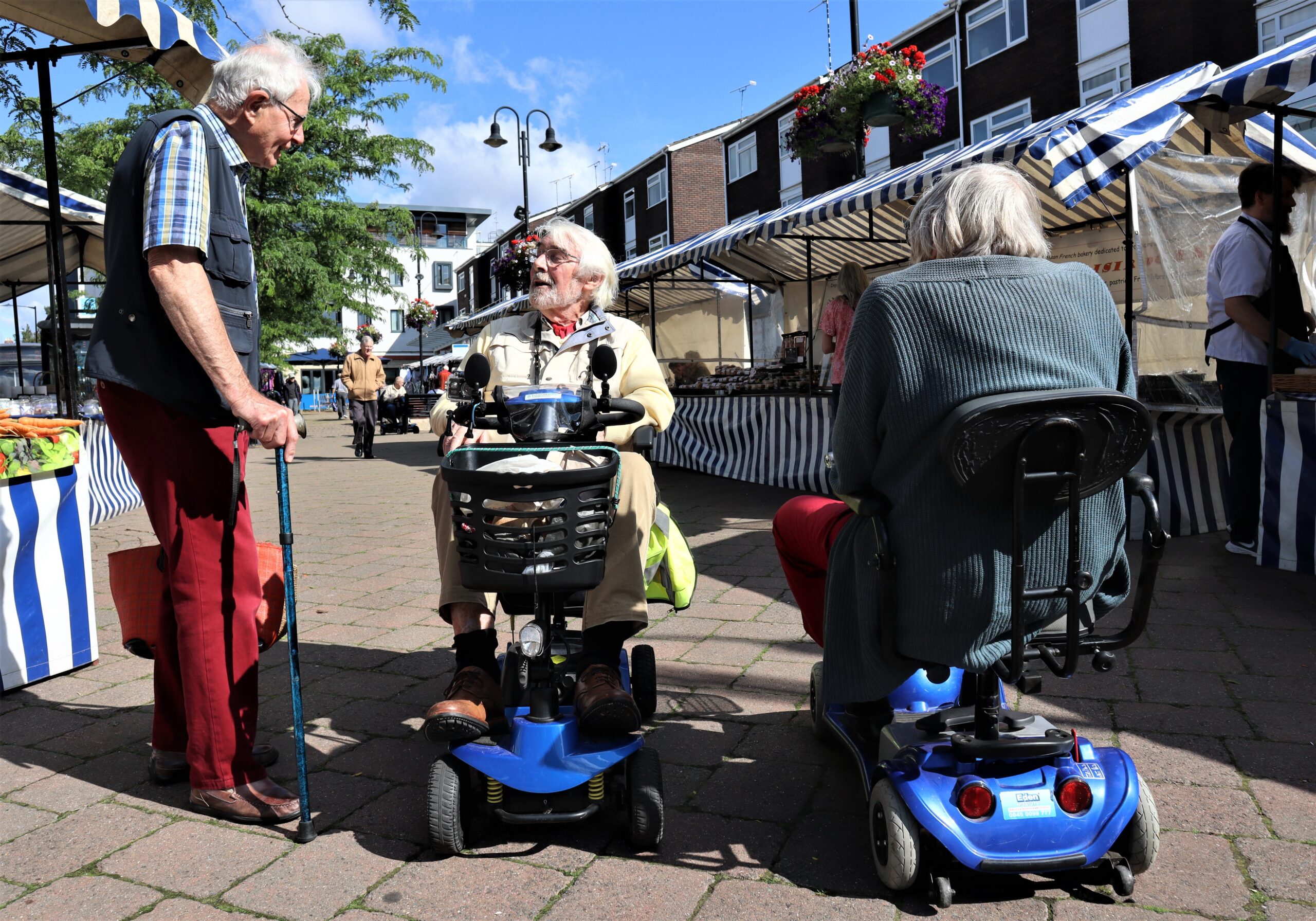
All the above stories came about because I have just taken delivery of my first set of wheels since I stopped driving over fifteen years ago. My advanced age and medical condition have forced me to acquire a new mobility scooter, a good deal smarter than the go-carts of the past, but have I retained the thrill of trundling along close to the ground again? Or will I have to scare myself, a few times first. I really don’t want scabby knees or roll-over accidents do I?
A new learning curve awaits me, frustratingly todays rain is preventing my first solo trip, but that is life….. I just need to wait, as we did a long ago – to find my wheels.
Cyril Hobbins – November 2022
| Year | Member (s) | Party | Majority |
| 1889 | Lord William Leigh | Separtist | unopposed |
| 1892 | Lord William Leigh | Separtist | unopposed |
| 1895 | Lord William Leigh | Separtist | unopposed |
| 1898 | Lord William Leigh | Separtist | unopposed |
| 1901 | Lord William Leigh | Separtist | unopposed |
| 1904-5 | Lord William Leigh (Died Nov. 1905) | Separtist | unopposed |
| 1905-7 | Lord Dudley Leigh | Conservative | 586 |
| 1910 | Lord Dudley Leigh | Conservative | unopposed |
| 1913 | Lord Dudley Leigh | Conservative | unopposed |
| 1919 | Charles Randall | Conservative | unopposed |
| 1922 | Charles Randall | Conservative | unopposed |
| 1925 | Charles Randall | Conservative | unopposed |
| 1928 | Charles Randall | Conservative | unopposed |
| 1931-33 | Charles Randall (Died March 1933) | Conservative | unopposed |
| 1934 | George Tisdale | Independent | unopposed |
| 1937 | George Tisdale | Independent | unopposed |
| 1946 | George Tisdale | Independent | unopposed |
| 1949 | Alan Huckvale | Conservative | unopposed |
| 1952 | Alan Huckvale | Conservative | unopposed |
| 1955 | Henry Watling | Conservative | unopposed |
| 1958 | Eustace Carey-Hill – No.1 Division ————————————— Henry Watling – No. 2 Division | Conservative ————– Conservative | 677 ———— 722 |
| 1961 | John Wilson – No. 1 Division ————————————— Henry Watling – No. 2 Division | Conservative ————– Conservative | 1324 ———— 959 |
| 1964 | John Wilson – No. 1 Division ————————————— Nevill Spencer – No. 2 Division | Conservative ————– Conservative | 1090 ———— 766 |
| 1967 | John Wilson – No. 1 Division —————————————- Nevill Spencer – No. 2 Division | Conservative ————– Conservative | 1412 ———— 1060 |
| 1967 by elec. | Clarence Forsyth – No. 2 Division | Conservative | 331 |
| 1970 | Clarence Forsyth – No. 1 Division —————————————- Bill Whiteman – No. 2 Division | Conservative ————– Conservative | 1652 ————- 1285 |
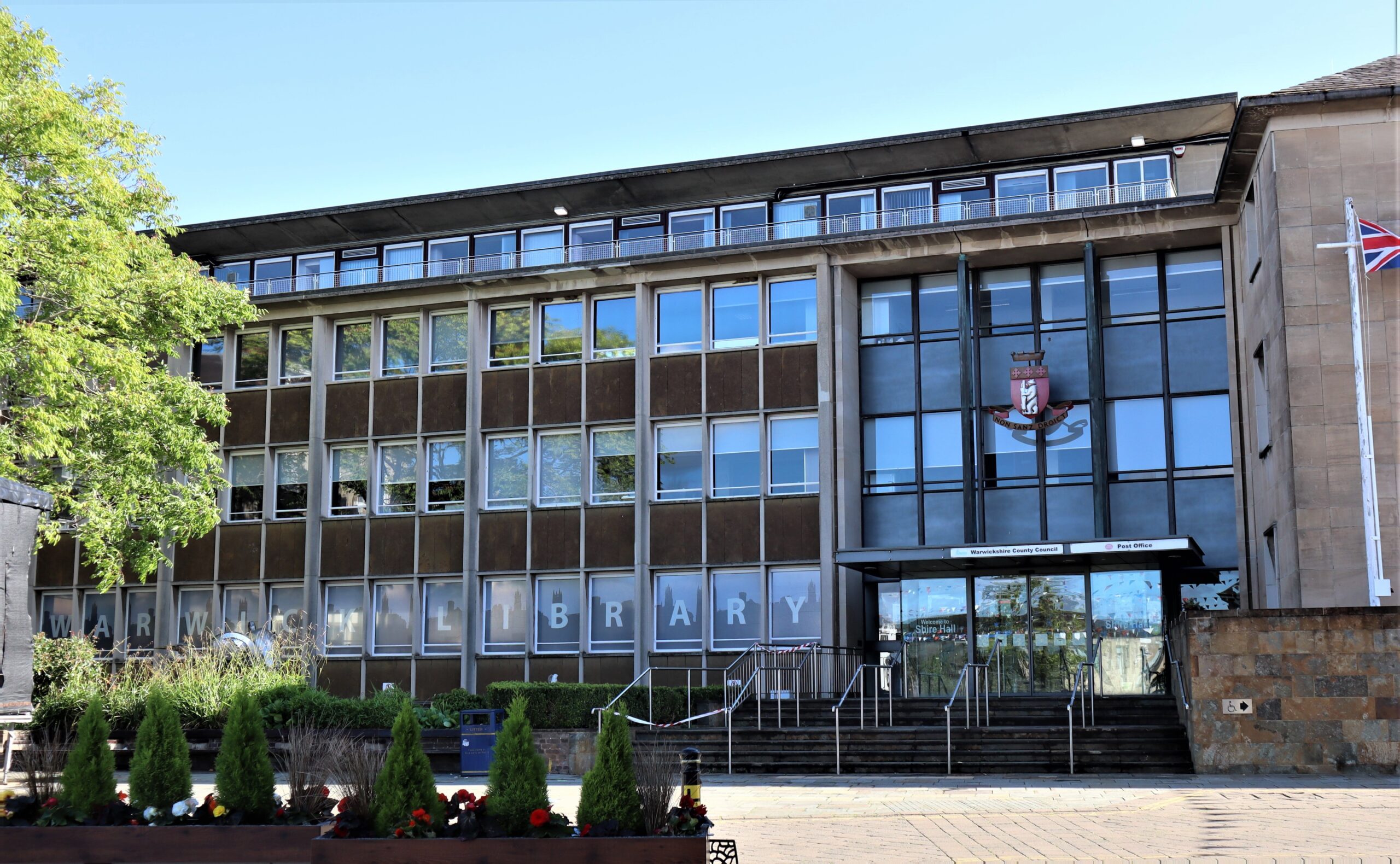
The Local Government Act 1972, was an act of parliament that took place in England and Wales to reform local government. It officially took place on 1st April 1974. The 1973 elections acted as ‘shadow authorities’ until the official hand-over date. This new legilation meant that Warwickshire as a county was cut in half with the northern section becoming the West Midlands County Council (WMCC), and designated as a metropolitan county council. Warwickshire County Council (WCC) became a non-metropolitan authority. These changes meant a reduction in the number of WCC councillors (77 down to 55), with elections taking place every four years, not three. Alderman were abolished.
| Year | Members | Party | Majority |
| 1973 | Florence Adcock – No. 1 Division ————————————————– Helen Dore – No. 2 Division | Conservative ————– Liberal | 548 ——— 226 |
| 1977 | Florence Adcock – No. 1 Division ————————————————– Kenneth Hogarth – No. 2 Division | Conservative ————– Conservative | 1789 ——— 605 |
| 1981 | Helen Dore – Abbey ————————————————– Florence Adcock – St. John’s ————————————————– Peter Simpson – Park Hill & Stoneleigh | Liberal ————— Conservative ————— Conservative | 325 ——— 576 ——— 180 |
| 1982 by-elecs | Kenneth Hogarth – Abbey ————————————————– John Wilson – St. John’s | Conservative ————— Conservative | 86 ——— 700 |
| 1985 | Kenneth Hogarth – Abbey ————————————————– John Wilson – St. John’s ————————————————– Peter Simpson – Park Hill & Stoneleigh | Conservative ————— Conservative ————— Conservative | 83 ——— 818 ——— 181 |
| 1989 | John Cooke – Abbey ————————————————— Robert Wooller – St. Johns ————————————————— Peter Simpson – Park Hill & Stoneleigh | Conservative ————— Conservative ————– Conservative | 169 ——— 1376 ——— 558 |
| 1993 | Haydn Thomas – Abbey ————————————————— Robert Wooller – St. John’s ————————————————— John Coggins – Park Hill & Stoneleigh | Lib-Dem ————— Conservative ————— Conservative | 790 ——— 653 ——— 316 |
| 1997 | Haydn Thomas – Abbey ————————————————— Robert Wooller – St. John’s ————————————————— Graham Windybank – Park Hill & Stoneleigh | Lib-Dem ————— Conservative ————— Conservative | 39 ——— 1589 ——— 110 |
| 2001 | Haydn Thomas – Abbey ————————————————— Alan Cockburn – St. John’s ————————————————— Dave Shilton – Park Hill & Stoneleigh | Lib-Dem ————— Conservative ————— Lib-Dem | 44 ——— 1000 ——— 31 |
| 2005 | John Whitehouse – Abbey ————————————————— Alan Cockburn – St. John’s ————————————————— Dave Shilton – Park Hill | Lib-Dem ————— Conservative ————— Lib-Dem | 56 ——– 917 ——– 507 |
| 2009 | John Whitehouse – Abbey ————————————————— Alan Cockburn – St. John’s ————————————————— Dave Shilton – Park Hill | Lib-Dem ————— Conservative ————— Conservative | 15 ——— 551 ——— 798 |
| 2013 | John Whitehouse – Abbey —————————————————- Alan Cockburn – St. John’s —————————————————- Dave Shilton – Park Hill | Lib-Dem ————— Conservative ————— Conservative | 320 ——— 620 ——— 811 |
| 2017 | Jonathan Chilvers – Lapworth & West Kenilworth —————————————————- John Cooke – St. John’s —————————————————- Alan Cockburn – Park Hill | Green ————— Conservative ————— Conservative | 556 ———- 937 ———- 101 |
| 2021 | John Cooke – Lapworth & West Kenilworth —————————————————– Richard Spencer – St. John’s —————————————————– Tracey Drew – Park Hill | Conservative ————— Conservative ————— Green | 844 ———- 318 ———- 830 |
| 2025 | Mark Stevens – Lapworth & West Kenilworth —————————————————– Richard Dickson – St. John’s —————————————————– Tracey Drew – Park Hill | Green ————— Lib-Dem ————— Green | 125 ———- 622 ———- 571 |
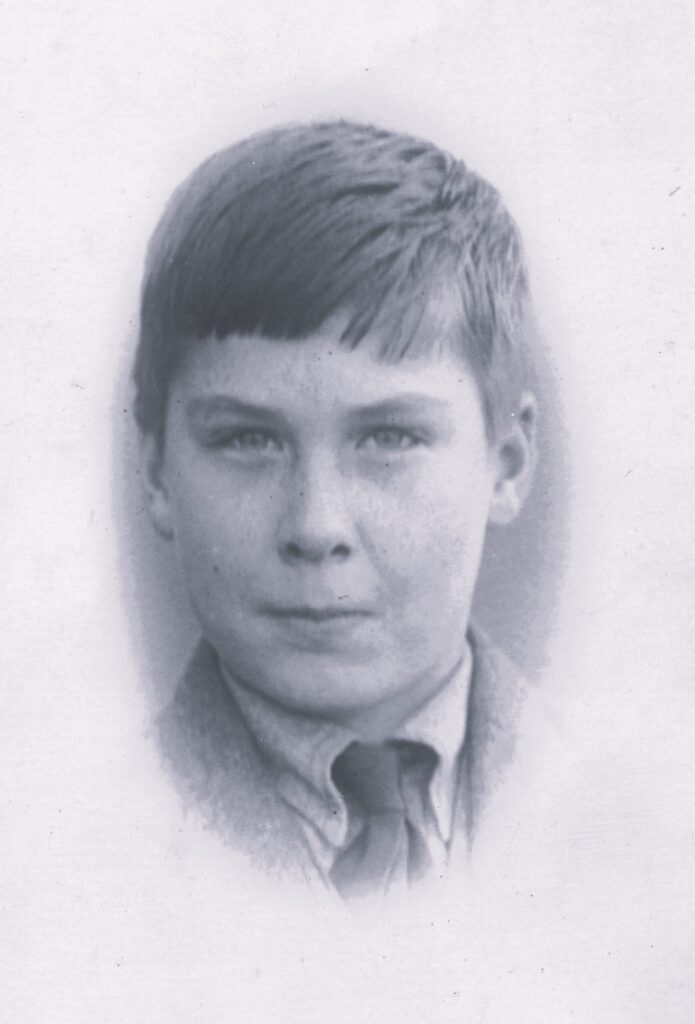
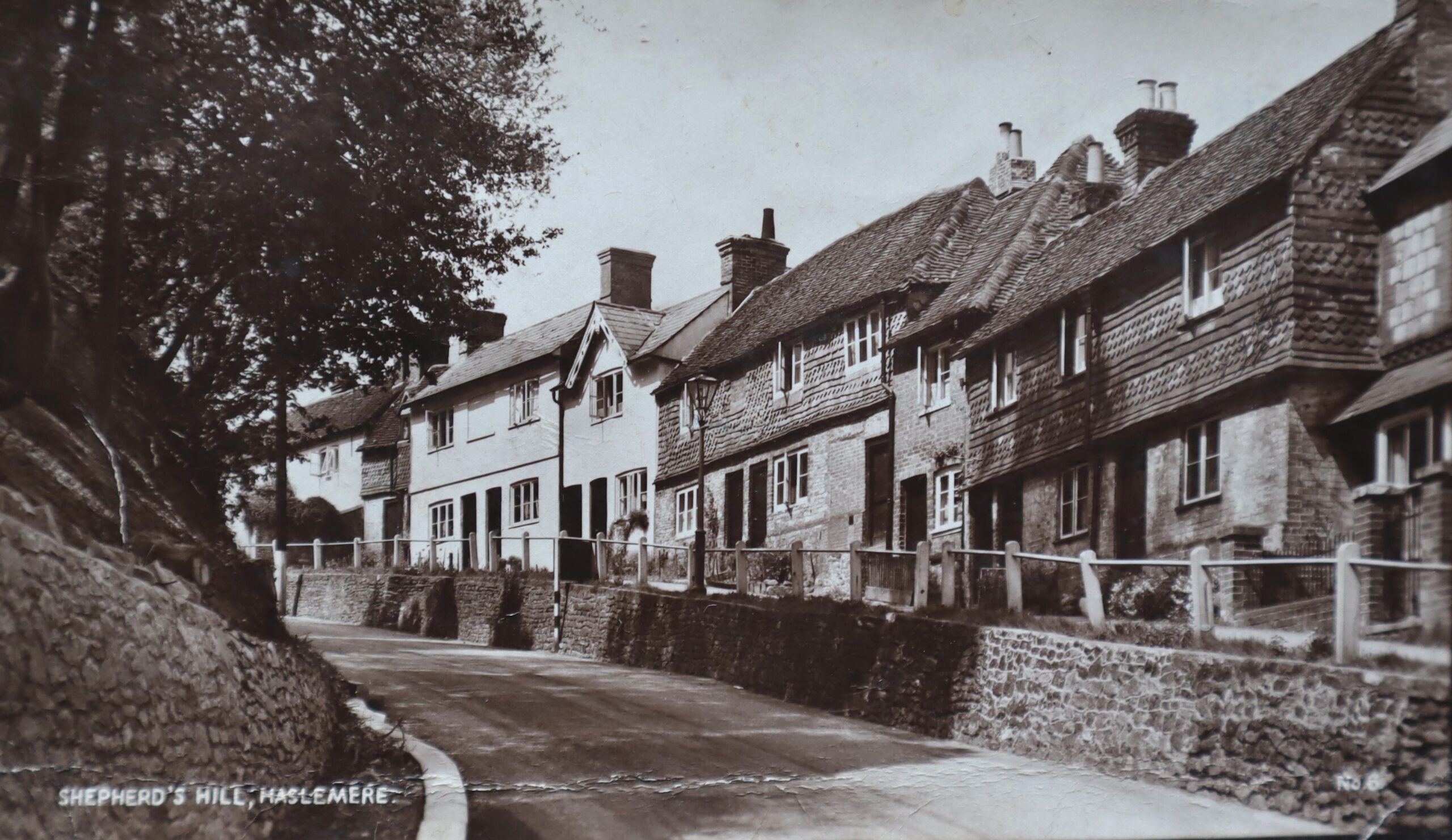
Horace Minden Burrows was born in Haslemere, Surrey, on 26th May 1917, to parents Albert and Olive. But when he was only 15-years-old, he decided to move to Kenilworth (all on his own), to find work in the engineering industry in Coventry. He lodged with family friends, Tom and Ella Taylor in Priory Road.
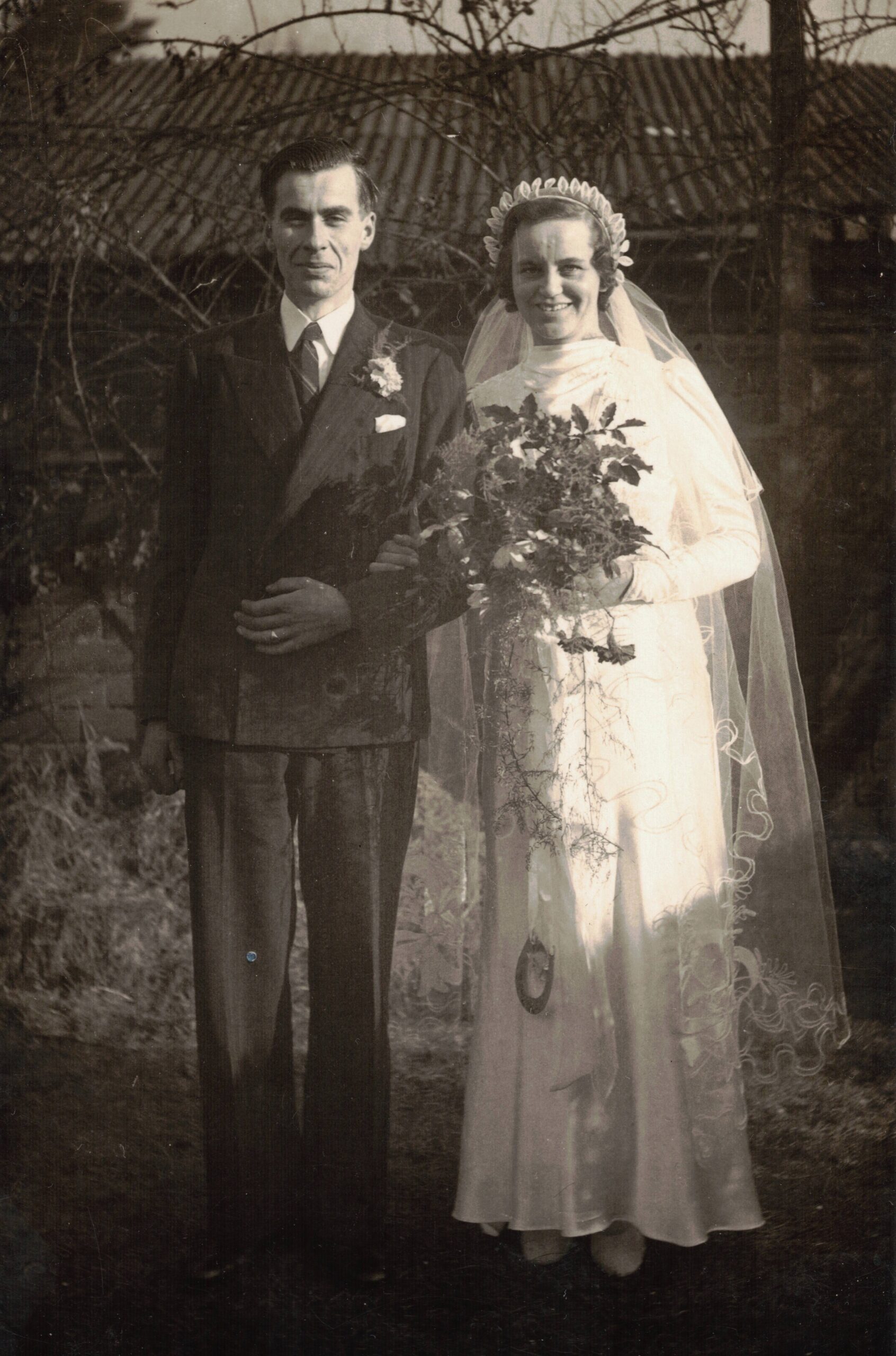
After coming to Kenilworth, he indeed found work in Coventry. On the 1939 register, he was recorded as being employed as a Motor Car Bodymaker. But WW2 was looming, and in February 1940, then aged 22, he was summoned to Coventry for a medical and was passed ‘Grade 1’. Because of his reserved occupation, he was not immediatly called-up, and was put into the reserve. Three months later, following the Dunkirk evacuation, the UK braced itself for a possible invasion, and most of the armed forces were in southern England awaiting the enemy – but luckily it never happened. In early 1942, Horace married Daisy Gould, and their first home together was in High Street. But within a year, in January 1943, Horace was finally called-up into the Royal Marines. Something big was about to happen……..
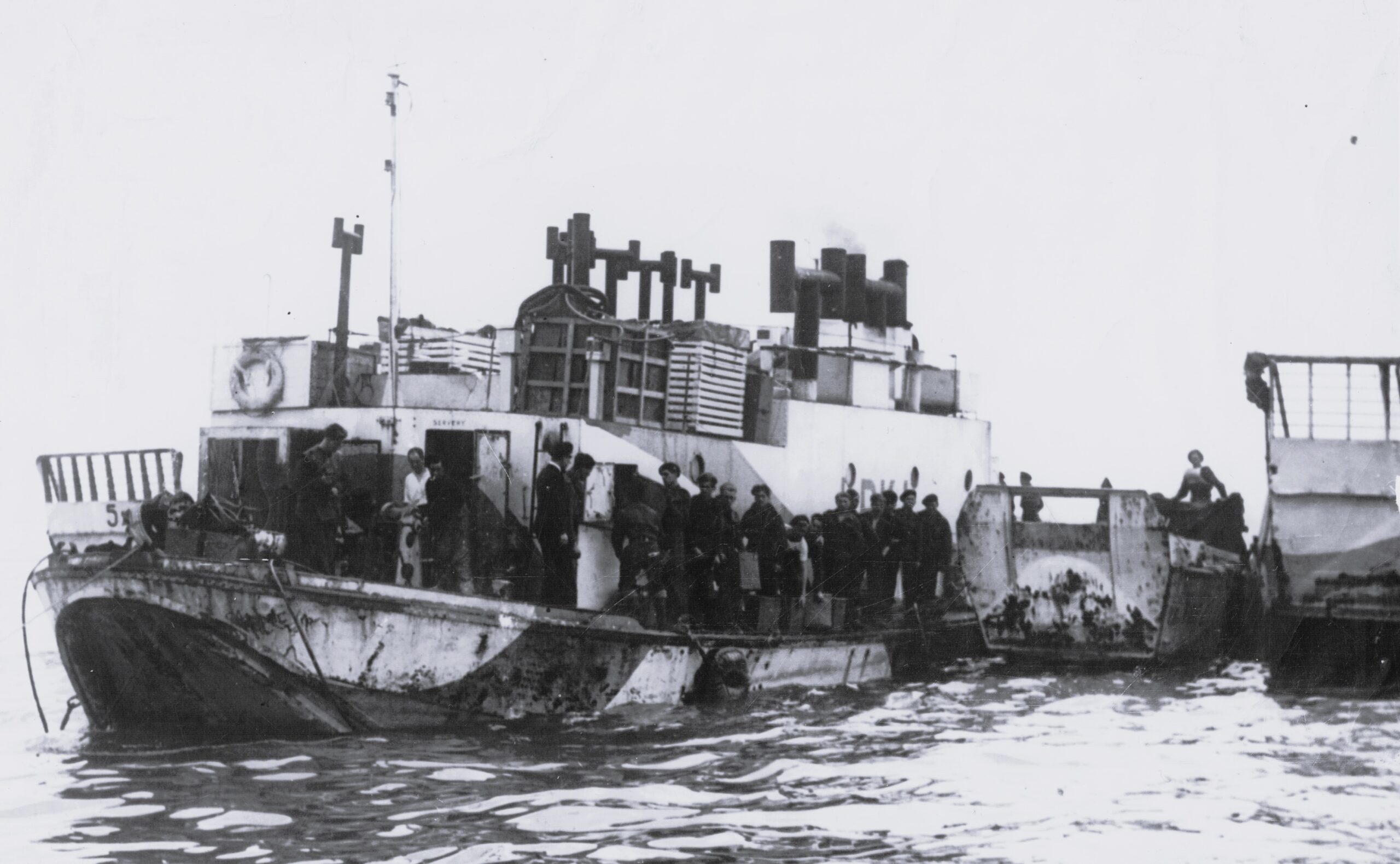
The planning of the invasion, Operation Neptune – part of Operation Overlord, had began back in 1943, which gave the combined allied forces plenty of time to prepare. It was to become the biggest seabourne invasion in history, and Horace was right in the thick-of-it.
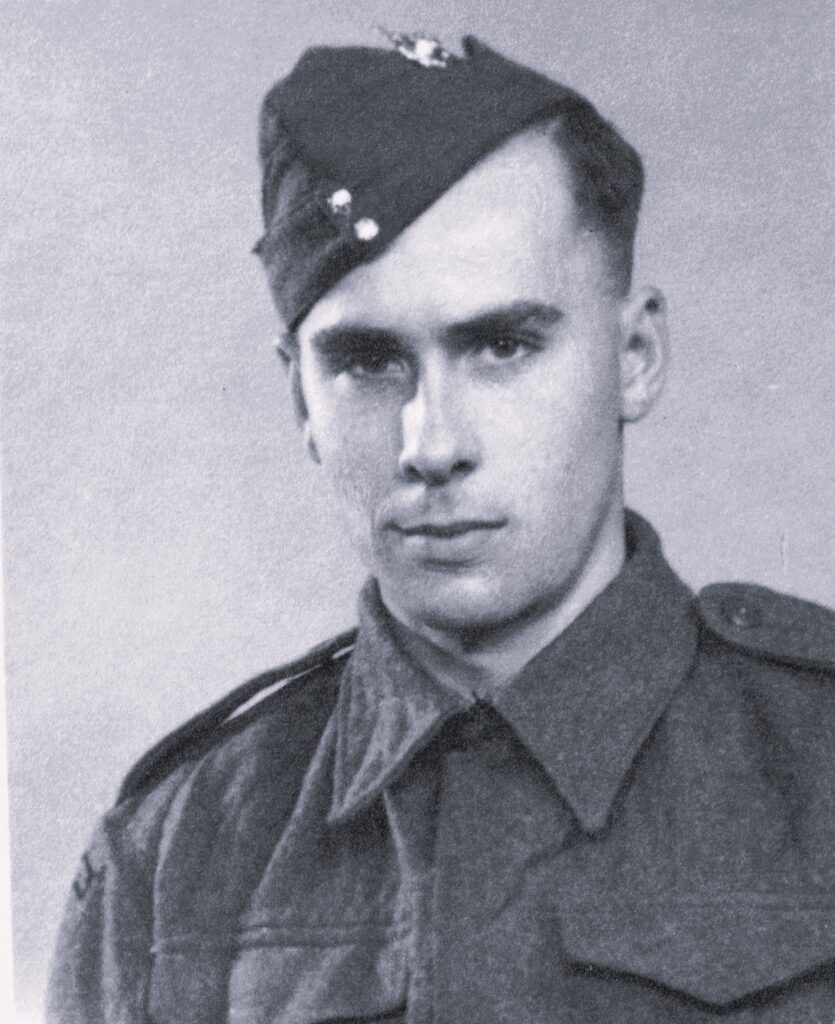
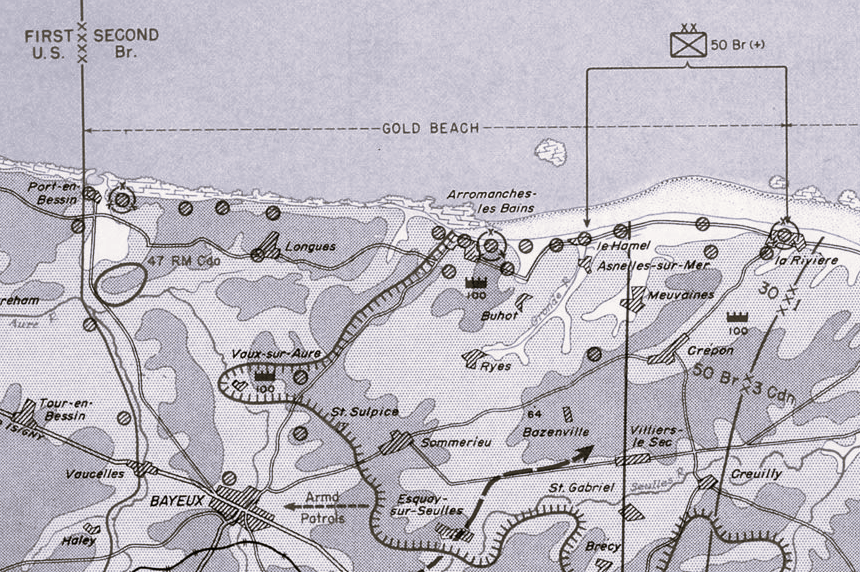
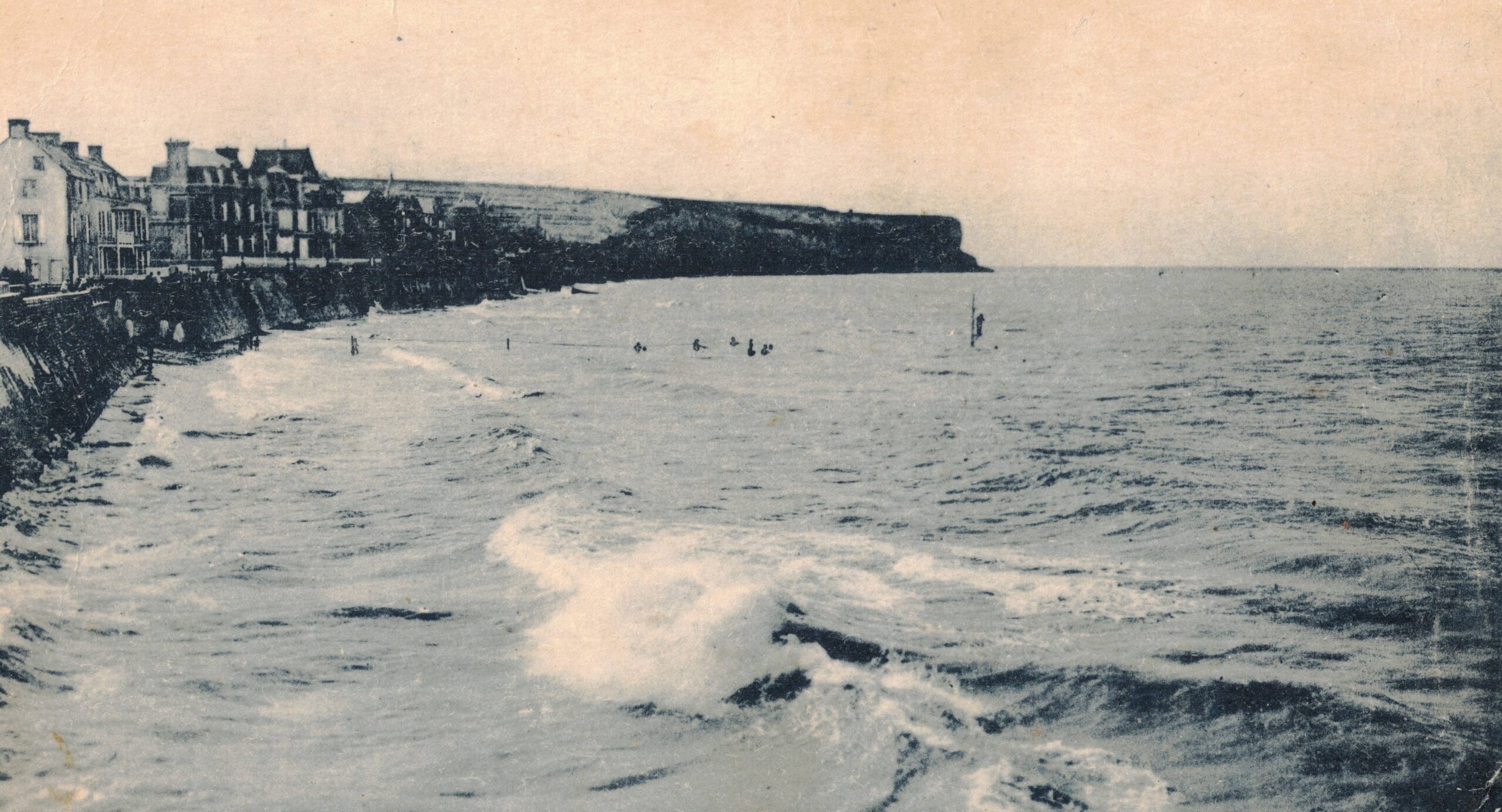
Horace was a member of the newly formed 904 Flotilla, who trained on Landing Craft Support (medium) – or, in short, the L.C.S. (M)s. These crafts had twin 0.5″ calibre machine guns and a 4″ smoke mortar (later firing high explosive bombs) plus a smoke generator. Horace became the driver of boat No. 74, and was part of the invasion of Gold Beach during D-Day, 6th June.
In 2005, he remarked; “We were giving covering fire to the amphibious ‘DD’ tanks as they approached the beaches, but it was like using a pea-shooter against those concrete gun emplacements. Our bullets just bounced off. We were shelled a bit, bombed a bit and blown about a bit, but somehow, I survived”.
One of his eardrums was burst with all the noise, so he was deaf in one ear for the rest of his life.
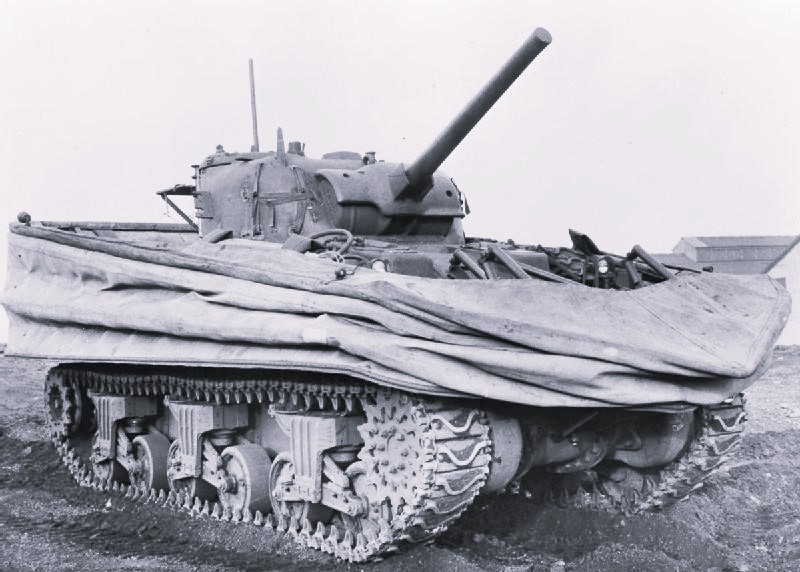
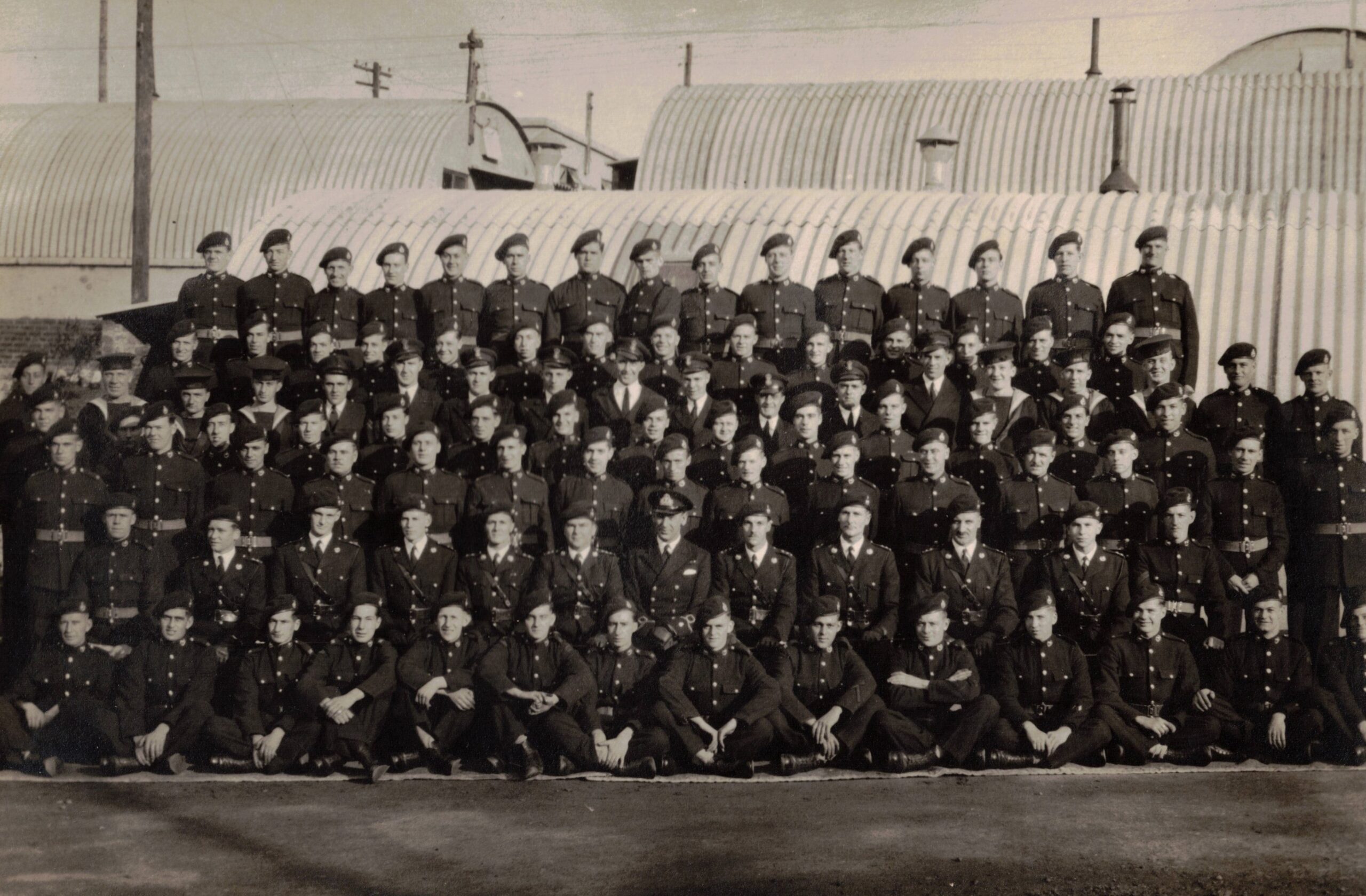
By the end of D-Day, around 25,000 troops had been landed at Gold Beach, in which over 15,000 Marines took part. Following the success of Operation Neptune, the 904th Flotilla were sent back to England and re-deployed. They headed north, and by November had arrived at H.M.S. Monck, Port Glasgow. From here, the Marines sailed to India, and then onto Burma to fight the Japanese. Horace was always forthcoming about his D-Day experiences, but the time he spent in the Burmese jungle, he would never ever talk about it, not one word…………
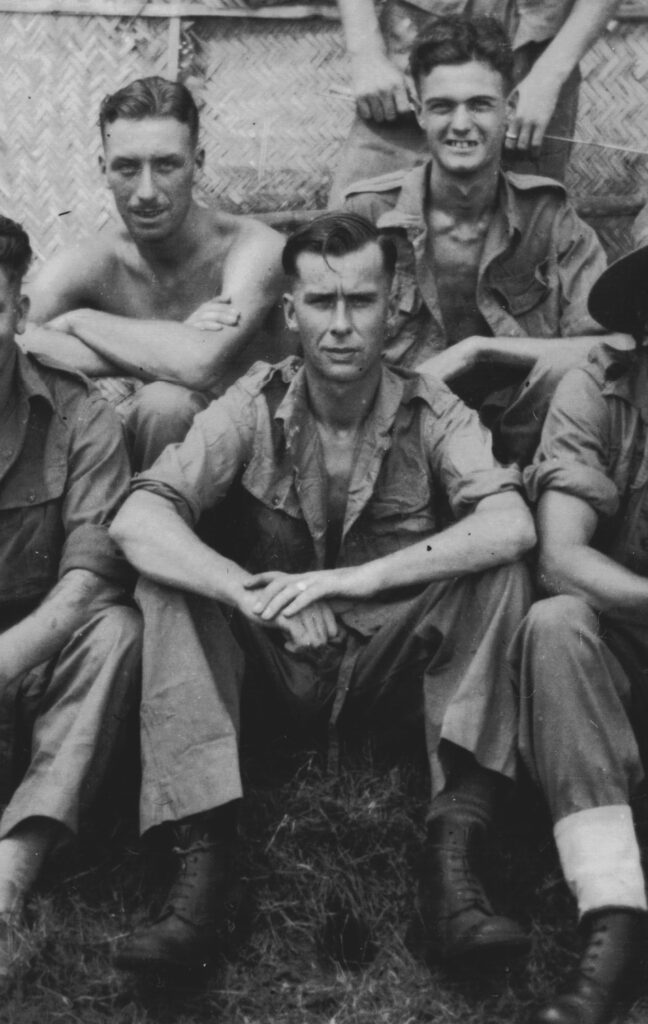
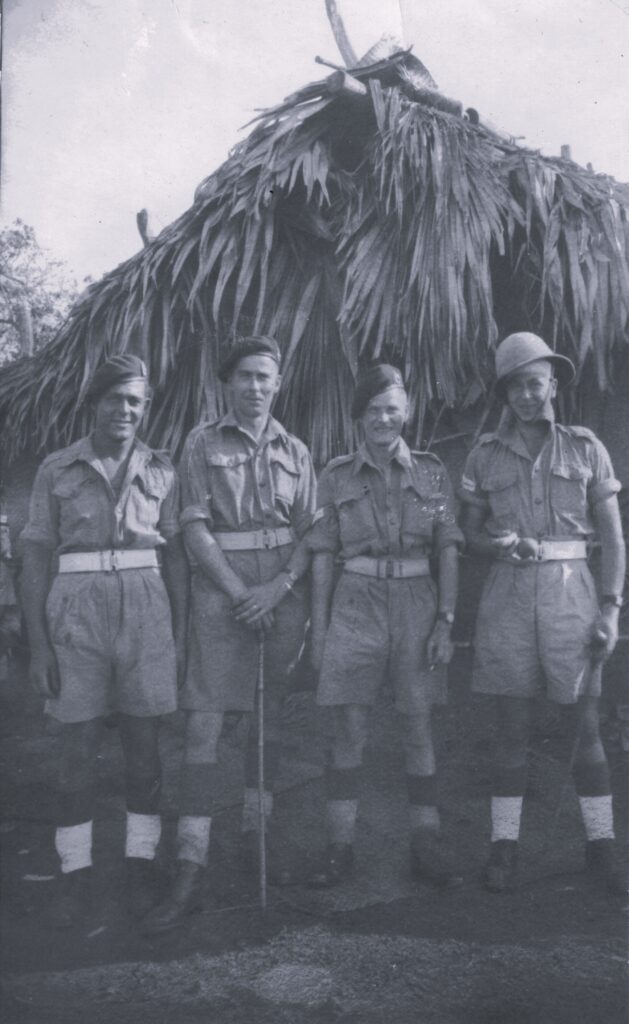
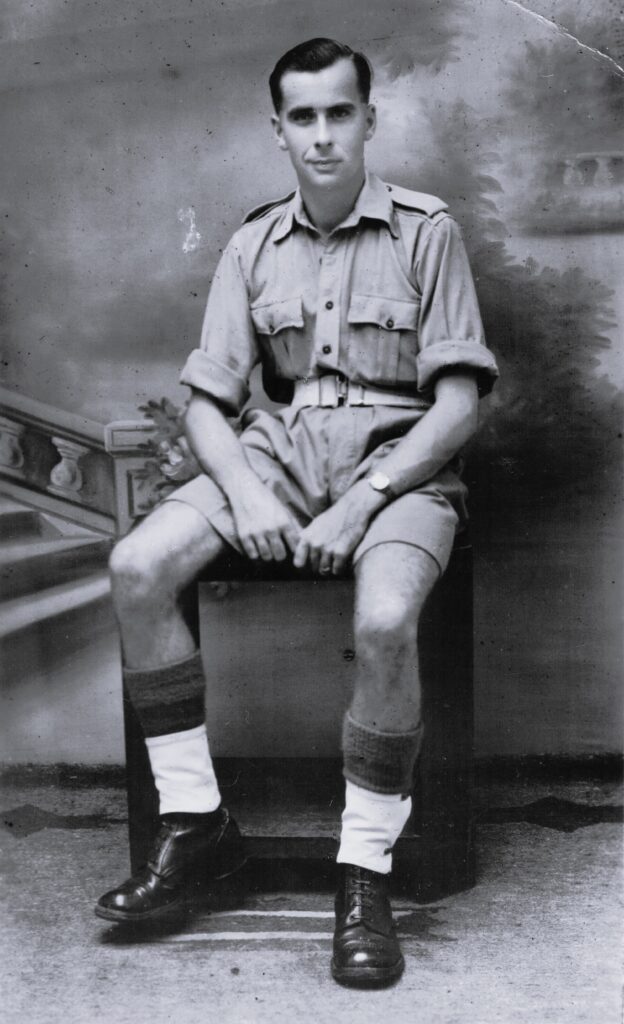
Horace was finally de-mobbed in the spring of 1946 at Plymouth. On his return home, he went back into the thriving engineering industry in Coventry. Over the years, he worked for various companies including; Rover, Carbodies and Standard Triumph. He and Daisy continued to live in High Street for a number of years, then during the 1960s they moved to Avenue Road, off Clinton Lane.
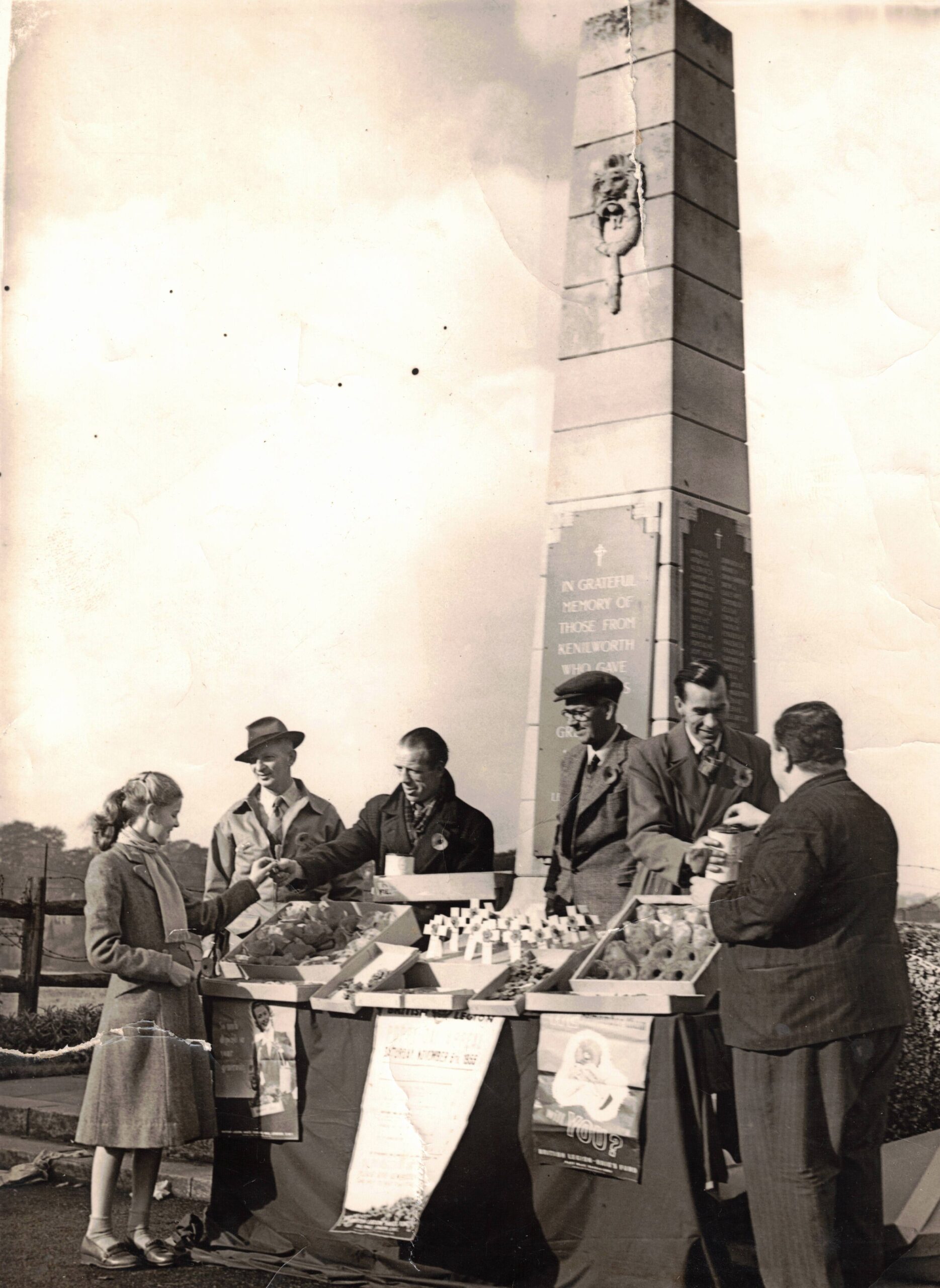
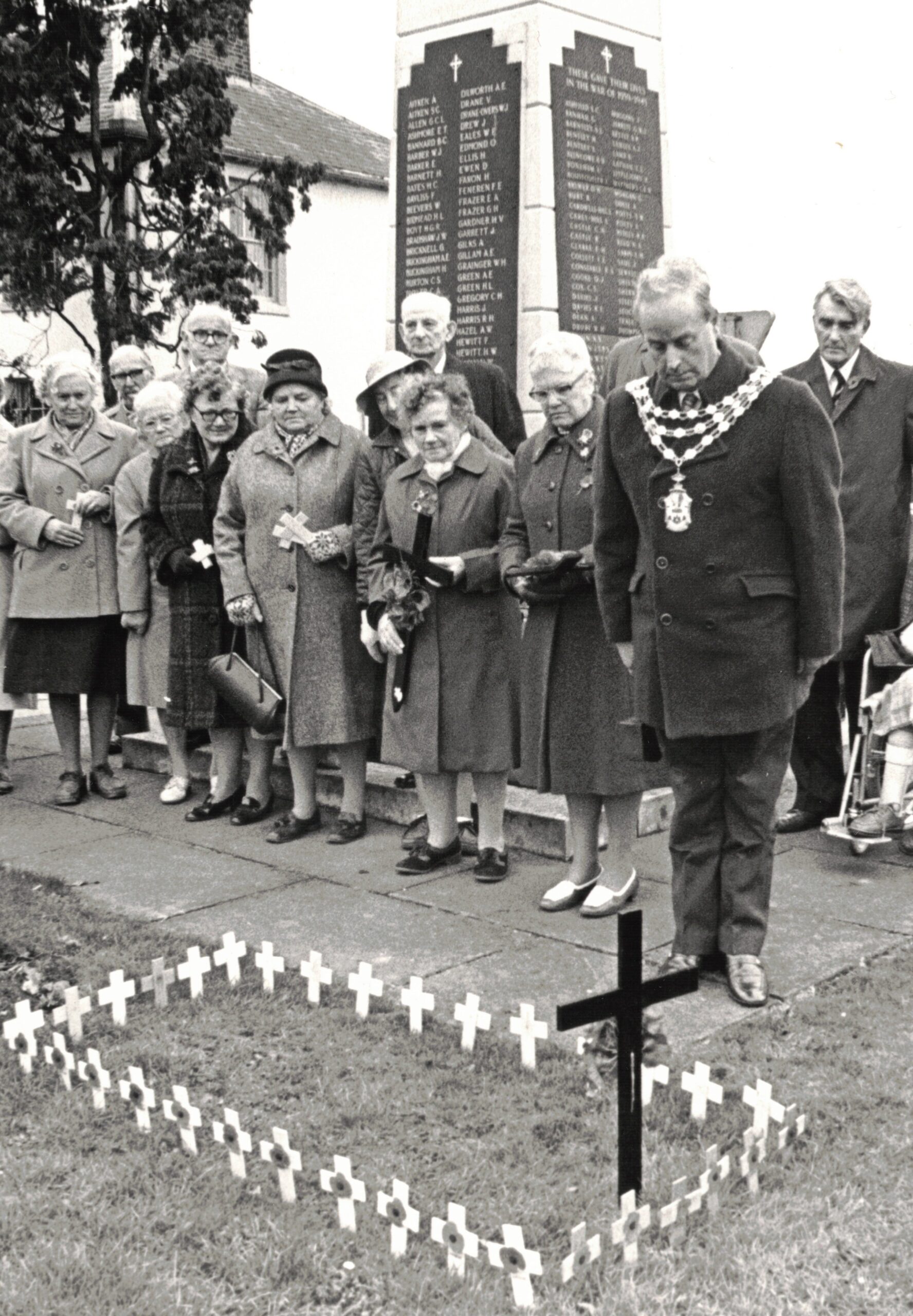
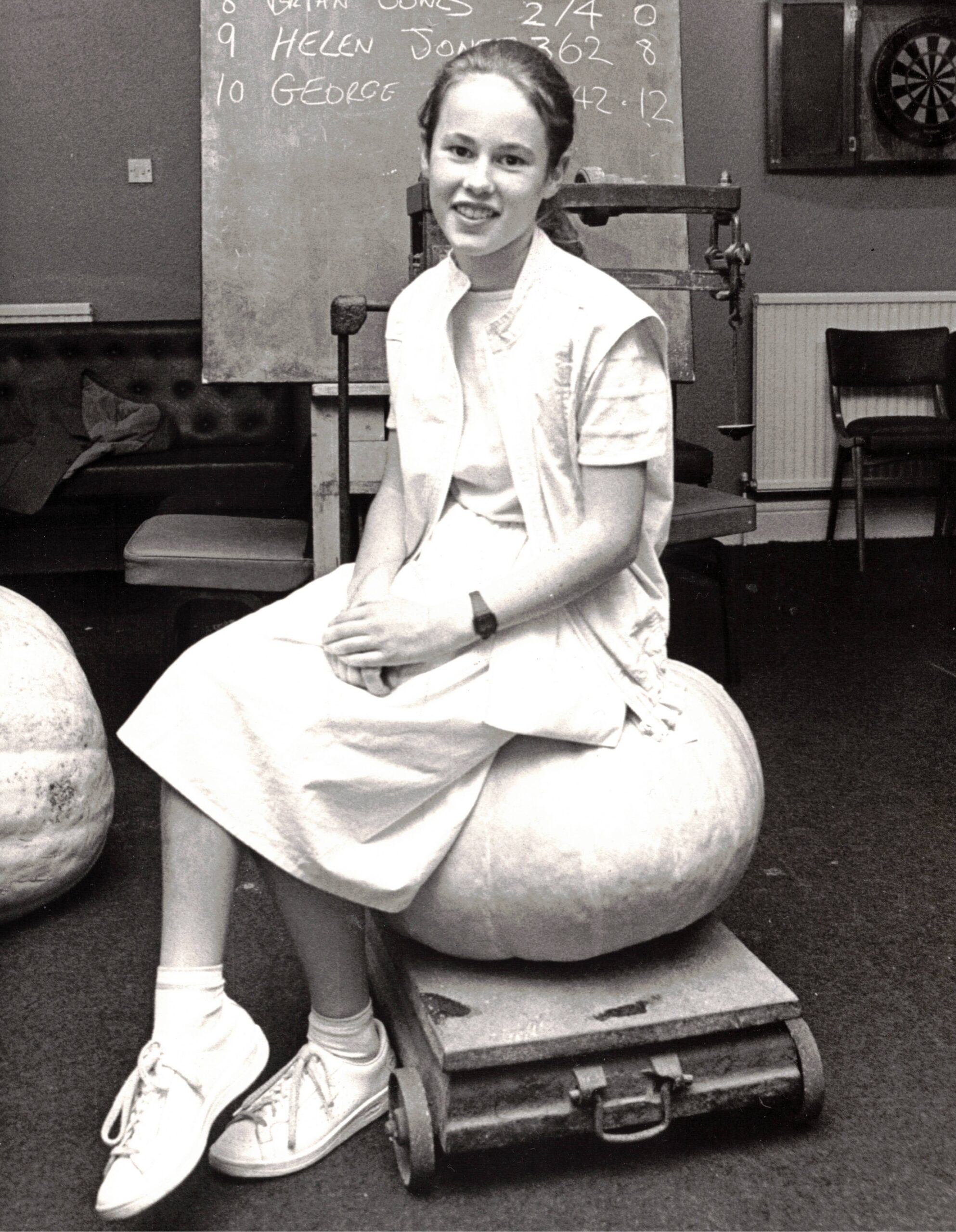



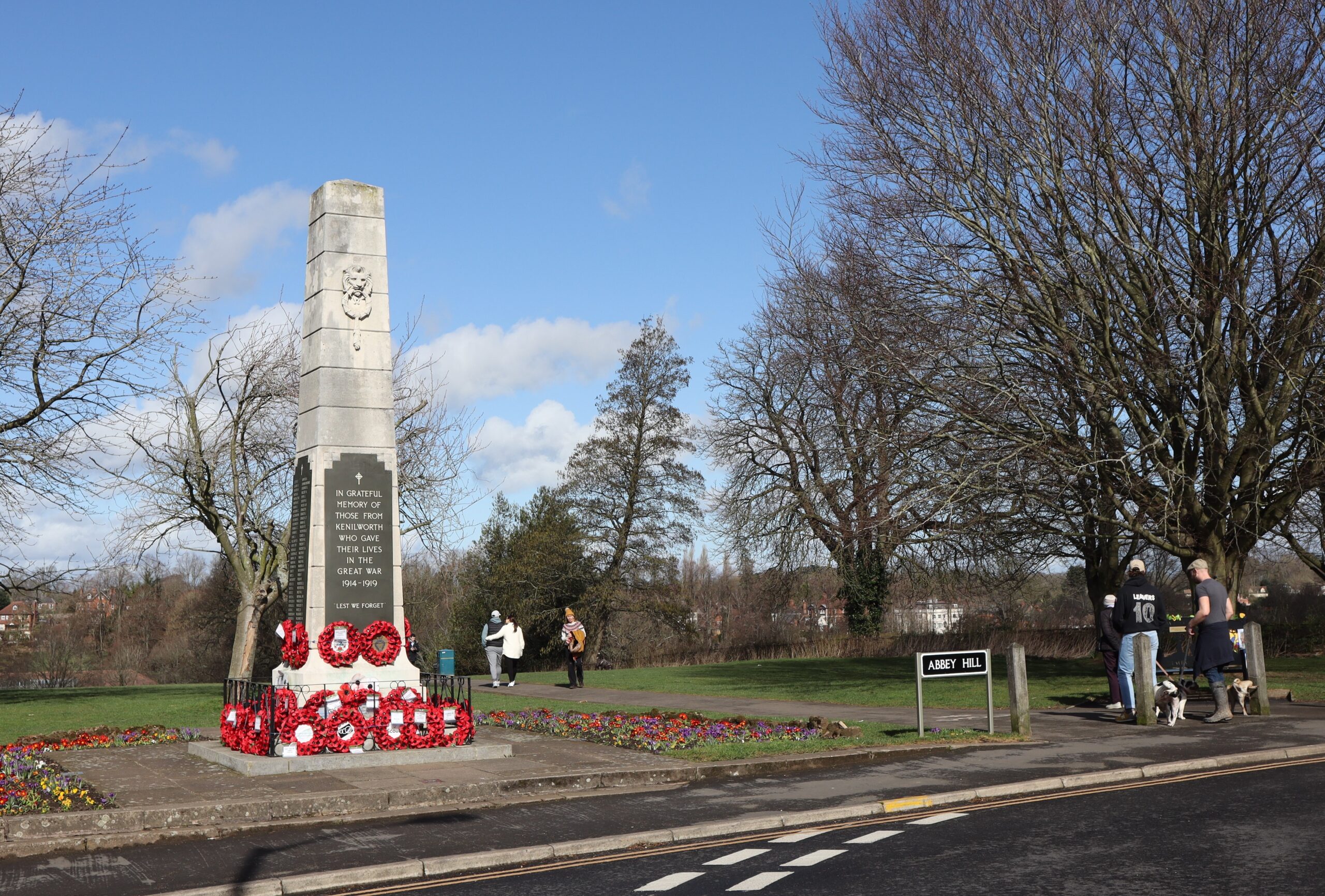
For the rest of his life he became an active member of the Kenilworth Branch of the Royal British Legion and eventually became chairman. Like all Legion members, he was dedicated to Poppy Appeal each year, which raised funds for former military personnel who were in need of help. The Kenilworth Branch would also arranged numerous events throughout the year to raise money including: dinner parties, flower shows, coffee mornings, sponsored walks, even pumpkin evenings!
CLICK ON PHOTOS TO ENLARGE
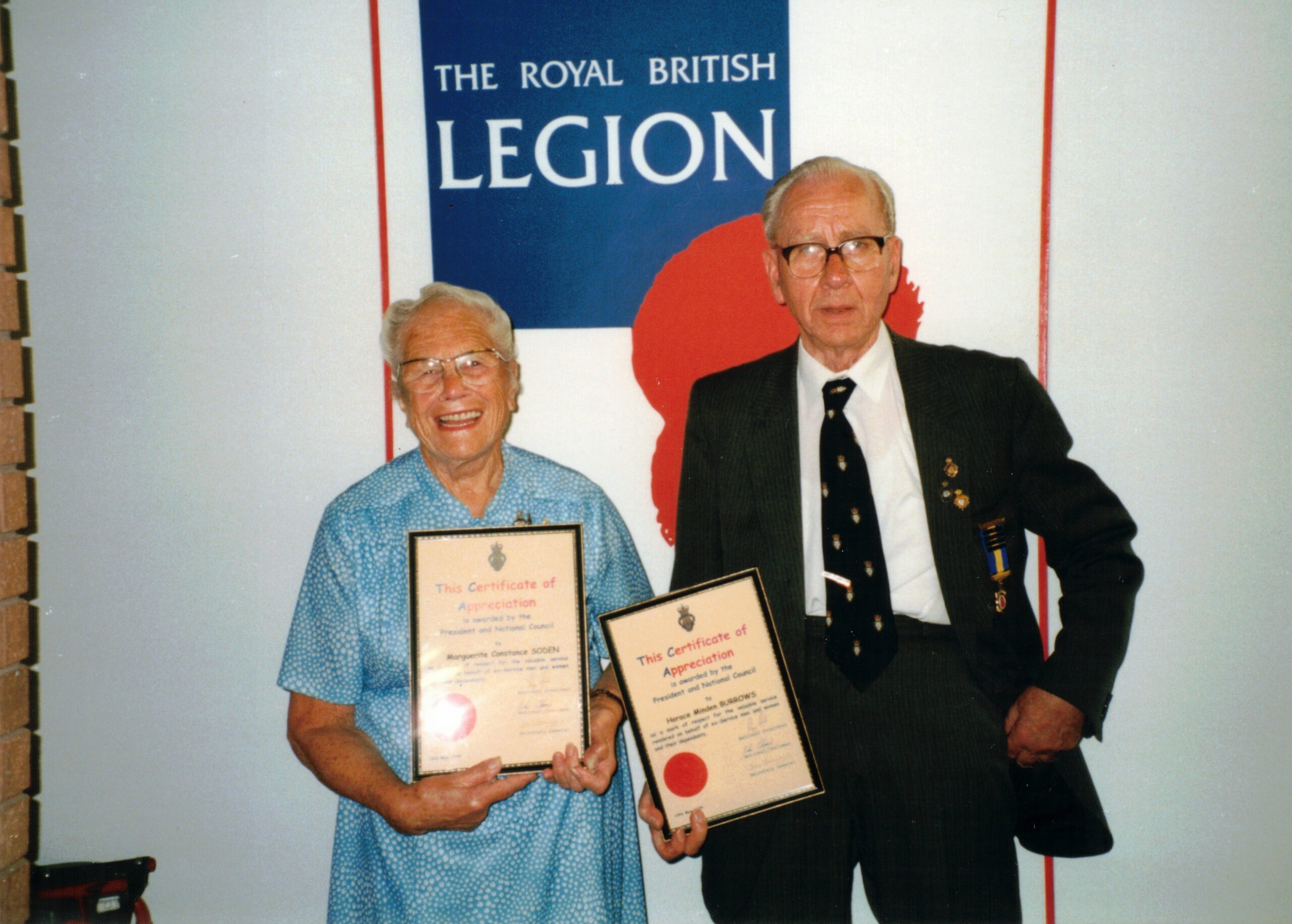
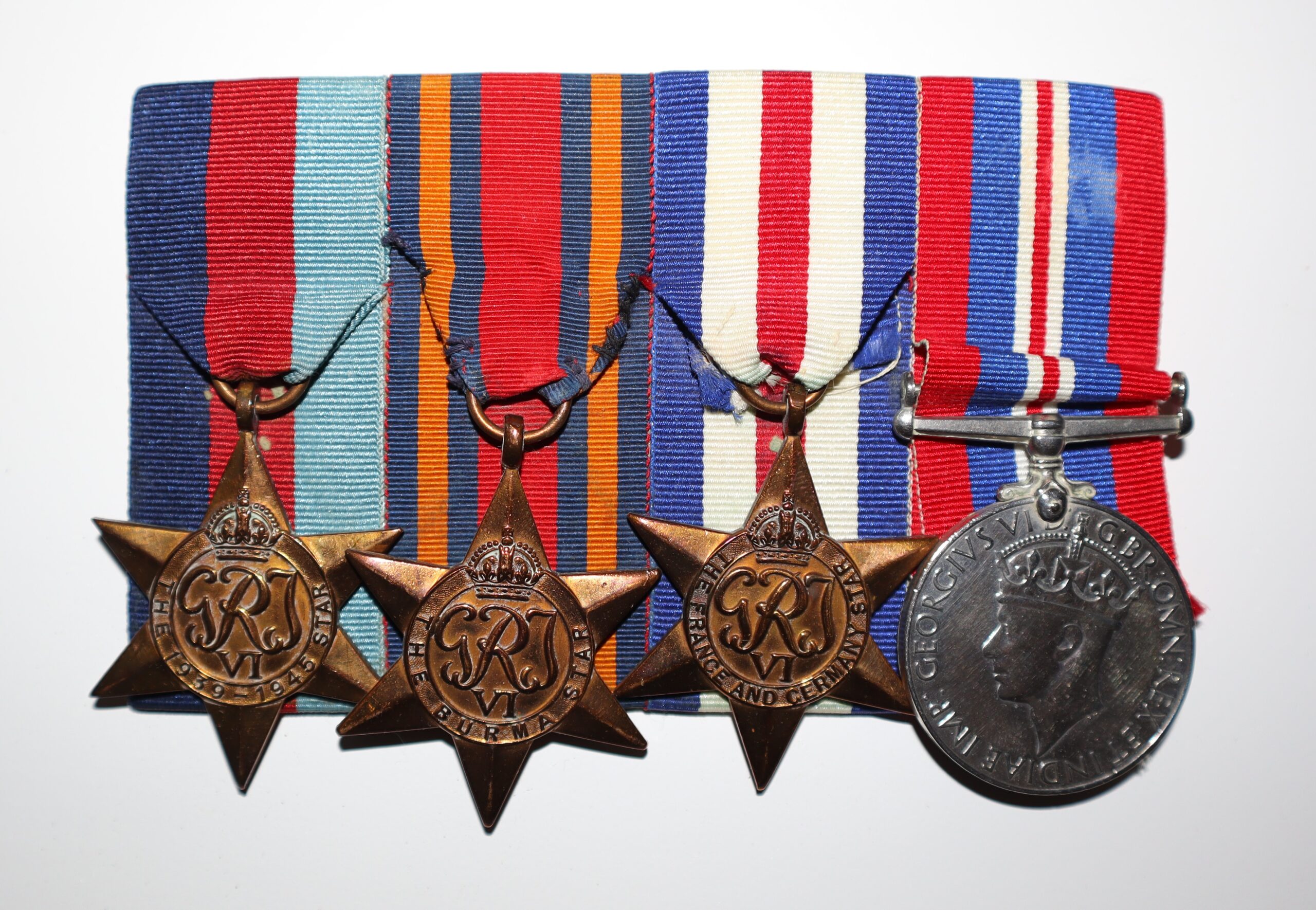
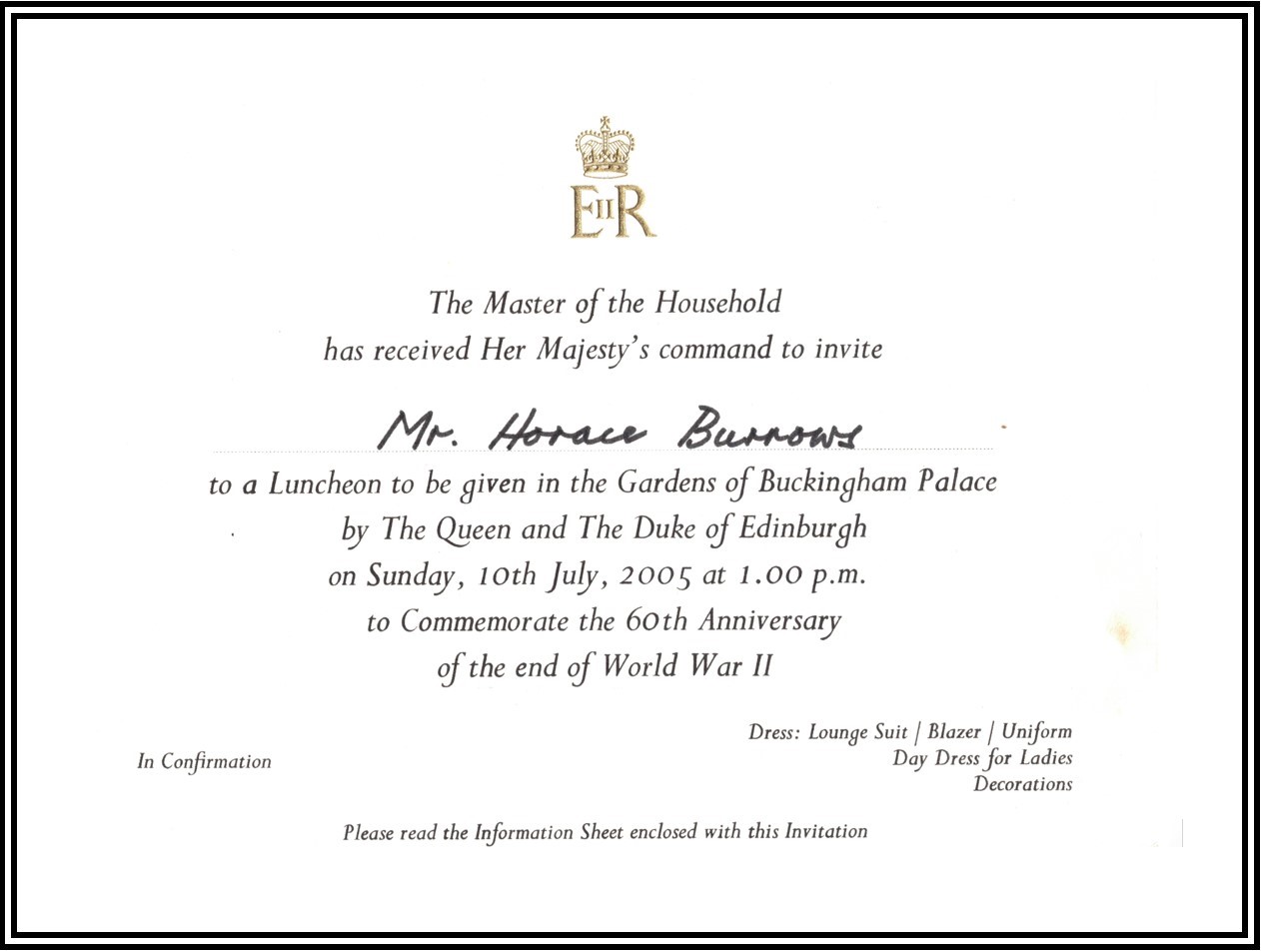
In 2005, in recognistion of his miltary service (and no doubt his British Legion work also), he was invited to lunch with Queen Elizabeth and The Duke of Edinburgh, in the back garden of Buckingham Palace. It was to commemorate the 60th year of the ending of the war, 200 people attended occasion. Numerous dignitaries were there, including members of the Royal Family and Prime Minister, Tony Blair and his wife, Cherry. There was a fly-over of various WW2 aircraft and the music was provided by The Band of the Queen’s Division, and rather fittingly for Horace, The Band of the Royal Marines. For the record, all guests had Ballotine of Salmon with herb mayonnaise salad with peas, tomatoes and asparagus, plus new potatoes. Dessert was gooseberry shortbread.
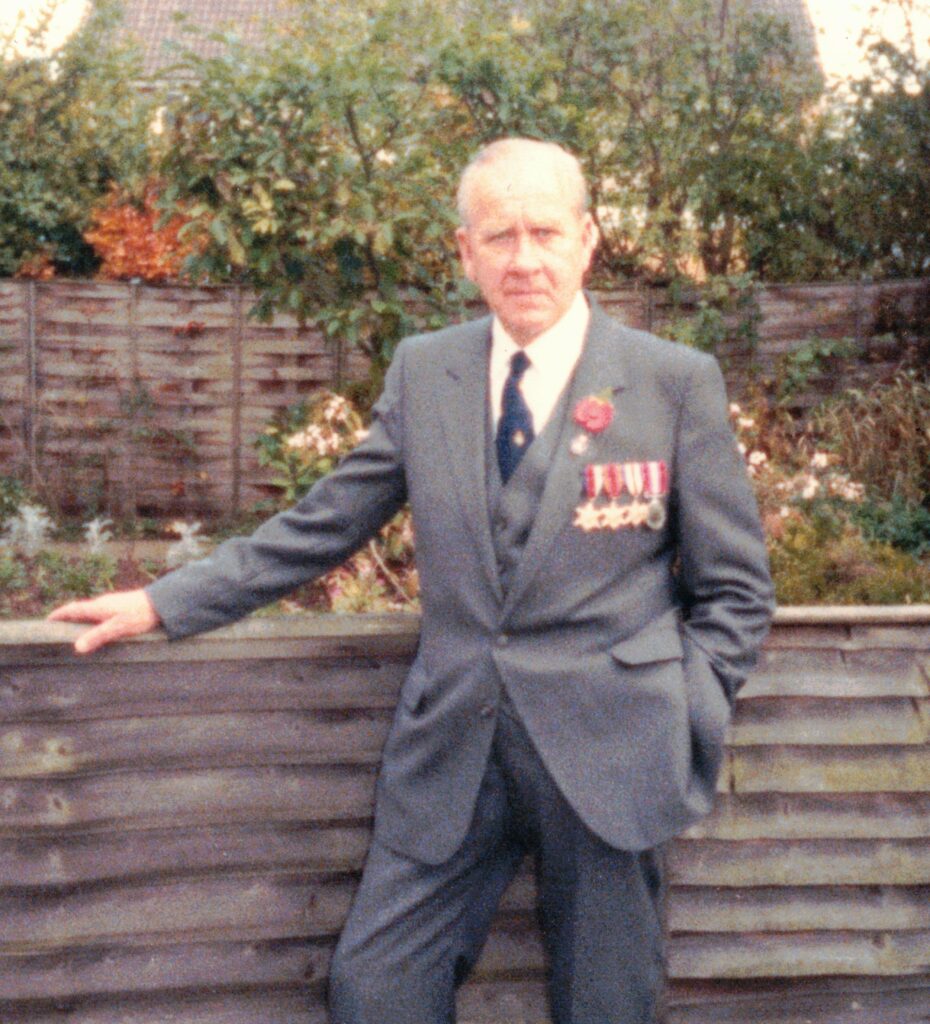
Horace Minden Burrows
26th May 1917 – 13th February 2016
A big thank you to his son John Burrows for suppling many of the above photos.
The new Parliament started life in 1801 following the dissolution of the UK and Ireland Parliament the previous year. At the time, two members represented Kenilworth, Sir John Mordaunt and Sir George Augustus William Shuckburgh-Evelyn.
Sir George, the 6th Baronet was a clever mathematician and astronamer. He had a private observatory installed with the self-named Shuckburgh telescope. Shuckburgh, a crater on the moon is named after him. As if his birth name wasn’t long-winded enough, he later added a second surname of Evelyn, by act of parliament in 1794. The surname being the maiden name of his second wife.
In census of 1821, Warwickshire had a population of 274,392, and was a much larger area than it is today with cities of Coventry and Birmingham included within its boundaries. These cities are now part of the ‘West Midlands County’. But very few people, more notably women, didn’t have the vote.
In 1832, Warwickshire was divided into two new divisions, north and south Warwickshire, with Kenilworth falling into the Southern division, but each constituency still retained two MPs. At this period the county’s population had increased to over 336,000, but in 1836 the official number of registered voters was only 3,997. The two-member system continued until 1885 when Warwickshire was split into four divisions. Kenilworth was incorporated into the Rugby Division.
After the First World War, constituency boundaries were again being changed by the ever popular Boundary Commissioners, who had the task of redistributing parliamentary seats throughout the country. Not surprisingly there was local criticism regarding these changes. (No change there). So, after 33 years of being in the Rugby Division, Kenilworth was now a part of Warwick & Leamington. The population within this new constituency was just over 85,000. But the first two general elections of this new division (1918 and 1922) went uncontested with Ernest Pollock (Con) being elected unopposed. When the constituency finally had a poll, Anthony Eden took the seat with a majority of 5,203, polling 16,337 votes. The turnout was good at 73%. Eden (later Sir), would stand for a total of 32 years before ill health forced him to stand down, he is Kenilworth’s longest serving MP.
Conservative John Hobson (later Sir), went on to be elected in the subsequent 1957 by-election to replace Eden. During his 10 years representing the town he first became Solicitor General and then Attorney General. He was a strong advocate of the restoration of hanging, he died in London in 1967.
One tragic death of a Kenilworth MP was that of Gilbert Leigh. In 1884, whilst on a hunting expedition in Wyoming, USA, he fell to his death down a canyon. His body was not located for a week. He had been elected at the 1880 General Election when the constituency was called South Warwickshire. He was only 33.
It wasn’t until 1983, following boundary changes again, that Kenilworth’s name first appeared in the constituency name – Rugby & Kenilworth. After further boundary changes in 2010, the constituency of Kenilworth & Southam was created.
In 1964, the town of Kenilworth had 11,219 registered voters up from 8,912 in the 1959 election.
In 2015, the electorate in Kenilworth & Southam was 63,957. By 2019, this had risen to 68,154. Slight boundary changes then took place prior to the 2024 election, which increased the electorate to 71,451.
| Year | Member (s) | Votes | Majority | Constituency Name |
| 1801 | Sir John Mordaunt (Con) Sir George Shuckburgh-Evelyn (Con) | both unopposed | – | Warwickshire |
| 1802 | Dugdale Stratford Dugdale (Whig) Sir George Shuckburgh-Evelyn (Con) | both unopposed | – | Warwickshire |
| 1804 (by-elec) | Dugdale Stratford Dugdale (Whig) —————————————- Sir Charles Mordaunt (Con) | standing member ——————- unopposed | – | Warwickshire |
| 1806 | Dugdale Stratford Dugdale (Whig) Sir Charles Mordaunt (Con) | both unopposed | – | Warwickshire |
| 1807 | Dugdale Stratford Dugdale (Whig) Sir Charles Mordaunt (Con) | both unopposed | – | Warwickshire |
| 1812 | Dugdale Stratford Dugdale (Whig) Sir Charles Mordaunt (Con) | both unopposed | – | Warwickshire |
| 1818 | Dugdale Stratford Dugdale (Whig) Sir Charles Mordaunt (Con) | both unopposed | – | Warwickshire |
| 1820 (by-elec) | Dugdale Stratford Dugdale (Whig) ————————————– Sir Francis Lawley (Whig) | standing member —————– 2153 | – ——– 1184 | Warwickshire |
| 1826 | Dugdale Stratford Dugdale (Whig) Sir Francis Lawley (Whig) | both unopposed | – | Warwickshire |
| 1830 | Dugdale Stratford Dugdale (Whig) Sir Francis Lawley (Whig) | both unopposed | – | Warwickshire |
| 1831 | Sir Francis Lawley (Whig) Sir Grey Skipwith (Lib) | both unopposed | – | Warwickshire |
| 1832 | Sir Grey Skipwith (Lib) ———————————— Sir George Phillips (Lib) | 1396 ——————- 1121 | 288 ——— 13 | South Warwickshire |
| 1835 | Sir John Mordaunt (Con) Edward Ralph Charles Sheldon (Lib) | both unopposed | – | South Warwickshire |
| 1836 (by-elec) | Sir John Mordaunt (Con) ———————————— Evelyn John Shirley (Con) | standing member —————– 1872 | – ———- 513 | South Warwickshire |
| 1837 | Sir John Mordaunt (Con) Evelyn John Shirley (Con) | both unopposed | – | South Warwickshire |
| 1841 | Sir John Mordaunt (Con) Evelyn John Shirley (Con) | both unopposed | – | South Warwickshire |
| 1845 (by-elec) | Evelyn John Shirley (Con) ————————————- George Greville (Con) | standing member ——————- unopposed | – | South Warwickshire |
| 1847 | Evelyn John Shirley (Con) George Greville (Con) | both unopposed | – | South Warwickshire |
| 1849 (by-elec) | George Greville (Con) ————————————- Heneage Finch (Con) | standing member ——————- unopposed | – | South Warwickshire |
| 1852 | George Greville (Con) Heneage Finch (Con) | both unopposed | – | South Warwickshire |
| 1853 (by-elec) | Heneage Finch (Con) ————————————– Evelyn Philip Shirley (Con) | standing member ——————- unopposed | – | South Warwickshire |
| 1857 | Evelyn Philip Shirley (Con) Edward Bolton King (Whig) | both unopposed | – | South Warwickshire |
| 1859 | Evelyn Philip Shirley (Con) Sir Charles Mordaunt (Con) | both unopposed | – | South Warwickshire |
| 1865 | Henry Wise (Con) Sir Charles Mordaunt (Con) | 1585 1517 | 264 196 | South Warwickshire |
| 1868 | Sir Henry Wise (Con) Sir John Hardy (Con) | 2581 2501 | 109 29 | South Warwickshire |
| 1874 | Hugh de Grey Seymour (Con) Sir John Eardley-Wilmot (Con) | 2832 2301 | 662 631 | South Warwickshire |
| 1880 | Sir John Eardley-Wilmot (Con) Gilbert Leigh (Lib) | 2864 2650 | 157 43 | South Warwickshire |
| 1884 (by-elec) | Sir John Eardley-Wilmot (Con) ————————————— Sampson Samuel Lloyd (Con) | standing member ——————- 3095 | – ———- 1176 | South Warwickshire |
| 1885 | Henry Payton Cobb (Lib) | 4877 | 1344 | Rugby |
| 1886 | Henry Payton Cobb (Lib) | 4006 | 478 | Rugby |
| 1892 | Henry Payton Cobb (Lib) | 4519 | 688 | Rugby |
| 1895 | Richard Verney (Con) | 4354 | 284 | Rugby |
| 1900 | Corrie Grant (Lib) | 4349 | 219 | Rugby |
| 1906 | Corrie Grant (Lib) | 5181 | 272 | Rugby |
| 1910 (Jan) | John Baird (Con) | 6191 | 1205 | Rugby |
| 1910 (Dec) | John Baird (Con) | 5712 | 771 | Rugby |
| 1918 | Sir Ernest Pollock (Con) | unopposed | – | Warwick & Leamington |
| 1922 | Sir Ernest Pollock (Con) | unopposed | – | Warwick & Leamington |
| 1923 | Anthony Eden (Con) | 16377 | 5203 | Warwick & Leamington |
| 1924 | Anthony Eden (Con) | 19575 | 6609 | Warwick & Leamington |
| 1929 | Anthony Eden (Con) | 23045 | 5460 | Warwick & Leamington |
| 1931 | Anthony Eden (Con) | 38584 | 29323 | Warwick & Leamington |
| 1935 | Anthony Eden (Con) | 35746 | 24816 | Warwick & Leamington |
| 1945 | Anthony Eden (Con) | 37110 | 17634 | Warwick & Leamington |
| 1950 | Anthony Eden (Con) | 27353 | 8953 | Warwick & Leamington |
| 1951 | Anthony Eden (Con) | 28282 | 9803 | Warwick & Leamington |
| 1955 | Sir Anthony Eden (Con) | 29979 | 13466 | Warwick & Leamington |
| 1957 (by-elec) | John Hobson (Con) | 24928 | 2157 | Warwick & Leamington |
| 1959 | John Hobson (Con) | 32513 | 13079 | Warwick & Leamington |
| 1964 | Sir John Hobson (Con) | 29749 | 10884 | Warwick & Leamington |
| 1966 | Sir John Hobson (Con) | 28918 | 8697 | Warwick & Leamington |
| 1968 (by-elec) | Dudley Smith (Con) | 28914 | 21922 | Warwick & Leamington |
| 1970 | Dudley Smith (Con) | 36994 | 15369 | Warwick & Leamington |
| 1974 (Feb) | Dudley Smith (Con) | 30167 | 11293 | Warwick & Leamington |
| 1974 (Oct) | Dudley Smith (Con) | 27721 | 8245 | Warwick & Leamington |
| 1979 | Dudley Smith (Con) | 35925 | 16102 | Warwick & Leamington |
| Year | Member | Votes | Majority | Constituency Name |
| 1983 | James Pawsey (Con) | 29622 | 14241 | Rugby & Kenilworth |
| 1987 | James Pawsey (Con) | 31485 | 16264 | Rugby & Kenilworth |
| 1992 | James Pawsey (Con) | 34110 | 13247 | Rugby & Kenilworth |
| 1997 | Andy King (Lab) | 26356 | 495 | Rugby & Kenilworth |
| 2001 | Andy King (Lab) | 24221 | 2877 | Rugby & Kenilworth |
| 2005 | Jeremy Wright (Con) | 23447 | 1556 | Rugby & Kenilworth |
| 2010 | Jeremy Wright (Con) | 25945 | 12552 | Kenilworth & Southam |
| 2015 | Jeremy Wright (Con) | 28474 | 21002 | Kenilworth & Southam |
| 2017 | Jeremy Wright (Con) | 31207 | 18086 | Kenilworth & Southam |
| 2019 | Jeremy Wright (Con) | 30351 | 20353 | Kenilworth & Southam |
| 2024 | Sir Jeremy Wright (Con) | 19395 | 6574 | Kenilworth & Southam |
