SynopsiSynopsis
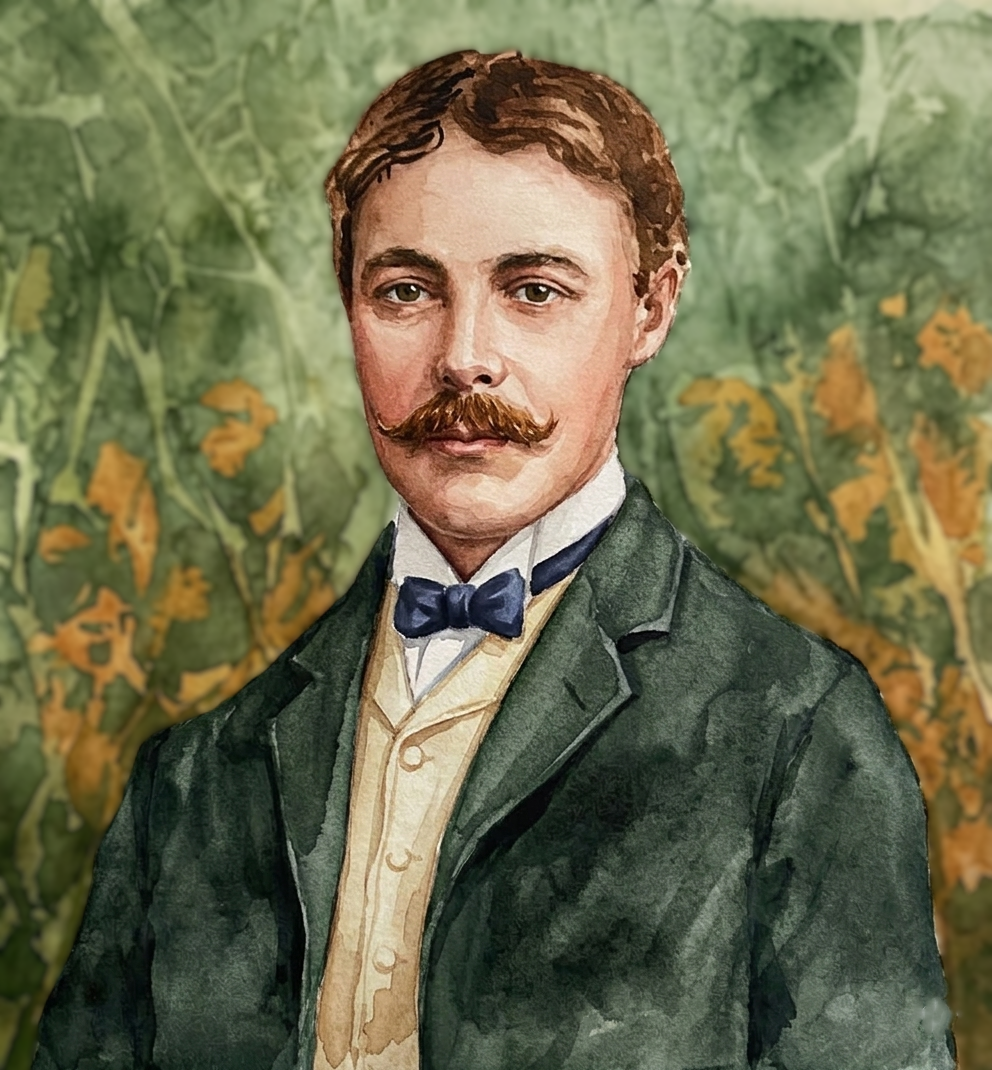
(artists impression by the late Cyril Hobbins)
Kenilworth MP, Gilbert Henry Chandos Leigh was the eldest son of Lord William Leigh, 2nd Baron Leigh, and Lady Caroline Amella Grosvener, daughter of Richard Grosvenor, 2nd Marquess of Westminster.
Born in 1851, at Marylebone, London,1 he was educated at Harrow, and Magdalene College, Cambridge. He had six surviving siblings: Margaret, Francis, Rupert, Agnes and Rowland and Mary.
Leigh had been elected to Westminster as a Liberal in the South Warwickshire Division at the 1880 General Election, a contest he was not expected to be elected. Indeed, he was the first Liberal to be elected to the seat in 45 years. He came second to conservative John Eardley-Wilmot by 94 votes, this was at the time when the constituency had two MP’s.
He died age 33, in September 1884, whilst on an expedition in Wyoming, USA, he fell to his death while hunting. He was un-married and childless.
Prior to his death, he had intermated that he would not be standing for re-election in the 1885 General Election. This was apparently due to his views not being in-line with the local Liberals, the issues regarding the annexation of Egypt may also have been one of the reasons.
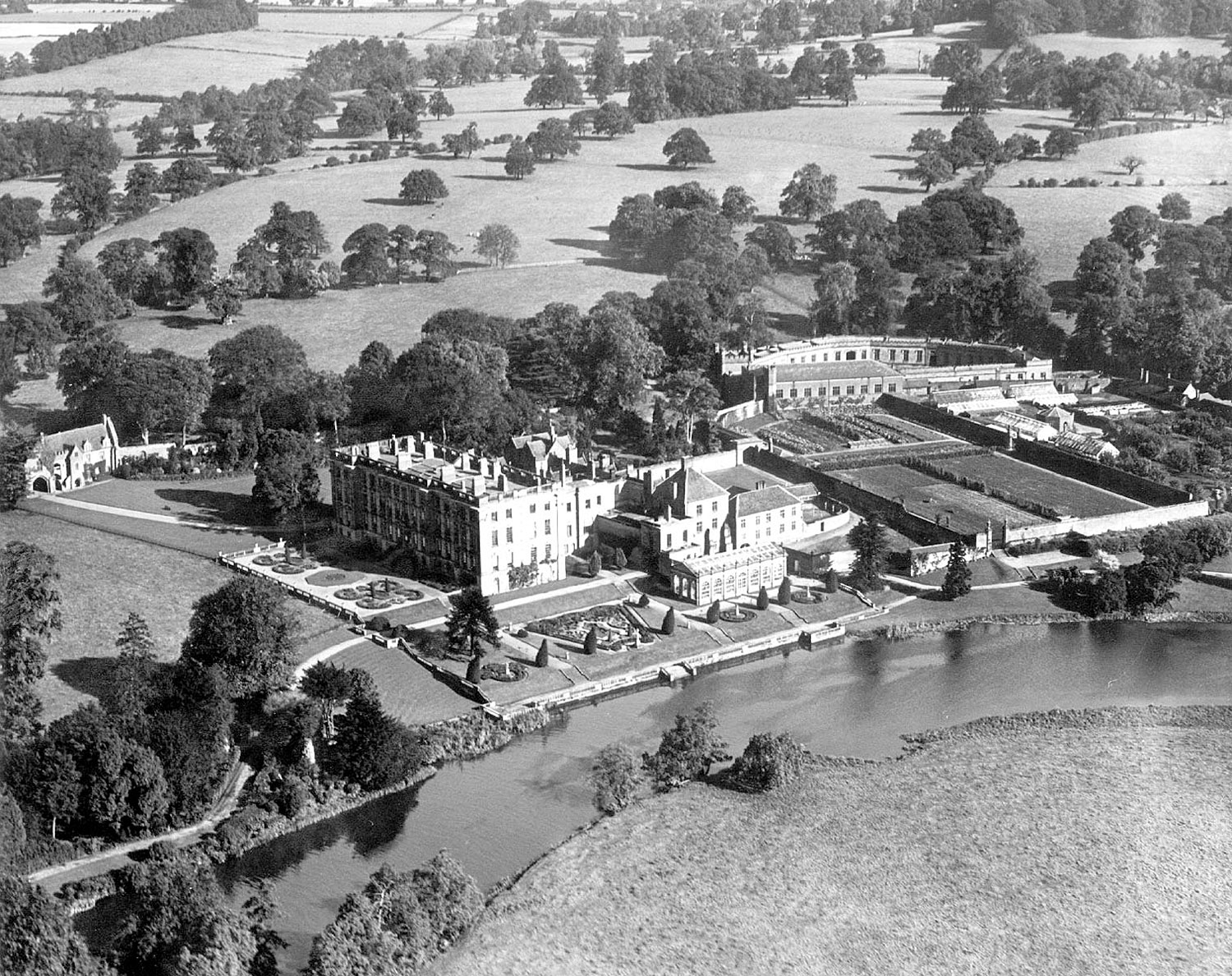
The Leigh Estate, Stoneleigh Abbey, Warwickshire, England.
(Warwickshire County Records Office. Image 129/15 image 10026)
Travelling Man
During the parliamentary recess of 1884, ‘Gilly’ as he was known to his family and friends, travelled to America on a sight-seeing and hunting expedition with a small party of friends. This included William Grenfell, former MP of Salisbury, who was on his first ever visit to the country. Leigh, however, had been there several times, and knew the place well. Indeed, he had travelled extensively, and been to such places as Scandinavia, China, India and Japan.
They departed England from Albert Dock, Liverpool, on the White Star Line SS Germanic on 7th August,2 and docked at New York on the 16th. It appears the party went their separate ways early in the trip, Grenwell recounted that he travelled to Niagara and “swam across the pool”. He said they eventually met-up at Chicago, and then travelled to St Paul in Minneapolis. From there they headed west on the Northern Pacific Railroad, and then onto Custer in Montana.3 They then travelled south into Wyoming, and about 25th August, they arrived at Sheridan City, where they met up with area-guide, Bob Stewart. They continued south into Johnson County to the ranch of Moreton Frewen, near Kaycee.4
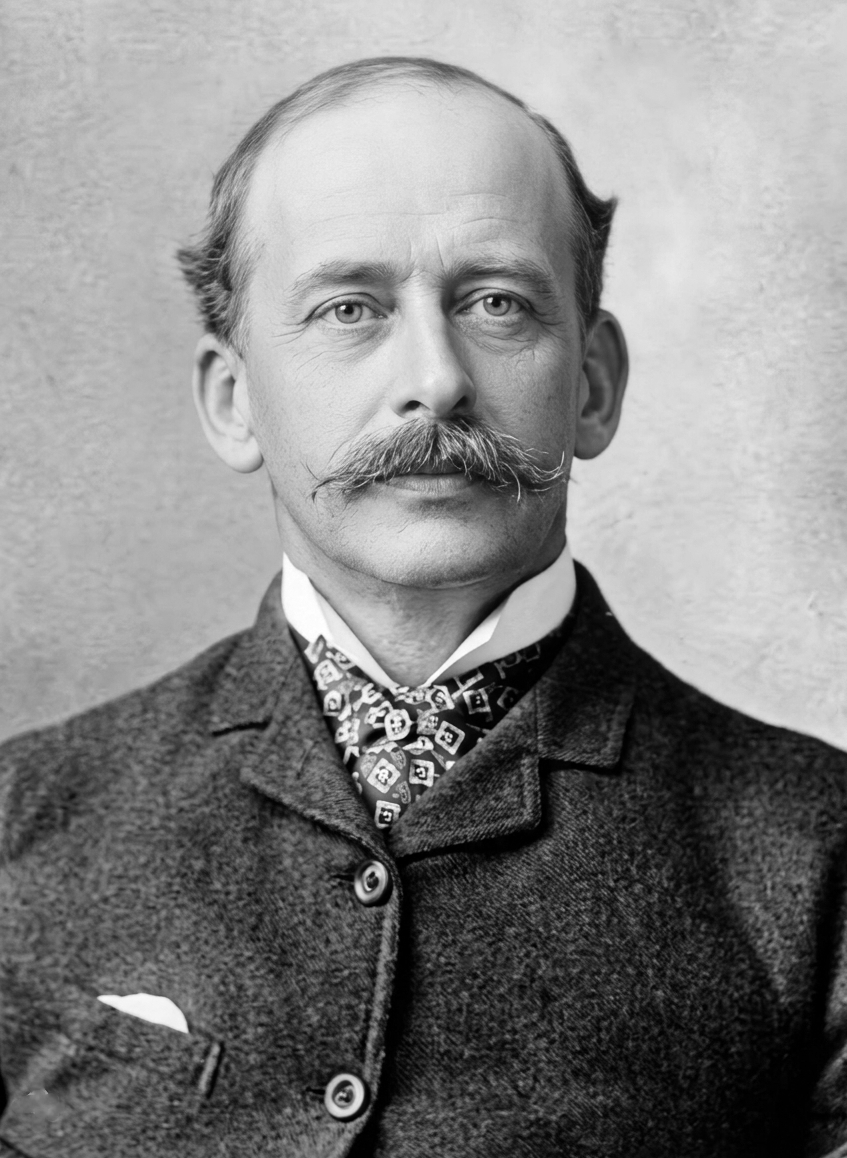
Frewen (pictured) 5 was a long-term friend of Leigh, and was well connected, his uncle being Winston Churchill, no less. During the cattle boom of the 1870s and 1880s, (together with his brother Richard) he had first established the Big Horn Ranche Company, and later, Moreton, having bought out his brother, formed the Powder River Cattle Co.6
Their two-storey ranch was oddly named ’76’, but it was also known as ‘Castle Frewen’ by the locals. It was here the Frewens entertained the rich and famous of the ‘Empire’ with lavish hunting parties.
For the final part of their expedition the party made camp at the bottom of Ten Sleep canyon, in Washakie County. Here, the hunters in the party would seek out some ‘Big Game’, notably, Bighorn Sheep. The settlement of Ten Sleep, sits on the base of the Big Horn Mountains, which was an ideal hunting location. Ten Sleep got the name from its location, “ten sleeps” (or nights) midway between the Sioux Camps on the Platte River from the south to an historical Sioux campsite to the north, near Bridger, Montana.7 Although the area was of outstanding natural beauty, it had many dangers, with ravines, caverns, and back then, was also the home of grizzly bears. There was also continuing tensions with the Indians. By the time the party arrived at Ten Sleep, they would have travelled nearly 2000 miles to get there from New York, using the available transport of the time, trains, wagons and horses.
Death in the Canyon
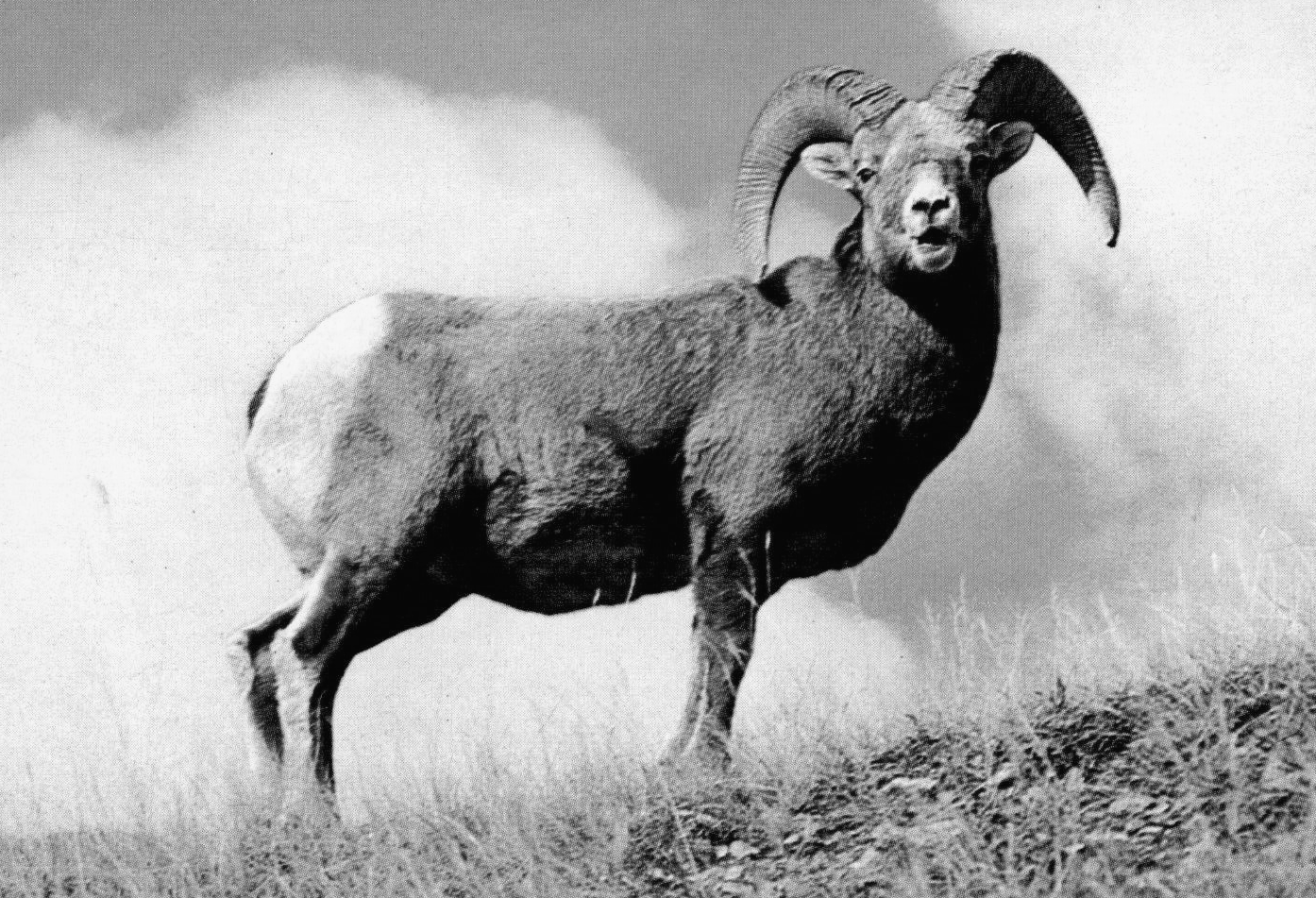
Gilbert left the camp alone on his horse in the early afternoon on Sunday 14th September, hoping to ‘bag’ a prized Big Horn Sheep (pictured). Due to his late start they didn’t expect him back until nightfall, but when he was still absent the next morning, they were obviously concerned.
The party, along with many local ranchers, started to search for Leigh. Shots were fired into the air, hoping that if Leigh was injured, he might return fire, but there was no response. Two miles from camp they came across his horse with his coat on the saddle but found nothing else. They continued searching on a daily basis without success. So Bob Stewart was sent with a letter to Frewen at his ranch, some 40-miles-away, informing him of the grave situation. On the seventh day of the search on Sunday 21st, on their third sweep of the area, three miles from camp, they came across Leigh’s hat. Soon afterwards, his body was found on a ledge in a hidden hollow. He had fallen approximately 80 to 100 feet to his death. His clothes were not torn, and it looked like he had died instantly. The skull was fractured and one of his legs was broken. He was lying on his back, and considering his body had been there for seven days, it was in good condition and was untouched by animals. His rifle had caught amongst the branches of a tree about 10 yards down from the precipice. It appears he was trying to retrieve a sheep that he had shot but lost his footing.8 The area was slippery and was covered with loose stones.9 A doctor was sent for, in the hope the body could get embalmed.
Grenfell said there was only one place to ascend the presipice, which was about a mile-and-half up the canyon from their campsite. Leigh was leaving for home the next day, and went out for a final look round, a decision that cost him his life.
This was not the first time Leigh had put himself in danger out in the wilds. Some years earlier, in Colorado, he had gone missing for three days. He had survived on just a tin of sardines to sustain himself. Luckily, he came across some travellers, and was saved.10
On the 23rd September, a special despatch was sent from the US Military outpost of Fort McKinney, near Buffalo, to the newspaper, The Cheyenne Daily Leader. It gave an account of the party’s movements and the death of Leigh.11
The Long Journey Home
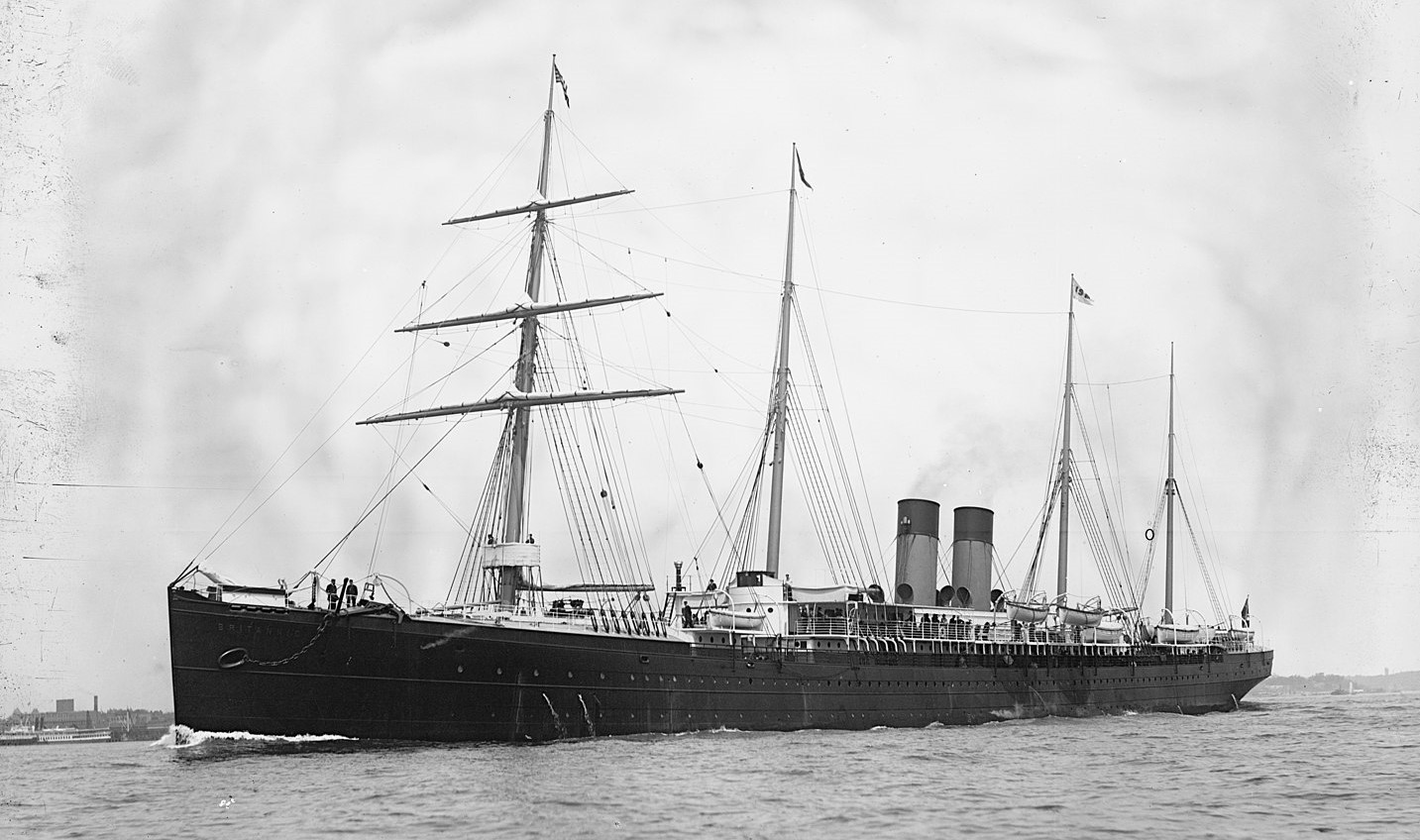
On hearing of the tragedy, Lord Leigh, who at the time was visiting Titsey Place in Surrey,12 decided that his son must be brought home. To make this happen, he asked family members, Canon James Wentworth Leigh, uncle of the deceased, and Gilbert’s younger brother, Rupert, to travel to America and bring his body home. They embarked on the 6,500 plus mile round-trip from Liverpool to New York, on the SS Britannic, on 25th September, arriving on 5th October.13
From Ten Sleep, the biggest challenge the party faced, was the shear logistics of transporting the body back from the ‘wild west’ of Wyoming to New York. This would eventually take them just over two weeks, not bad going under the circumstances. A make-shift stretcher/conveyance was made from tree trunks, tied together with rope, and then carried across the Big Horn Mountains. They eventually met-up with Gilbert’s brother, Dudley, now heir to Barony, at Rock Creek, near Buffalo. Dudley had for some years established a sheep farm in the San Francisco area. At Buffalo, a metallic coffin was found.14
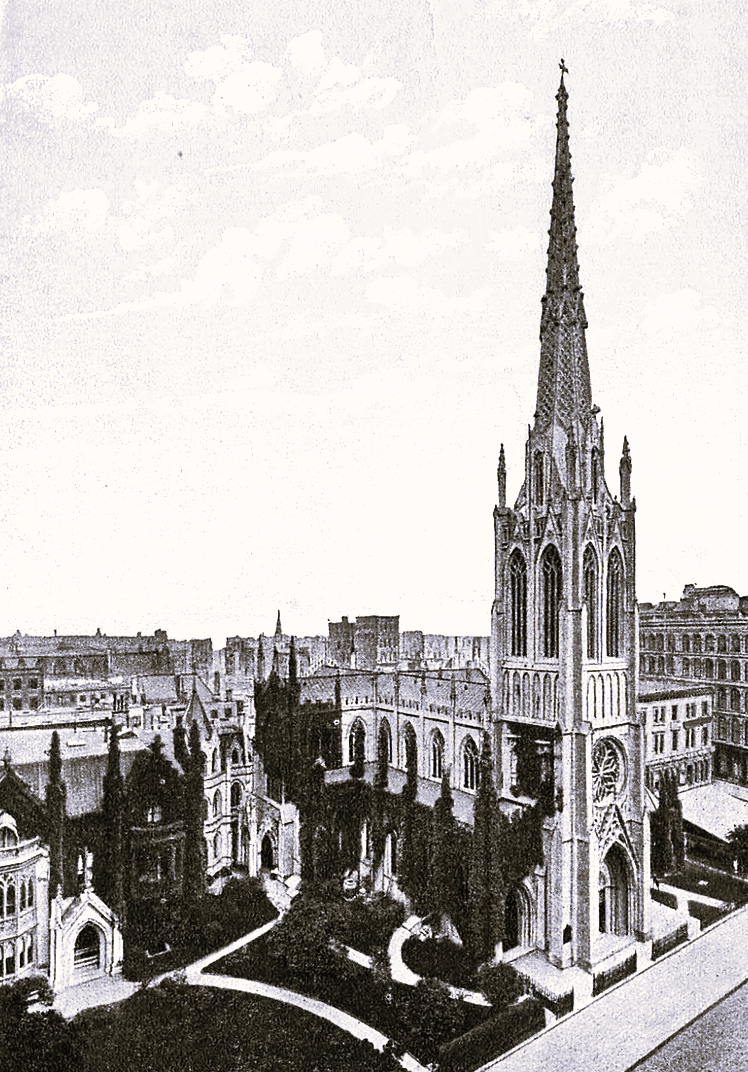
The party headed to Cheyenne in south Wyoming, which was more than 300 miles away. From here they boarded the Union Pacific Railroad to New York, a journey of some 1,700 miles. They arrived in New York on 9th October, and the coffin was placed in Grace Church at Broadway.15
They boarded the SS Britannic on Saturday 11th October, and arrived at Liverpool on Monday 20th. Lord Leigh, and The Hon. Edward Chandos Leigh, were at the docks to greet the party. The following day, an extra carriage was attached to the 2.15pm train from Lime Street station, arriving in Coventry at 5.30. The coffin was transferred to a waiting hearse, and taken to the chapel in the west wing of the Abbey, the bells tolled on its arrival. The body remained there overnight. It was covered in numerous wreaths, many of which were of an unusual size and beauty.16
The Internment
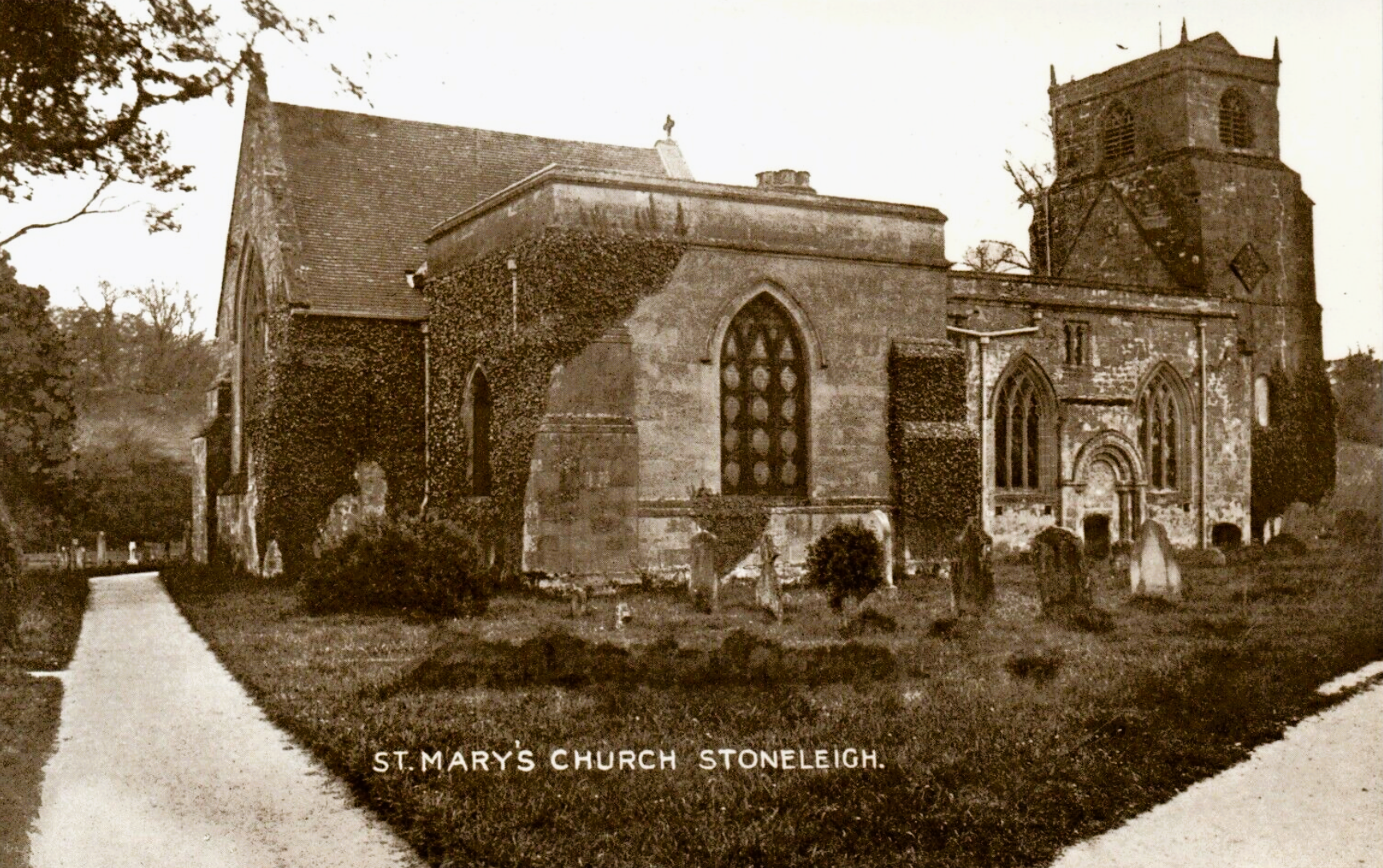
On the day of the funeral, 22nd October, the weather was calm, and thousands of people had turned out to pay their respects. Contemporary reports suggest it may have numbered 2,000 to 3,000 people, this meant that only family and close friends were admitted inside the church. Moreton Frewen was in attendance.17
The cortege left the Abbey via the private path through Home Park at 11.45am, crossing both the River Avon, and the River Sowe. It was led by Mr. Stainton, the house-steward, followed by the Leigh family and the household staff. The coffin, made of panelled oak from the estate, lay upon a Stratford Bier (flat-bed carriage). Samuel Thomas Wackrill of Leamington took care of the funeral arrangements.18
On the name plate was engraved:
The Honourable
Gilbert Henry Chandos Leigh MP
Born September 1st 1851 – Died September 14th 1884
The Rev. John Thomas Thorn (who would go on to be the vicar of St Mary’s for 33 years) performed the burial service. Outside, the Rev. O. R. Shaw-Stewart read the service of the dead for the people unable to get into the church. The body was interred in a mausoleum on the interior of the church.19
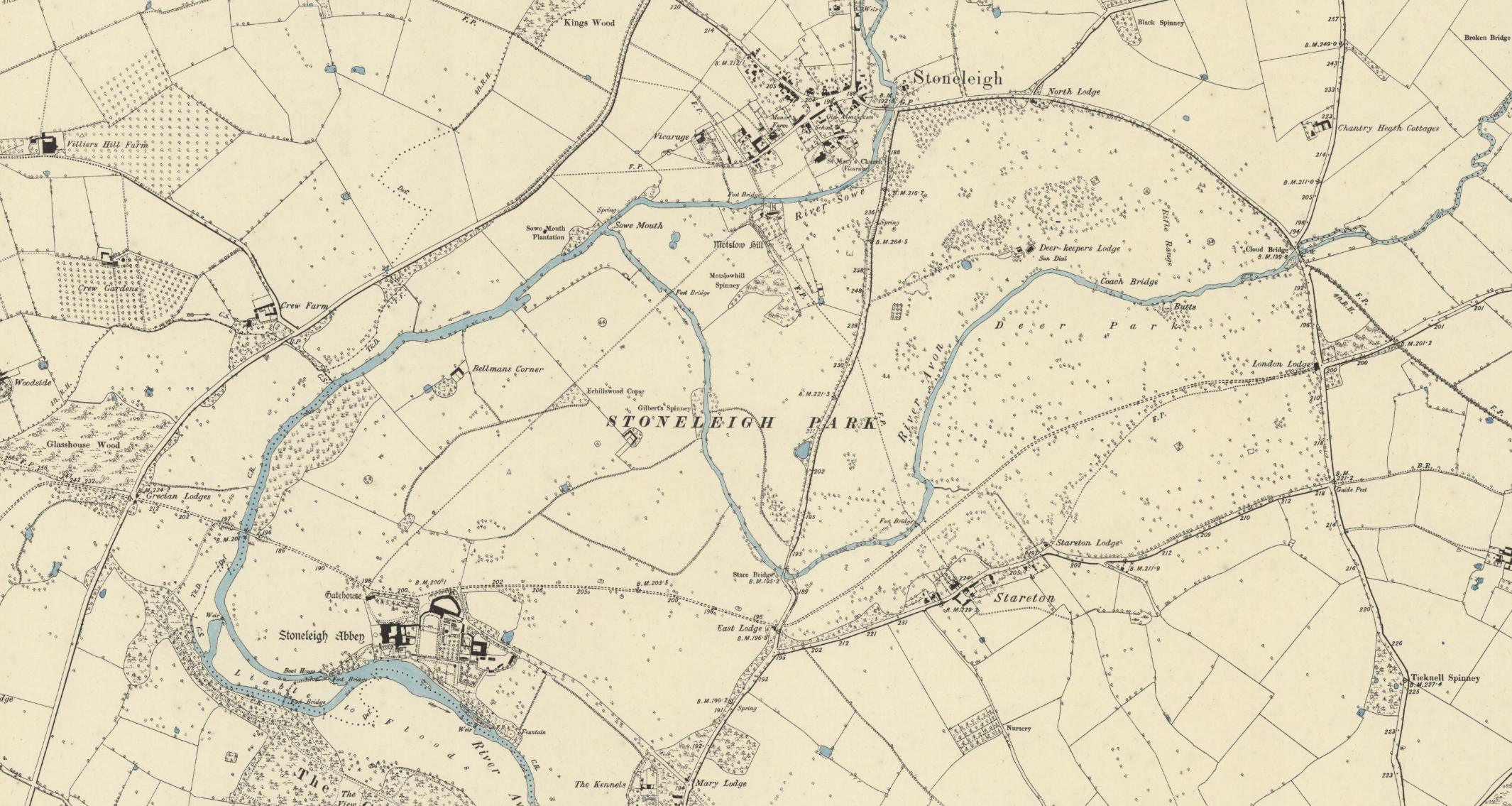
1886 map of Stoneleigh. Licence CC-BY-(NLS) https://maps.nls.uk/index.html
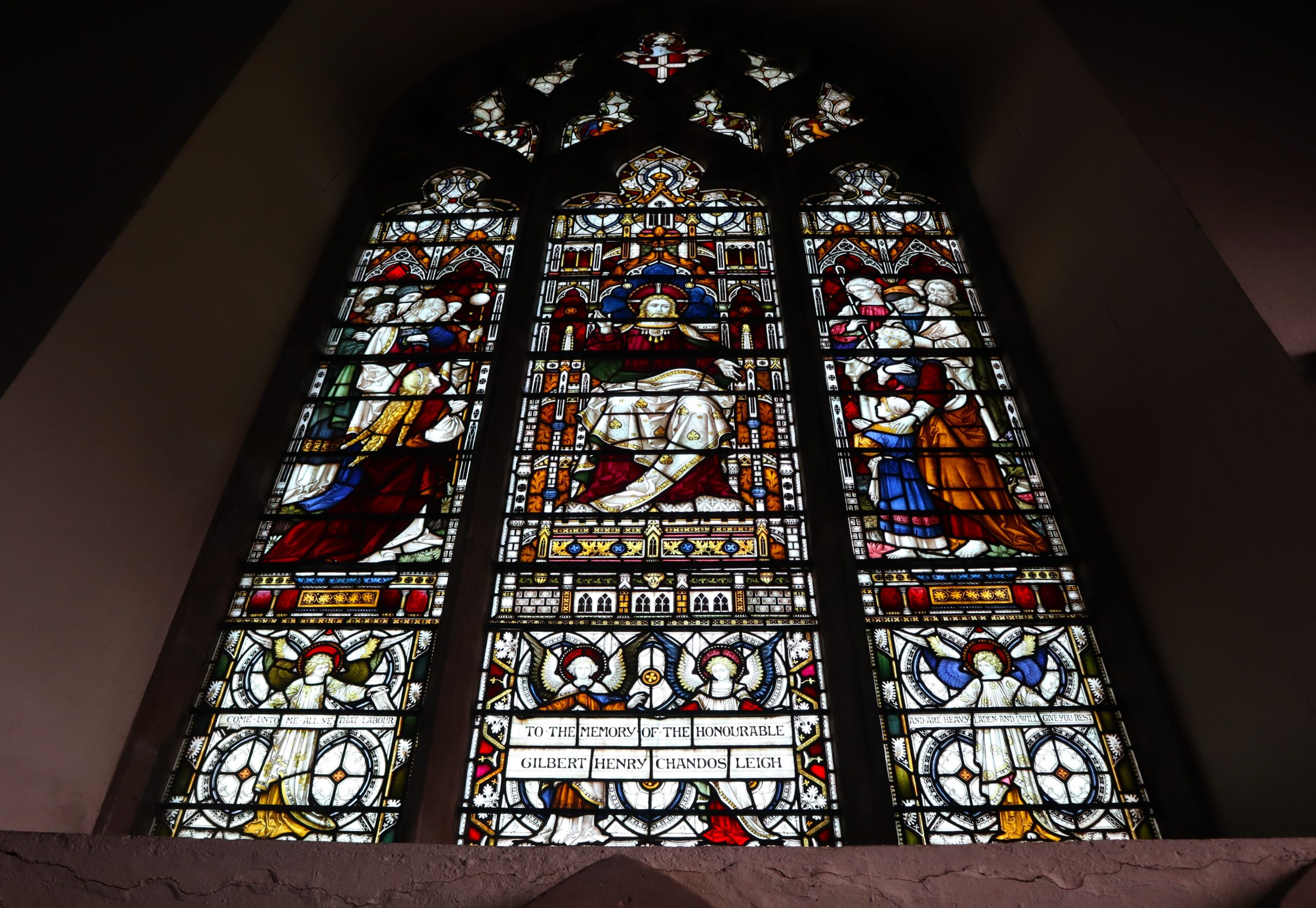
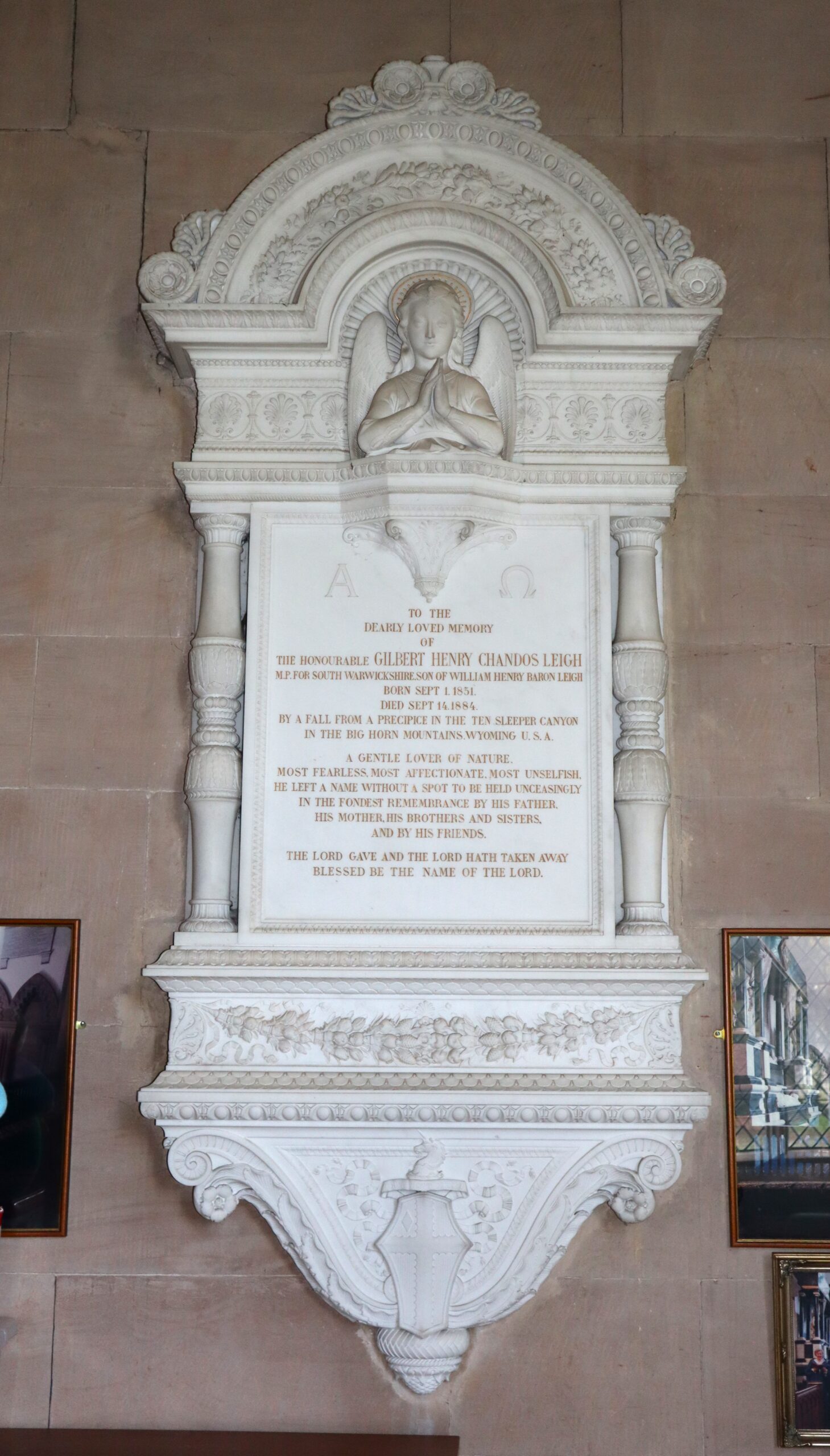
Eulogies and Messages of Condolences
Moreton Frewen, known as the ‘Cattle King of Wyoming’, said the death of Gilbert Leigh should not go un-noticed. He was in the original expedition of five pioneers that came to Wyoming starting from Rawlins, in the autumn of 1878, to explore the then absolutely unknown regions of the Big Horn and Yellowstone Rivers. He had returned from another visit with a most enthusiastic report of the profits of cattle-raising in the thousand valleys of the Upper Missouri System, and it is not too much to say that from this report many hundreds of young Englishmen now owe their prosperity and position because of it. It was achieved by British enterprise and British capital. He recognised this area of America was not just for working-men emigrants, but also for wealthy emigrants.20
William Grenfell said of Leigh, he was a very ‘adventurous and plucky man’, and was the most modest and un-selfish person I ever knew, and was a great favourite with everyone we met. He had singular nerve and resource in times of difficulty.21
Lord and Lady Leigh received numerous telegrams and letters of condolences from all over the country. Notably, Lady Churchill, who sent condolences on behalf of Queen Victoria.22
The By-Election
The Conservatives nominated Sampson Samuel Lloyd, as their candidate, who was the present chairman of Lloyds bank, But Lloyd had a checkered political history, having been un-successful in many previous by-elections and general elections.
The Liberals selected 33-year-old Lord William Compton, the 5th Marquess of Northampton, but he had never stood for parliament before. However, he had served in the Diplomatic Service for a number of years, in the British embassies in Paris, Rome and St. Petersburg.23
Due to the uncertainty of the arrival of Leigh’s body or even the suggestion that he was to be buried in America, the two parties were becoming restless. They initially came to an agreement that campaigning would not begin until the 15th October, by which time the funeral would have taken place. However, it was soon realised that the funeral would not happen until 22nd October, at the earliest. The Liberals asked the Conservatives if they would consider further delaying the campaign until after the funeral, but they refused.24 One reason given was that a number of venues had already been booked and notices/adverts posted, so it would be difficult to cancel and then re-booked them at such short notice. 25 So, by mid-October, the campaigning was well under way – by both parties.
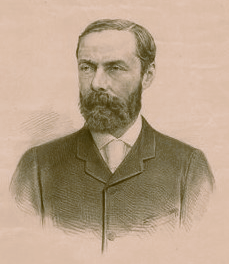
Parliamentary secretary to the treasury, Richard Grosvenor MP (Lord Stalbridge), motioned in parliament, on Monday 27th October, that a new writ be issued for the election of a new member to the South Warwickshire Division.26
The election took place on the 7th November, but with the political landscape having changed, Tory Sampson Lloyd won by a large majority. Of 29 Polling Stations in the constituency, there was just one in Kenilworth, at the National Schools. The surrounding villages of Ashow, Stoneleigh, Baginton, Honiley, Leek Wootton, Stivichall and Beausale, were also required to use the polling station in Kenilworth. 27 The count took placed at Shire Hall in Warwick.
Result 28
Sampson Lloyd (Con) 3,095
William Compton (Lib) 1,919
Majority 1,176
Electorate 6,590
Turnout 5,014
The Leigh Legacy
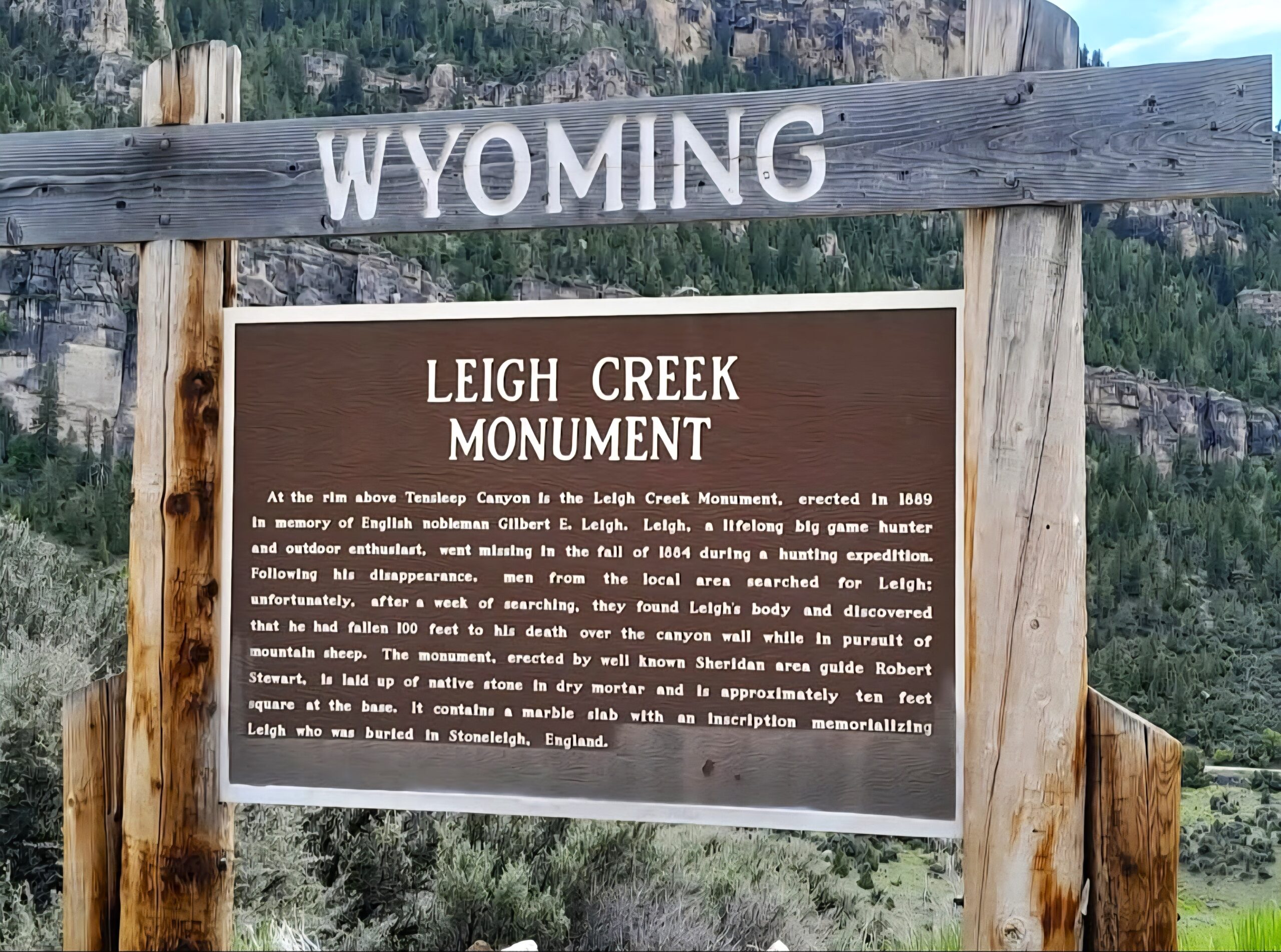
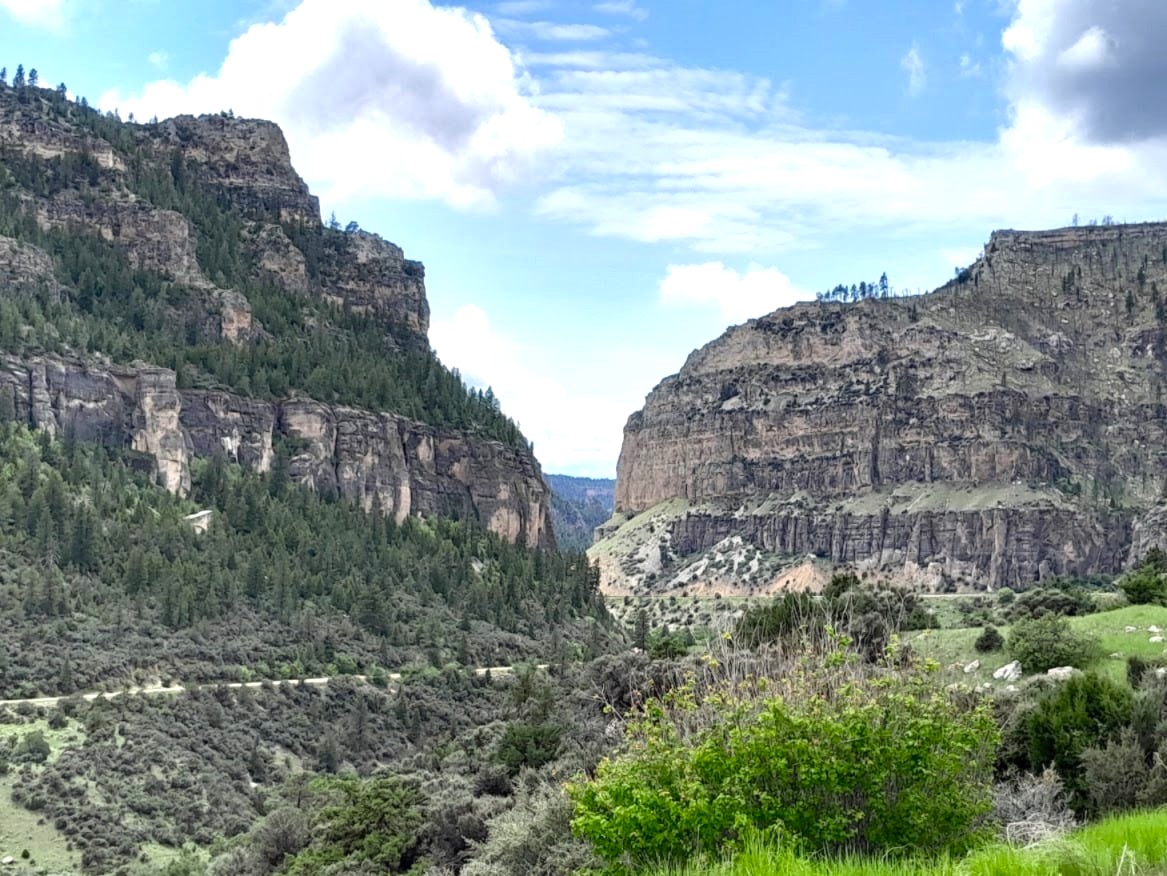
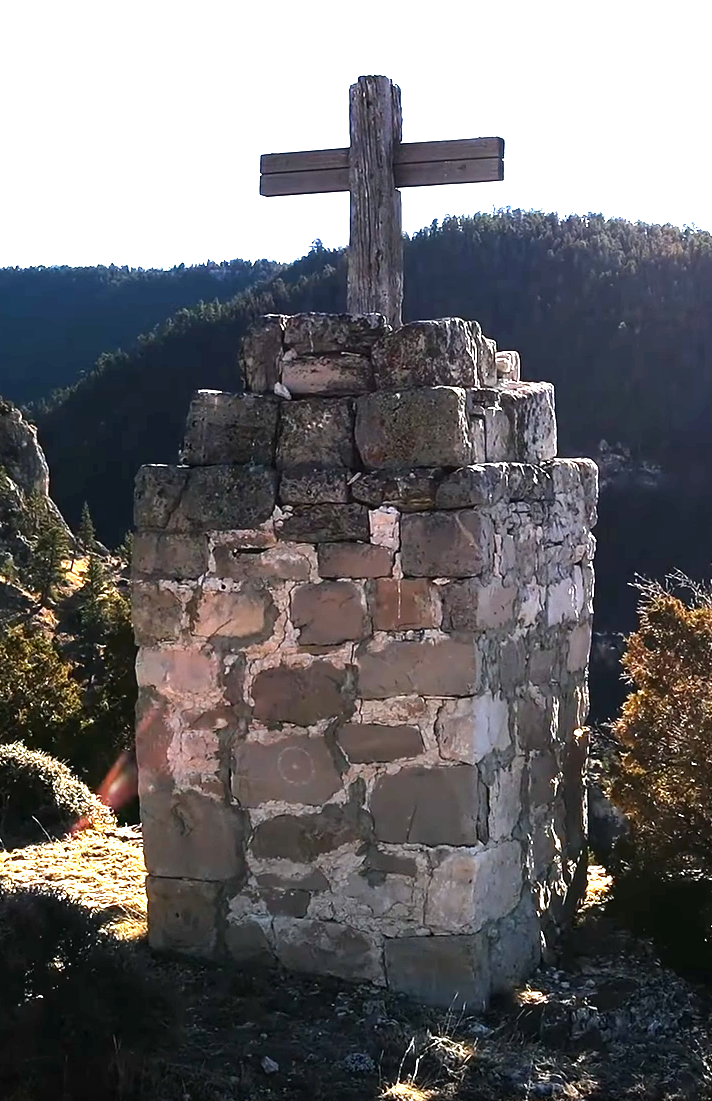
In 1889, Bob Stewart, a member of Leigh’s original hunting party, together with local ranchers, erected a monument on top of the canyon near to the spot where Leigh met his death. It’s constructed from local stone, and is about 10′ square at the base, and inlayed with a marble slab, inscribed to the memory of Leigh. 29 It can clearly be seen from US Highway 16.
To this day, it’s still in good condition considering it’s age and the environment in which it’s located. It’s probably maintained by the local community. The nearby creek which joins the main Ten Sleep creek, was named in his memory, the campground, close to the creek, also bears his name. The monument is accessible, but only via a difficult 14-mile round-trip.30
sources
- Cencus records ↩︎
- norwayheritage.com departures/arrivals and newspaper reports 1884. ↩︎
- Leamington Courier (William Grenfell’s account) 1st November 1884 ↩︎
- Daily Boomerang – 24th September 1884 ↩︎
- Ancestry.com ↩︎
- American Heritage Center, University of Wyoming ↩︎
- Ten Sleep Council website ↩︎
- Morton Frewen telegram – London Standard 30th September 1884 ↩︎
- Leamington Courier (William Grenfell’s account) – 1st November 1884 ↩︎
- Warwick Advertiser – 27th September 1884 ↩︎
- Daily Boomerang – 24th September 1884 ↩︎
- Kenilworth Advertiser – 27th September 1884 ↩︎
- White Star Line Timetables, newspaper reports and norwayheritage.com departures/arrivals 1884 ↩︎
- Leamington Spa Courier (William Grenfell’s account) – 1st November 1884 ↩︎
- The Globe – 10th October 1884 ↩︎
- Coleshill Chronical – 25th October 1884 ↩︎
- Kenilworth Advertiser – 25th October 1884 ↩︎
- Warwick and Warwickshire Advertiser – 25th October 1884 ↩︎
- Kenilworth Advertiser – 25th October 1884 ↩︎
- New York Herald ↩︎
- Leamington Courier – 1st November 1884 ↩︎
- Leamington Courier – 4th October 1884 ↩︎
- Wikipedia – William Compton 5th Marquess of Northampton ↩︎
- The Observer – 17th October 1884 ↩︎
- Warwick & Warwickshire Advertiser – 18th October 1884 ↩︎
- Dublin Daily Express – 28th October 1884 ↩︎
- Birmingham Daily Post – 8th November 1884 ↩︎
- Leamington Couier 15th November 1884 ↩︎
- Historic Marker Database (HMdb.org) ↩︎
- hikingproject.com/Leigh Monument out-and-back ↩︎